How to choose AI painting tools, 2026 Midjourney Jimeng Wen Xin Yi Ge actual measurement comparison
How to choose AI painting tools, 2026 Midjourney Jimeng Wen Xin Yi Ge actual measurement comparison
In the past two years, more and more people want to draw some pictures by themselves, from public account covers, e-commerce main pictures to game concept drafts, or even just posting interesting pictures to Moments. Everyone's first reaction is to give it to AI to try. Problems have also arisen. There are a lot of AI painting tools available on the market, including overseas and domestic ones, web pages and mobile apps. The price difference is not small, and the drawing styles are all different. Many people are still confused about which one to choose. What this article wants to do is very simple. Put together several tools that are currently being discussed and discuss clearly what they are good at and who they are suitable for, so as to help you avoid detours.
What is the current situation of AI painting tools?
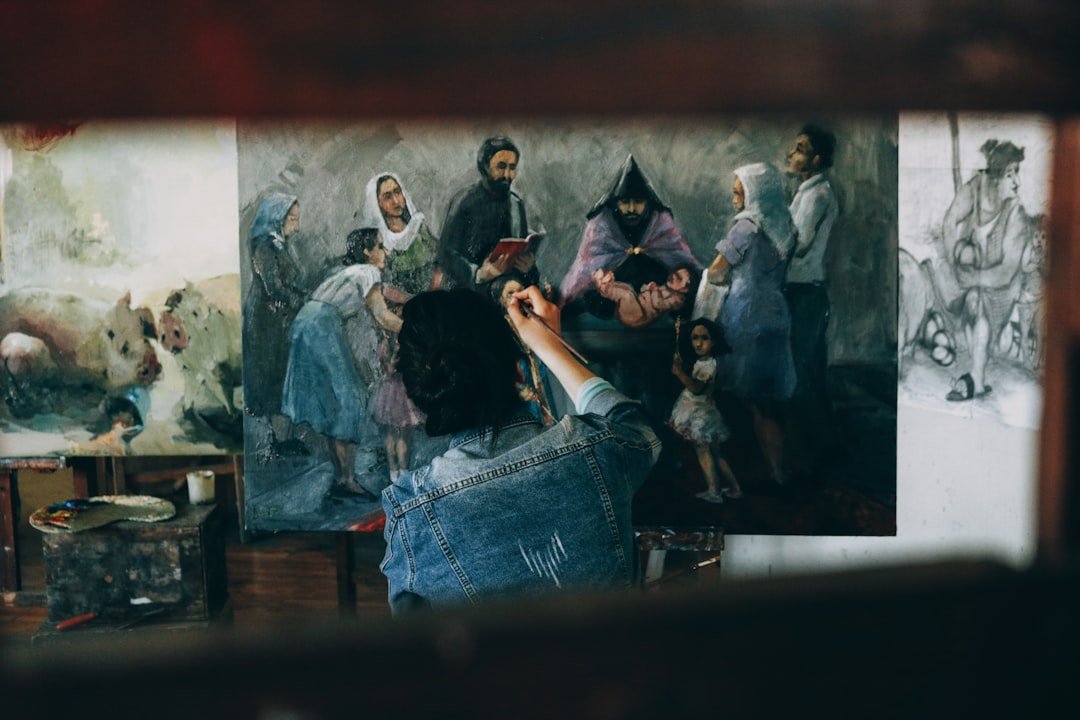
If AI painting was still in the early adopter stage a few years ago, now it has actually entered many people's daily workflow. Designers use it for inspiration sketches, self-media use it for mass production and distribution pictures, small businesses use it for product display pictures, and ordinary users use it for fun and expressions. Once the needs are segmented, the tools naturally begin to differentiate. Overseas camps have products that are known for their stylized atmosphere, and major domestic manufacturers have also launched their own painting capabilities and integrated into their respective large model ecosystems.
For ordinary users, choosing a tool is actually a trade-off between several things: whether the pictures look good, whether they can understand Chinese requirements, whether the operation is complicated, how much it will cost, and whether the finished pictures can be used for commercial purposes. No tool can achieve perfect scores in all dimensions. The so-called best is essentially the most suitable for your usage scenario. Let’s start with a few representative products.
Midjourney is the benchmark for atmosphere in overseas camps
When it comes to AI painting, Midjourney cannot be avoided. It is a product that started early overseas and has great influence. It has become almost synonymous with high-quality AI mapping for a long time. What it is most praised for is the atmosphere and aesthetic tonality of the pictures. The pictures produced often have a strong artistic quality. The processing of light, shadow, composition, and color often exceeds the user's expectations. Even if the prompt words you give are very simple, it can also add a lot of surprises.
However, the threshold for Midjourney is not low for domestic users. On the one hand, its usage environment has requirements for network conditions; on the other hand, its prompt word system is biased towards English, and Chinese requirements often need to be translated in the mind first. Please refer to the official public page for its specific pricing and packages. No speculation here. In general, Midjourney is suitable for advanced users who pursue picture quality, are willing to spend time studying prompt words, and have high aesthetic requirements. If you just want to post a picture to a circle of friends, it may be a bit heavy.
Jimeng, an all-round player of the byte series
Jimeng is an AI creation tool owned by Bytedance. It relies on Byte's content ecology and model capabilities, and its positioning is relatively comprehensive. It is not just a simple text-generating image, but also has layouts in the direction of image processing, style conversion and even video generation. It is the kind of product that wants to open up the creative links as much as possible. For creators who are active in byte-based content platforms, the connection will be smoother.
Jimeng is relatively friendly to Chinese users. The interface is in Chinese and prompt words can be directly described in Chinese, which saves a lot of translation trouble. Its style covers a wide range, from realism to two-dimensional, from illustrations to design drafts. It is suitable for people with complex needs and want to use one tool to handle a variety of tasks. It should be reminded that the specific functional boundaries, generation quotas and charging methods are subject to the official public page. The platform is updated frequently, and it is safest to refer to what is actually seen.
Wenxinyige Baidu’s localization plan
Wenxin Yige comes from Baidu and relies on the Wenxin large model. It is a highly discussed member of domestic AI paintings. Its advantages are also reflected in localization. The understanding of Chinese semantics, the grasp of national style elements and Chinese aesthetics are the reasons why many users choose it. When you want to paint ink paintings, Chinese trends, or pictures with traditional Chinese imagery, tools like these with large Chinese models on the back can often help you understand the intention better.
Wenxin Yige is also relatively complete in terms of functions, providing a variety of style templates and size options, which reduces the cost of getting started for novices. People who don’t know much about prompt words can also quickly produce usable pictures. It also supports Chinese interaction, which is a real convenience for most domestic users. It is also recommended to refer to the official public page for pricing. Overall, Wen Xin Yi Ge is suitable for users who prefer Chinese-style themes, are accustomed to Chinese operations, and hope to complete their creations within the ecosystem of major domestic manufacturers.
Horizontal experience of image quality and rendering texture
Putting these models together to look at the image quality, we need to explain one thing first. The so-called image quality is largely subjective. Different themes and different aesthetics may lead to completely opposite conclusions. Any comparison that claims to be quantitative scoring must be questionable. Judging from the general feedback in the industry, Midjourney has an outstanding reputation for its artistic atmosphere and high-quality scenes, and its pictures are often stunning at first sight.
As for domestic tools, the progress of Jimeng and Wen Xin Yige in recent years is obvious to all. They have been able to produce very effective effects on common themes such as realism, merchandise, and portraits, and are basically sufficient for daily use. What really widens the gap is often not the upper limit of a single picture, but the stability and restoration of specific needs. The recommended approach is to take the same prompt word and run it a few times on different tools to see which one comes out closer to what you want. Actual testing is always more reliable than looking at other people's reviews.
Chinese prompt word understanding: Who understands you better?
This item is actually the home field of domestic tools. Chinese prompt word understanding tests the model's ability to grasp Chinese context, idioms, Internet terms and even specific cultural images. Behind Jimeng and Wen Xin Yi Ge are big Chinese models. If you write about national trends, ink and wash, or cyberpunk-style alleys, they will most likely be able to catch it. You don’t need to deliberately change the sentences into something that the machine can understand.
Overseas tools such as Midjourney are very mature in English prompt words, but Chinese needs often need to be translated into English first, or approximated with some conventional keywords. There is inevitably information loss in the process, especially when it involves very local concepts. It is easy to fail to express the meaning. So if your creation highly relies on Chinese descriptions and you are too lazy to translate, then the Chinese understanding advantage of domestic tools will make the whole process much more comfortable.
Style variety and control
Style diversity refers to how many painting styles a tool can cover, from realistic photography to flat illustrations, from impasto oil paintings to two-dimensional, from minimalist design to complex Chinese style. In this regard, several mainstream tools are actually not weak, and the difference is more reflected in their respective areas of expertise and default tonality. Midjourney's default aesthetic is artistic and easy to produce tonal pictures; domestic tools have richer templates on local themes and practical scenes.
What’s more critical than diversity is controllability, that is, whether you can make it do exactly what you want. This involves advanced capabilities such as prompt word weighting, reference pictures, and partial redrawing. Different tools have different levels of support. For novices, the controllability directly determines whether you are creating or drawing cards. It is recommended that when choosing a tool, don’t just look at how many styles it can draw, but also whether it allows you to repeatedly fine-tune it to your satisfaction. This is what really affects the experience during daily high-frequency use.
Difficulty to get started and learning cost
The difficulty of getting started is something that many people overlook but is actually very critical. Midjourney is very capable, but its learning curve is relatively steep. If you want to use it well, you need to spend time studying the writing of prompt words, the combination of parameters, and its unique usage process. It is not particularly friendly to pure beginners. It's more like a professional tool that requires practice. It's great once you've mastered it, but there's a threshold in the early stages.
Domestic tools are generally more user-friendly in this regard. Jimeng and Wenxin Yige both provide templates, preset styles and Chinese guidance. You often only need to fill in a few keywords and choose a style to produce a picture, and you can use it with almost zero learning cost. For users who just want to get usable images quickly and don’t want to delve into technical details, tools that are easy to get started are obviously more suitable. After all, tools serve efficiency. If the cost of learning is higher than the time saved, then it is putting the cart before the horse.
Don’t ignore price and commercial licensing
Price is often a realistic factor that determines which one you choose in the end, but here is a special reminder that each company’s package structure, free quota, and payment tiers will be adjusted from time to time. Please refer to the official public page for any specific figures. Old quotes circulating on the Internet may not be accurate. A safer approach is to use the free quota to try out the tools first, confirm that you are satisfied with the effect, and then decide whether to pay for which one.
What is more easily overlooked and more important than price is commercial authorization. If you draw a picture for business, such as an e-commerce main picture, a commercial poster, or a picture for paid content, be sure to read clearly in the official terms whether the picture can be legally used for commercial use, what the copyright belongs to, and whether there are any additional authorization requirements. Different tools and different packages have very different requirements for commercial use. If you try to save trouble and use them directly, you may risk risks. When it comes to money matters, spending a few minutes to read the authorization instructions clearly is far more cost-effective than wrangling afterward.
How to choose according to needs and budget without stepping into pitfalls
We can make a simple classification after talking here. If you are a design-related practitioner who pursues picture quality and artistic tonality, is willing to invest in researching tools, and network conditions permit, then Midjourney is worth a try. Its upper limit is indeed high enough. If you are a domestic content creator or small businessman who needs a large number of pictures in Chinese on a daily basis, and value Chinese understanding and speed of getting started, then domestic tools such as Jimeng and Wenxin Yige will be much more convenient, and it will be more worry-free to connect to the domestic ecology.
In terms of budget, don’t rush to become a member as soon as you get started. Use up the free quota first, then compare it horizontally before paying. Theme preference is also very important. Those who often paint Chinese style and trend will give priority to tools endorsed by Chinese large models. Those who pursue overseas aesthetic atmosphere can rely on Midjourney. The ideal situation is not to use only one, but to have two or three in hand and use them according to your needs. This is the way for veterans to play. There is no absolute quality of a tool. The key is whether it can stably help you turn the images in your mind into reality.
Domestic solutions for easily drawing pictures on mobile phones
The previous models we talked about focus on web pages or desktop processes, but the real scenario for many people is that they are scrolling through their mobile phones and suddenly come up with a picture. At this time, it is obviously unrealistic to take out the computer. If you need a solution that allows you to quickly draw pictures in Chinese without using a ladder on your mobile phone, you can pay attention to a software calledLingtuThe App, its full name in the App Store is Lingtu-AI Drawing Design. You can download it by directly searching for Lingtu on iOS. It does not require a VPN and is more friendly to users who are afraid of messing with the network environment.
Its idea is to bring together the capabilities of different styles. The atmospheric direction uses a Midjourney style engine, the realistic direction uses a Flux style engine, and if you want to quickly produce drawings, there is a Nano Banana style fast engine, which is equivalent to using them interchangeably in one app. The interaction is localized in Chinese, and the prompt words can be written directly in Chinese without having to worry about English translation. As a domestic option for mobile phones, it is suitable for people who want to start immediately when inspiration comes, but are too lazy to mess around in front of the computer. Of course, its positioning is different from that of professional desktop tools. For the specific effects, it is recommended that you download it yourself and give it a try. Only after using it will you know whether it suits you or not.
FAQ
Where should newbies of AI painting tools start?
If you are a complete novice, it is recommended to start with tools that have low entry barriers and support Chinese interaction, such as the domestic Jimeng and Wenxin Yige. Most of them provide templates and style presets, and you can produce pictures with almost zero learning cost. Once you are familiar with the basic logic and have higher requirements for the graphics, you can then try advanced tools like Midjourney that require research on prompt words. The transition will be smoother.
What is the biggest difference between Midjourney and domestic tools?
The most intuitive difference lies in the usage environment and language habits. Midjourney is an overseas product, which has requirements for network conditions, and the prompt word system is more English-based; domestic tools support Chinese interaction, do not require additional network troubles, and have a better understanding of Chinese needs. Each has its own strengths in terms of picture quality. Midjourney is known for its artistic atmosphere. Domestic tools are very good at local themes and practical scenes. It is recommended to use the same prompt words for actual measurement and comparison.
Can pictures drawn with AI be used directly for commercial use?
This depends on the specific tools and the licensing terms of the package you are using. Different products and different levels have very different commercial regulations. When it comes to profit-making purposes such as e-commerce main images and commercial posters, be sure to confirm copyright ownership and commercial authorization requirements in the official terms. Do not take it for granted and use it directly to avoid copyright risks.
Is there any AI painting app on mobile phones that doesn’t require a ladder?
some. Take Lingtu as an example. It can be downloaded by directly searching for Lingtu in the iOS App Store. It does not require a VPN, uses Chinese localized interaction, and also integrates various style engines such as atmosphere, realism, and speed, making it suitable for scenes where you can easily draw pictures on your mobile phone. For specific effects, it is recommended that you download and experience it yourself before judging whether it is suitable.
How much do these tools cost?
The package structure and price of each company will be adjusted from time to time. This article does not provide specific figures to avoid misleading. Please refer to the official public page for all prices. A safer approach is to use the free quota to try out several tools first, and then decide which one to pay for after confirming that the effect is satisfactory. Remember to read the terms related to commercial licensing clearly.
📝 本文来自抖文 www.douwen.me ,转载请保留出处。
原文链接:https://www.douwen.me/archives/1386/
💬 评论 (8)
Thanks for the detailed comparison.
Practical tips not fluff.
Bookmarked for reference.
Step-by-step is gold.
Loved the FAQ section.
Sharing this with my team.
Easy to follow.
Great resource.