Will using too much AI make people stupid? How to use it in 2026 to avoid degradation
Will using too much AI make people stupid? How to use it in 2026 to avoid degradation
In the past year or two, more and more people around us have begun to leave writing emails, checking information, writing code, and even thinking about ideas to AI. After the habit is formed, a faint uneasiness also arises: Will I become stupid if I use AI every day? This concern is not groundless. When something that originally requires brain use is taken over by a tool, the brain will indeed lose an opportunity to exercise. But saying "become stupid" is too simplistic and crude, because some people become more and more hollowed out the more they use the same tool, while others become more capable and more efficient. So instead of worrying about whether you will become stupid, it is better to break down the problem and look at: which abilities may be degraded, which ones will be amplified, and the key difference lies in how to use them.
Let’s look at the worry objectively first

Worrying about becoming stupid with AI is essentially a vigilance against "capability outsourcing", and this vigilance is valuable. People who rely on something to the point where they can't leave it will naturally feel a little uneasy. However, what needs to be distinguished is that sometimes this uneasiness is a real loss of ability, and sometimes it is just an illusion caused by unfamiliarity with new tools. Every time a labor-saving tool appears in history, it has been accompanied by similar debates. From calculators to search engines, voices worrying about the degradation of human beings have never stopped. In hindsight, some of the worries came true, while others proved to be unnecessary. A rational attitude is neither complete denial nor complete optimism, but rather acknowledging that risks do exist without treating them as an irreversible fate. Whether people become stupid or not depends largely on how people get along with tools.
What is cognitive offloading and why is it worth paying attention to?
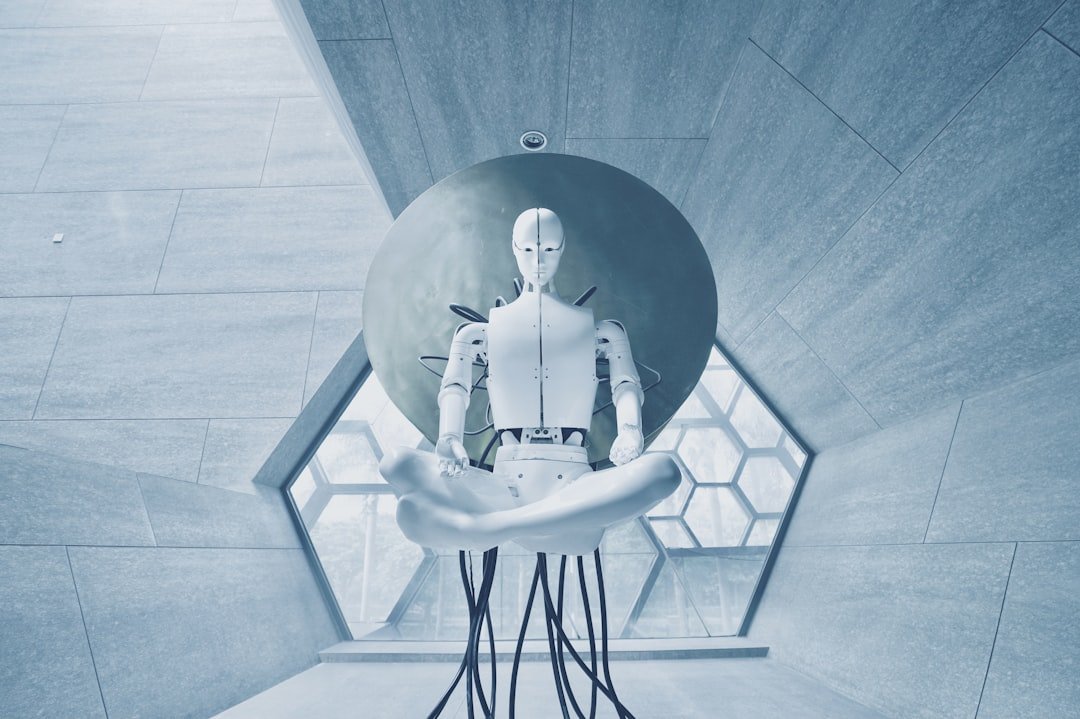
There is a concept in psychology called cognitive offloading, which roughly means that people will transfer part of the burden of thinking and memory to external tools, such as using sticky notes to take notes, using navigation to find directions, and using search engines instead of reciting. This in itself is neutral and even efficient. The human brain has limited capacity. Only by outsourcing trivial things can we free up energy to make more important judgments. The question is how much and to whom the offloading occurs. If what is offloaded is a low-value memory such as checking a phone number, the impact will not be big; but if core thinking such as analysis, judgment, and organization of ideas are outsourced for a long time, the corresponding "muscles" of the brain may become weak due to lack of use. What’s special about AI is that it can take over precisely high-order cognitive tasks, which is why it deserves more vigilance than previous tools.
An intuitive analogy: Will you become road-challenged if you use navigation too much?

Many people have this experience. Ever since they got used to mobile phone navigation, they have become less and less familiar with routes. When they arrive at a place they have been to several times, they still don’t know the way. Some studies have pointed out that people who rely on navigation for a long time may have a weakened ability to actively construct spatial maps, because the brain no longer needs to remember routes on its own. This example is appropriate because it demonstrates the double-edged nature of cognitive offloading: navigation allows people to go to farther and unfamiliar places, but it also makes people give up the exercise of "drawing a map in the mind." The impact of AI on thinking ability is logically similar. When you ask AI to draft a draft every time you write something, you are indeed faster, but your own ability to organize language from scratch is also quietly lacking exercise. Whether you can maintain it depends on whether you give yourself the opportunity to practice.
What abilities may be deteriorating?
Roughly classifying the abilities that are easily affected, memory and retrieval may be the first to be affected. When AI can be asked casually about any information, people's motivation to actively memorize and summarize knowledge will decrease. The second is the ability to "from blank to form" in writing, which is the process of organizing opinions and elaborating wording in front of a blank piece of paper. If AI is always allowed to produce the first draft, this ability to start from scratch will be easily blunted. Then there is the need for deep thinking and patience. If AI gives answers too quickly, people will become less and less willing to endure the torment of "can't figure it out." And a lot of truly valuable thinking happens during that difficult period of lag. These degradations are usually not cliff-like, but as slow as boiling a frog in warm water. By the time you notice them, you have often become accustomed to dependence.
What abilities might be enhanced?
The other side of the matter is that AI is also actually amplifying certain capabilities. The most obvious ones are information acquisition and learning efficiency. In the past, it took a long time to turn through materials and read many pages of documents to understand concepts. Now, AI can dismantle them, give examples, and explain them again in another way. The threshold for entry into an unfamiliar field is greatly lowered. The second is the broadening of horizons. There are always blind spots in a person's knowledge. AI can quickly provide references from different angles and disciplines, helping people think outside the box. There is also efficiency at the execution level. By handing over the repetitive and boring parts to AI, people can focus on creativity, judgment and decision-making. So a more accurate statement may be that AI will not simply make people dumber or smarter, but will amplify the way people use their brains. How you use your brain will amplify that tendency.
Key difference: use it as a crutch or as a stand-in
The watershed of degeneracy or not may lie in what you regard AI as. Using it as a crutch means that it helps you move forward, but you are still the one walking. You are still thinking, judging, and making the final decision. AI just saves you the mechanical part. Being a stand-in means that you hand over the entire thinking process and you are only responsible for copying and pasting. In this way, your brain is indeed continuously emptying out. The long-term results of these two uses of the same tool are vastly different. There is a simple criterion to determine which category you belong to: after using AI, whether your understanding of the matter has deepened or whether the task has been completed. If it is just completed and you can't explain the logic, then it has most likely changed from a crutch to a stand-in.
Several specific ways to prevent yourself from deteriorating
The first is to think first before asking the AI. When you encounter a problem, even if it only takes three minutes, list your initial thoughts first, and then let AI supplement or correct mistakes, so that you retain the step of independent thinking. The second rule is to let the AI explain rather than copy it directly. When it gives an answer, ask more about "Why is this so" and "Is there any other possibility?" and treat it as a teacher rather than a answering machine. The third rule is to maintain the feel, consciously leave some tasks to be done by yourself, such as writing important expressions first, making key judgments first, and regularly doing "tool-less training" for the brain. The fourth is to use AI for verification rather than generation. First have your own finished product, and then let it help you find loopholes, so that the initiative is always in your hands. What these points have in common is to ensure that the subject of thinking is still you.
Treat AI as a thinking opponent rather than an answering machine
Another recommended usage is to treat AI as an opponent that can be debated. When you have a point of view, don't rush to make it agree with it, but let it play the opposite side and find out the loopholes in your argument and the situations you have not considered. Not only does this usage not make you stupid, but it forces you to think more carefully. In the same way, when studying, you can ask AI to ask you questions instead of directly asking for answers; when writing, you can finish writing first and then ask it to question you paragraph by paragraph. The core idea is to create friction rather than eliminate friction. Human growth often comes from moderate resistance, and the most dangerous thing about AI is that it can smooth out all resistance, making people unknowingly stop exerting themselves in a silky experience. Taking the initiative to create some resistance for yourself to think is a good way to fight against degradation.
Some suggestions for different groups of people
For students and those who are laying the foundation, it is recommended to use AI with extreme caution, because this stage is exactly when building the underlying capabilities. If you outsource homework and thinking too early, you may miss the most critical training period. You should try your best to do basic questions and basic skills by yourself. For professionals, you can boldly use AI to improve efficiency, but you must stick to your professional judgment and don’t let it make responsible decisions for you. Tools can speed up the process, but they cannot take the blame for you. For creators, AI can be used for inspiration collision and preliminary sorting, but it is best to retain their own imprint on the final expression and style, otherwise the work will easily lose recognition. For elders and beginners, AI is a good and patient teacher, so you might as well use it to learn new things. At different stages and with different goals, the scale for getting along with AI should be different.
Degeneration is not inevitable, the key is to stay active
Going back to the original question, will AI become stupid if you use it too much? The answer is probably: maybe yes, maybe not, it depends on you. AI itself has no direction. It is just an amplifier. It amplifies your diligence and your laziness. It amplifies your thinking and your laziness. What really degrades people is never the tools, but the inertia of giving up using the brain. Use it as a crutch and you can walk further; use it as a stand-in and you may slowly forget how to walk. In this era where AI is becoming more and more capable, perhaps the most valuable thing to protect is the confidence that "I can still figure it out on my own." Tools will continue to evolve, but you have to keep it to yourself if you are willing to use your brain.
FAQ
Will using AI really make people stupid?
You cannot simply say yes or no. AI may degrade certain abilities that have been relied on for a long time, such as memory, independent writing, and deep thinking. This is related to the principle of cognitive offloading; but it can also enhance information acquisition and learning efficiency. Results depend more on how you use it than on the tool itself.
What does cognitive offloading mean?
Cognitive offloading is a concept in psychology, which refers to people transferring the burden of thinking and memory to external tools, such as using navigation instead of memorizing directions, and using search instead of reciting. It itself is neutral or even efficient, but if even the core analysis and judgment are outsourced for a long time, the related capabilities may be weakened due to lack of exercise.
How to use AI so as not to degrade yourself
Several practical methods are: think about it yourself before asking the AI, let the AI explain the principles instead of directly copying the answers, consciously retain some tasks that you do entirely by yourself to maintain the feel, and use the AI to help you check and correct errors instead of generating them for you. The key is to ensure that the subject of your thinking is always you.
Should students use AI to write homework?
Extra caution is recommended. The stage of laying the foundation requires a lot of independent training. If you outsource homework and thinking too early, you may miss the critical ability development period. Try to complete basic skills and basic questions by yourself, and use AI more for explanations and answering questions rather than directly writing for you.
What is the best use of AI?
A healthier way is to treat it as an opponent who can debate or as a patient teacher, allowing it to question your views, explain the logic behind it, and help you check for omissions and fill in the gaps, rather than as a substitute who directly gives answers. Creating moderate friction in thinking is more conducive to growth than pursuing smooth effort.
📝 本文来自抖文 www.douwen.me ,转载请保留出处。
原文链接:https://www.douwen.me/archives/1380/
💬 评论 (6)
Bookmarked for reference.
Sharing this with my team.
Loved the FAQ section.
Great resource.
Clear and to the point.
Practical tips not fluff.