How to choose an AI programming assistant, 2026 GitHub Copilot Tongyi Lingma CodeGeeX actual measurement comparison
How to choose an AI programming assistant, 2026 GitHub Copilot Tongyi Lingma CodeGeeX actual measurement comparison
Writing code has changed a lot in the past two or three years. In the past, if you typed a line of comments, you would have to type the subsequent implementation word by word; now open the editor, and code completion will follow your ideas and write out the entire function. AI programming assistants have gone from being a toy for early adopters to becoming an indispensable tool for many developers in their daily work. There are more and more choices on the market. Overseas, there is Copilot, a subsidiary of Microsoft GitHub. In China, there are Alibaba's Tongyi Lingma, Zhipu's CodeGeeX, and a bunch of products that are named but not named. Faced with so many options, how to choose has become a headache for many people. This article will put together some of the currently attracting attention, and talk about it from the perspectives of positioning, completion quality, Chinese support, IDE compatibility, price and data privacy. I hope it can help you clarify your ideas.
What problem does the AI programming assistant solve?
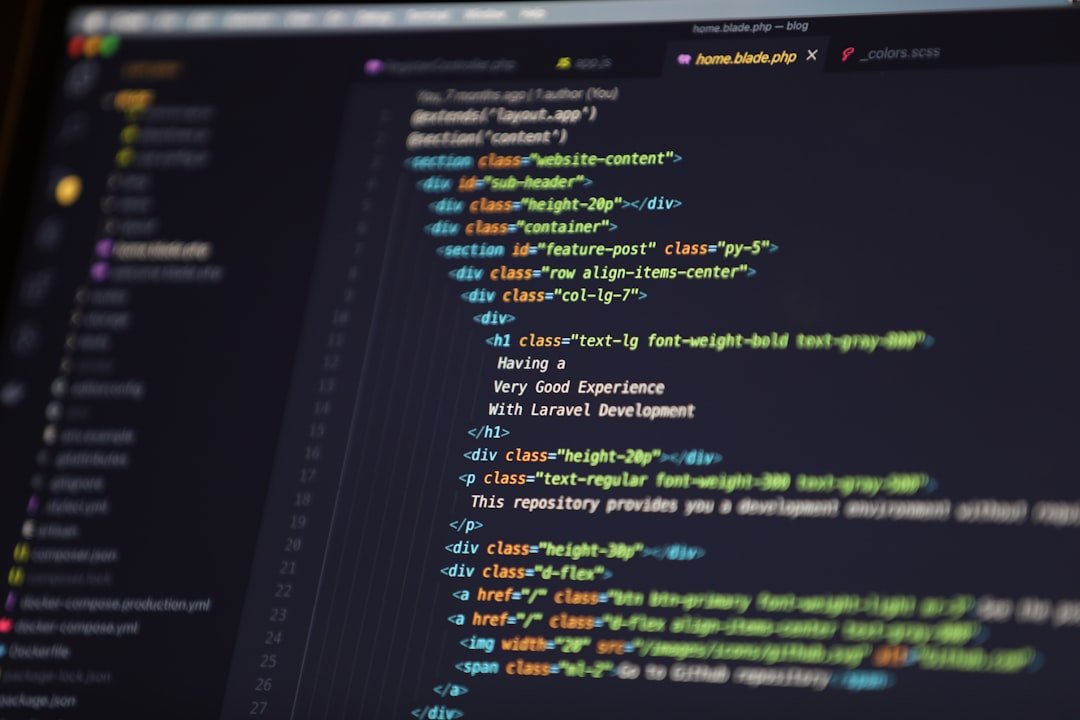
Before comparing specific products, let's first think clearly about what this kind of tool can help us solve. The most direct one is completion. When you are halfway through writing, it will guess what you want to write next based on the context, and fill in boilerplate code, repeating patterns, and common API calls in advance. For those parts that are boring to write but cannot be avoided, such as loop traversal, error handling, and data structure conversion, this kind of completion saves considerable time.
The next level up is conversational assistance. When you encounter a piece of old code that you don't understand, you can directly ask it what it is doing; if you want to add a unit test to a function, you can let it generate a draft first; writing regular expressions, writing SQL, and configuring CI processes are tasks that are infrequent and easy to forget the grammar. Asking a question is often faster than flipping through the document. There are also reconstruction, bug correction, and interpretation of error messages. These are all scenarios that AI assistants are gradually covering.
It should be emphasized that they are not here to do your thinking for you. The generated code must be read and tested. The industry generally believes that this type of tool is more like an assistant that responds quickly but occasionally gets confused. It is suitable for amplifying your existing judgment rather than making judgments for you. Putting your expectations in a reasonable position will make the selection meaningful.
Positioning and features of GitHub Copilot

GitHub Copilot is an AI programming assistant launched by Microsoft's GitHub, and it is also one of the earliest products known to the public in this wave. Backed by GitHub's huge open source code ecosystem and Microsoft's resources, its code generation in English scenarios has always been considered the first-tier level, especially its performance in mainstream programming languages and common frameworks is quite stable.
Its product form is relatively open around the actual development process. In addition to real-time completion in the editor, there is also a conversational interactive window, where you can directly ask questions and let it explain or rewrite during the process of writing code. For teams that host projects on GitHub, its connection with code repositories and pull requests is relatively smooth, which is equivalent to embedding the assistant into the workflow they are already using.
Copilot is mainly aimed at developers and teams with overseas business or who are accustomed to English technology stacks. If your project relies heavily on the international open source ecosystem, and your daily information and documents are all in English, then its compatibility with language understanding and coding style will be relatively high. Its specific version and functional boundaries are constantly being updated, and the actual capabilities are subject to the official public page.
The positioning and characteristics of Tongyi Lingma

Tongyi Lingma is an AI programming assistant launched by Alibaba. Its biggest label is that it is targeted at Chinese developers and domestic development environments. From the product design, we can feel that it has made a lot of targeted optimizations in the understanding of Chinese comments and Chinese demand descriptions. If you use Chinese to explain your ideas clearly, the fit of the code it generates is usually more reassuring.
Relying on Alibaba's accumulation in cloud computing and large models, Tongyi Lingma's performance in mainstream domestic programming languages and common business scenarios is recognized. For developers of common domestic technology stacks such as e-commerce, enterprise applications, and back-end services, the code it generates is often more correct in style and convention, and is less likely to be written in acclimated ways.
Another advantage is its localized user experience. The access is stable, the response is timely, and there is no need to bother with the network environment. This is a real convenience for the daily development of domestic teams. At the same time, as a product of a major manufacturer, it also has corresponding considerations in terms of compliance and corporate services. The specific function list and access methods are subject to Alibaba’s official public information. Before selecting, it is recommended to directly check the official documents to confirm the current support scope.
CodeGeeX’s positioning and features
CodeGeeX is an AI programming assistant launched by Zhipu. Zhipu is one of the teams that has received widespread attention in the field of domestic large models. CodeGeeX is also one of the earliest products in China that focuses on code generation. It has focused on multi-language code generation from the beginning of the project. It supports a wide range of programming languages and is suitable for developers with complex technology stacks.
As a domestic product, CodeGeeX also works hard on Chinese interaction. It can get more natural responses when describing needs and asking questions in Chinese. Its coverage of basic capabilities such as completion, code explanation, and question and answer is relatively complete, and corresponding entrances can basically be found for several types of auxiliary functions commonly used in daily development.
One of the characteristics of CodeGeeX is that it has a certain voice in the open source community, which has accumulated a lot of attention among the developer community who are willing to toss and pay attention to technical details. For those who want to use domestic tools but also care about the transparency and controllability of the tools, it is an option worth including on the shortlist. Its specific capabilities and versions are also continuing to evolve. The actual situation is subject to Zhipu's official public page.
How to check the completion quality
Completion quality is the indicator that everyone is most concerned about, but it is actually difficult to summarize with a number. The performance of the same tool in different languages, different projects, and different writing habits may vary greatly, so just listen to those who frequently claim high accuracy. If you really want to judge, you have to try it yourself.
Judging from public discussions, several tools each have their own areas of expertise. Copilot is often praised for its completion and coherence in the English context and international mainstream ecology; domestic tools such as Tongyi Lingma and CodeGeeX are more advantageous in their compatibility with Chinese annotation-driven and common domestic business codes. Whether completion is useful or not depends largely on whether your code matches the direction of its training focus.
A more practical way to judge it is to look at a few details: whether it can understand the context outside the current file, whether the code style it adds is inconsistent with other code in your project, and whether it frequently disturbs you when you don't need it. These experience-level things can determine whether you are willing to use it every day more than any promotional numbers. It is recommended to go to various companies with your own real code snippets and try them out during the selection stage.
Differences in Chinese support
Chinese support is a relatively obvious dividing line between domestic tools and overseas tools. The Chinese support mentioned here is not only whether the interface is in Chinese, but more importantly, whether it can understand your comments and requirements written in Chinese, and whether the generated code comments, variable naming, and error explanations are in line with the reading habits of Chinese developers.
As domestic products, Tongyi Lingma and CodeGeeX have natural advantages in this regard. If you explain the function clearly in one sentence in Chinese, it can more accurately understand the intention and transfer it to the code, and the generated explanatory content will also read smoothly. For projects where Chinese communication is the main focus in the team and document comments are all in Chinese, this fit will significantly reduce communication costs.
Copilot has also made progress in understanding Chinese over the years, but its foundation and training focus are more focused on the English ecology. If you are used to writing comments and asking questions in English, this difference is not obvious; but if the team collaborates in Chinese throughout the entire process, the experience of domestic tools in this link is usually smoother. There is no absolute advantage or disadvantage to this item. The key depends on which side your team’s actual language habits fall on.
IDE compatibility and access methods
No matter how powerful the tool is, it is useless if it cannot be installed into your commonly used editor, so IDE compatibility is a very realistic consideration. The current mainstream AI programming assistants basically cover the most commonly used editors such as VS Code, as well as the mainstream IDEs of the JetBrains series. This is almost standard. The difference is more reflected in the breadth of coverage and the stability of the plug-in itself.
Because GitHub Copilot is backed by Microsoft, its integration with VS Code has always been considered relatively deep, and the experience in Microsoft's own ecosystem is smooth. Tongyi Lingma and CodeGeeX also provide plug-ins for mainstream editors. Domestic tools usually take care of the IDE environments commonly used by domestic developers, and the installation and login process are more friendly to domestic users.
When selecting, in addition to checking whether the editor you use is supported, you should also pay attention to whether the plug-in takes up resources, whether it will slow down the editor, whether login authentication is troublesome, and other trivial details that affect your daily mood. The safest way is to install it and run it for two days in person. It is difficult to feel the real gap just by checking the support list. The specific list of IDEs supported by each company is based on the official public page.
Price and payment model
Price is often the straw that breaks the camel's back, especially when the team purchases in bulk. Most of these tools adopt a subscription system, with plans for individuals, as well as plans for teams and enterprises. Some products have discounts or free quotas for students, open source contributors, or specific scenarios.
It should be noted that the pricing and packages of each company are often adjusted, so we will not quote any specific figures here to avoid misleading. Whether it is GitHub Copilot, Tongyi Lingma or CodeGeeX, the real price, included functions, and whether there is a free trial are all based on the official public page. Be sure to verify the current quotation before choosing.
When comparing prices, don’t just focus on the sticker price. What needs to be calculated is the comprehensive account: whether the free quota is enough for daily use, whether the team version is charged per person or according to usage, whether there is any hidden function grading, and whether the enterprise version includes the management and compliance capabilities you really need. At the same price point, the functional boundaries may be very different. If you spread out these comparisons, you will not find out that they are not suitable after buying them.
Data privacy and security
Handing the code to an AI assistant cannot avoid the hurdle of data privacy, which is even the number one decision-making factor for enterprise users. The core questions are: will your code be uploaded, will it be used for model training, will sensitive information be leaked, and will there be clear instructions and turn-off switches for these behaviors.
Different products have different policies and commitments in this regard. Some provide stricter data isolation options in the enterprise version, and some allow turning off code uploads or limiting the scope of processing. For teams with high code sensitivity, it is more important to understand these terms than to care about how smart the completion is. After all, once the core code is leaked, the loss cannot be made up by saving development time.
For domestic enterprises, the requirements for data compliance and data export are rigid. The local compliance design of domestic tools in this regard is usually more worry-free. But no matter which one you choose, it is recommended to read its data usage terms and privacy policy carefully before purchasing, and ask legal personnel to check it if necessary. The specific data processing methods and commitments are subject to the official public statements of each company. Do not make assumptions based on your feelings.
How to choose according to scenario: individuals, enterprises, domestic alternatives
After talking about so many dimensions, the choice depends on who you are and where you will use it. For individual developers, the most practical thing is to use whichever one is convenient for them. First check whether the free quota is enough, and then check whether it supports the languages you often write and your annotation languages. Install it and try it for a period of time, and decide based on real experience. Don't be led away by the propaganda.
For corporate teams, the weight of considerations is completely different. Data privacy and compliance are often ranked first, followed by team management capabilities, procurement costs, and connection with existing workflows. If the business is overseas and the technology stack is international, the ecological fit of products such as Copilot deserves priority; if the business is mainly domestic and the emphasis is on data compliance and local support, domestic tools such as Tongyi Lingma and CodeGeeX will be a safer direction.
As for teams that clearly want to replace domestic products, Tongyi Lingma and CodeGeeX are candidates worthy of careful evaluation. One system relies on Alibaba’s cloud and large models, and the other relies on Zhipu’s model accumulation and open source community voice, each with its own emphasis. It is recommended to draw up a list of your team's real needs and check them one by one, rather than relying on anyone's recommendation. Don’t forget, too, that tools can be mixed and matched, and no one says a team can only use one.
FAQ
Can AI programming assistants completely replace programmers?
It seems impossible at present. It is good at completing boilerplate code, explaining code, and generating drafts. It is essentially a tool to amplify developer efficiency. The generated content still needs to be reviewed and tested by people. The industry generally believes that it changes the way of writing code, rather than eliminating the need for programmers' judgment.
Is there a big gap between domestic AI programming assistants and GitHub Copilot?
It depends on the scene. Copilot's performance in the English context and the international mainstream ecosystem has always been recognized, while domestic tools such as Tongyi Lingma and CodeGeeX have more advantages in Chinese understanding, domestic business codes, and local compliance. There is no absolute superiority. The key depends on which side your language habits and technology stack fall on.
Will these tools peek into my code?
Each company's data processing strategy is different, and some provide enterprise-level data isolation and the option to turn off uploading. Teams who are sensitive to code are advised to carefully read the official data usage terms and privacy policy before purchasing. Specific actions are subject to the official public statements of each company, and do not make assumptions based on feelings.
Can a team use multiple AI programming assistants at the same time?
Can. Tools are not mutually exclusive. It is common practice for different members or different projects to use different tools according to their needs. Mixing and matching allows teams to draw on their strengths in different scenarios, but they must pay attention to unifying the bottom line of data security and compliance.
What should you look for when choosing an AI programming assistant?
There is no one-size-fits-all answer. Individuals value convenience and free quota more, while companies value data privacy, compliance and team management more. The most reliable method is to take your own real code and requirements, actually try out the candidate tools for a period of time, and decide based on experience.
Tools change every year, and the optimal solution this year may not be the same next year. Rather than obsessing over which one is absolutely best, keep an open mind and check back regularly to see if your choice still works for you. After all, what truly writes good code is never the tool itself.
📝 本文来自抖文 www.douwen.me ,转载请保留出处。
原文链接:https://www.douwen.me/archives/1346/
💬 评论 (9)
Practical tips not fluff.
Sharing this with my team.
Bookmarked for reference.
Thanks for the detailed comparison.
Clear and to the point.
Loved the FAQ section.
Step-by-step is gold.
Great resource.
Easy to follow.