What is an AI agent and what can ordinary people do with it in 2026?
What is an AI agent and what can ordinary people do with it in 2026?
In the past two years, more and more people have been talking about AI. From the beginning, everyone was using chatbots to ask questions and write copy. Now, a new word appears frequently in various scenarios, and that is AI intelligence, also known as Agent. Many people are a little confused when they hear this term for the first time. They feel that it is similar to the conversational AI they usually use, but it seems different. In fact, Agent represents a clear change in the way AI is used. It no longer just passively answers a question you throw in the past, but can dismantle tasks around a goal, call various tools, and complete things step by step. This article will explain clearly what Agent is in plain language, and then talk about what practical things ordinary people can use it to do at this point in 2026, and what unreliable aspects it currently has that need to be kept in mind.
Let’s talk human words first: What exactly is AI Agent?

Translating the word Agent into Chinese, the more common term is intelligent agent or intelligent agent. You can think of it as an AI assistant that can do its own work. The core difference between it and ordinary chat AI is its ability to act. Ordinary conversational AI is like a very knowledgeable person sitting across from you. It will answer whatever you ask it, but it will not take the initiative to get up and help you. The Agent is more like a real assistant. You tell it a goal, such as helping me organize the meeting schedule for this week, and it will figure out what steps are needed, and then check the calendar, send reminders, and summarize information. A common description in the industry is that Agent has a combination of the capabilities of sensing, planning, calling tools, and executing. It can sense the current situation, plan a solution, call appropriate tools, and finally execute the task. It is the combination of these few things that turns it from a chatting program into a helper that can do things.
What is the difference between Agent and ordinary chat AI?
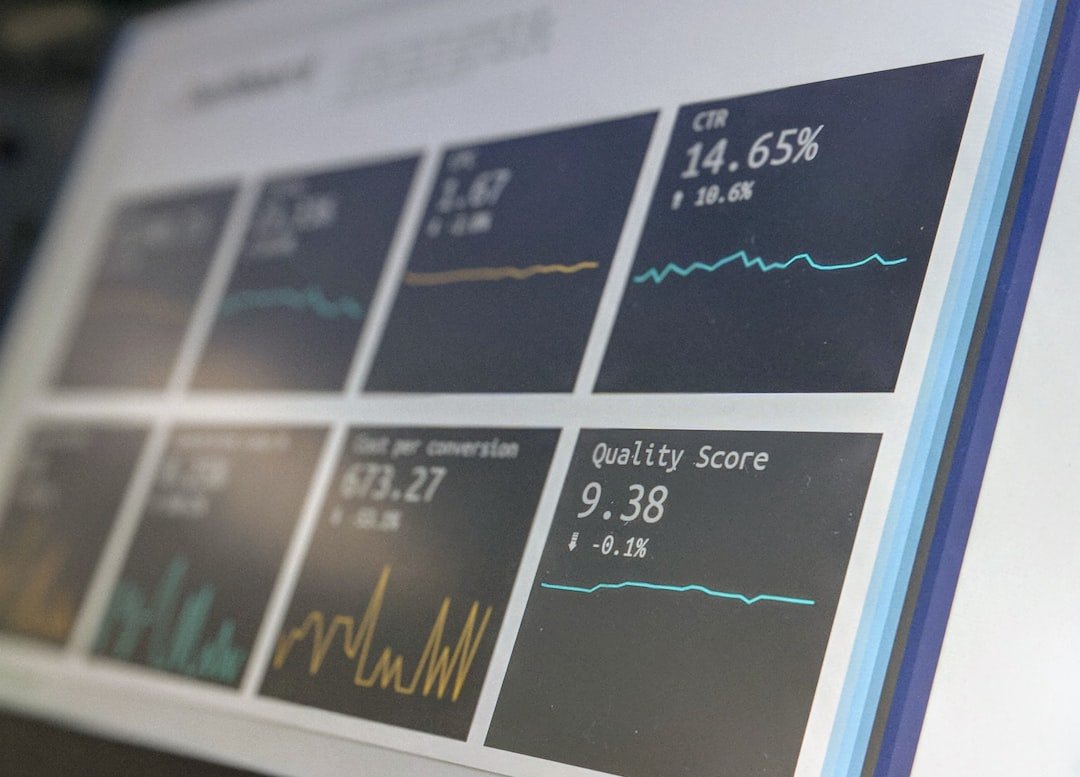
Many people can't tell the difference between Agent and ordinary conversational AI. In fact, the key depends on one thing: whether it can complete a multi-step process by itself. The working method of ordinary chat AI is one question and one answer. You ask a question and it answers a question. You need to push it personally in each round. It will not remember a long-term goal and take the initiative to do it. The difference with Agent is that after you give it a relatively complete goal, it will break the big goal into several small steps, and then complete them one by one. When it encounters the need to look up information, do calculations, or operate a certain software, it will call the corresponding tool instead of stopping and waiting for your instructions. For example, a normal chat AI is like a person who gives you directions when asking for directions, while an Agent is more like a driver who drives you directly to your destination. Of course, this analogy should not be taken too seriously. At this stage, Agent drivers often drive on the wrong road and require you to keep an eye on them. This will be discussed later. But from a design perspective, being able to plan and call tools by yourself is the most significant sign of Agent.
How does it plan and call tools by itself?

If you are curious about how Agent works internally, you can use a simplified loop to understand it. It first takes a look at the current goal and the information at hand. This step can be called thinking or planning, and it will determine what to do next. Then it chooses an appropriate action, which may be to search the web, may be to call a calculator, may be to read and write a file, or may be to access the interface of an application. This step is to call a tool. After the tool returns the results, it goes back to the first step to re-evaluate to see if it is closer to the target and whether it needs to adjust the direction, and then continues with the next round. This cycle of observation, thinking, and action will be repeated until it thinks the task is completed or it can no longer be done. The so-called tools can be search engines, code running environments, interfaces to various software, or even another AI. It is precisely because it can be connected to these external tools that Agent breaks through the limitation of the language model itself that can only generate text, and truly has the ability to change the state of the real world, such as helping you actually send an email instead of just writing a draft of the email.
Scenario 1 for ordinary people: Help you automatically look up information and do research
For most people, one of the easiest and most practical scenarios for Agent is to look up information and do research. In the past, if you wanted to learn about an unfamiliar topic, you had to open your browser, search for keywords one by one, click on more than a dozen web pages, and then manually extract the useful information and put it together. The whole process was time-consuming and easy to see. Agents with Internet search capabilities can take over this part of the physical work. As long as you explain the problem clearly, for example, help me understand whether a certain city is suitable for retirement, it will search multiple sources on its own, browse different web pages, summarize the scattered information into a relatively complete summary, and list the places it refers to. This is especially worry-free when preparing travel strategies, comparing several products, or learning about an unfamiliar field. However, a word of warning here is that the content compiled by the Agent is not always accurate. It may treat outdated information as the latest, or it may make mistakes in details. Therefore, you must double-check the information involving important decisions by yourself. It is more appropriate to use it as a diligent but occasionally sloppy intern.
Ordinary person scenario 2: Help you book your itinerary and arrange your schedule
Travel planning is another repeatedly mentioned Agent application direction. For a slightly more complicated trip, you need to check transportation, compare hotels, arrange attractions, and calculate time. There are many links and they are all interrelated. Just gathering all this information is enough to give people a headache. Theoretically, you can tell the Agent your starting point, destination, approximate budget and preferences, and let it help you put together a preliminary itinerary framework, including recommended routes, possible accommodation areas and rough daily arrangements. The idea is similar when it comes to schedule management. You can let it help you plan a relatively reasonable schedule based on your to-do items and existing arrangements, or automatically help you register when you receive a new appointment. What needs to be objectively explained is that currently there are relatively few mature products that can actually help you complete the entire set of booking and payment end-to-end. Most of the time, the Agent plays the role of coming up with solutions. In the end, you still need to confirm the actual ordering and payment. This is both a technical limitation and a reasonable design for security reasons.
Scene 3 for ordinary people: Help you process forms and documents
For many office workers, a considerable amount of time is spent on forms and documents every day, and this is exactly where Agent is good at helping. Some agents with the ability to read and write files and run codes can process structured data according to your requirements, such as rearranging a messy table according to certain rules, counting summary data of certain columns, or filtering out qualified parts from a pile of records. You just need to describe your requirements clearly in everyday language. You don't need to write formulas or type code yourself. It will call calculation tools behind the scenes to help you calculate and give you the results. In terms of documentation, it can help you condense a long report into key points, organize scattered notes into an organized outline, or generate a first draft according to the template you provide. This kind of work can really save you a lot of time in mechanical repetition. Of course, the more it involves the processing of numbers and facts, the more attention must be paid to checking. AI will occasionally make mistakes in calculation and classification, and it is always right to take another look at the key data yourself.
Ordinary Scene 4: Helping you automatically reply and handle trivial matters
There is also a scenario where Agent is used for repetitive and trivial daily tasks, such as preliminary processing of messages and emails. Imagine that an Agent helps you roughly classify the incoming emails, picks out the ones that are obviously advertisements, marks the important ones, and then drafts responses to some general inquiries and puts them there for you to review. This way, the burden on you to deal with your inbox is much lighter. In some customer service and consultation scenarios, the prototype of this kind of automatic response can already be seen. It can handle a considerable number of standardized common questions and transfer truly complex matters to humans. For individual users, leaving some small tasks with fixed processes to the Agent can indeed free up energy. But there is a boundary that needs to be guarded. Any content that represents your voice to the outside world, especially messages that are replied to others, is best to be confirmed by yourself before sending it out. After all, AI will occasionally have misunderstandings or inappropriate wording, so it is still risky to let it fully automatically communicate with people for you.
How mature is your current level? Don’t deify or underestimate it.
After talking about so many things that can be done, I have to pour some cold water on everyone and clarify the true level of Agent at this stage to avoid having too high expectations. A more pertinent point of view is that today’s Agent is at a stage where it is usable but not stable enough. It performs well on tasks with clear steps and clear rules, but once the task becomes complex and requires multi-step continuous decision-making, its probability of making an error will increase significantly, and it often does not realize it when it makes an error, and will give you the wrong result in a serious manner. It may also deviate from your original intention midway and become more and more crooked. Therefore, the more realistic usage now is human-machine cooperation, allowing the Agent to do the tedious physical work and prepare plans and drafts, while the judgment, control and final decision-making are still controlled by humans. Think of it as a newcomer who has good abilities but still needs to be brought up. Don't expect it to be on its own, and don't completely deny its value just because it occasionally makes mistakes. Only by finding this balance can you really make good use of it.
How do ordinary people get started? Start with existing products.
For ordinary people who want to try Agent, the threshold is actually lower than expected, because many ready-made products have already packaged these capabilities. Currently, most of the mainstream large-model dialogue products on the market have added agent-like functions such as online search, reading and writing documents, and performing multi-step tasks. You may have experienced it inadvertently while using them. The suggestion to get started is to start with low-risk, verifiable small tasks, such as asking it to help you check a piece of information, organize a paragraph of text, or make a simple table. Even if it does these tasks wrong, you can tell at a glance and the loss will be small. After you slowly figure out what it is good at and where it easily stumbles, then gradually give it more complicated tasks. A useful habit is to be as specific as possible about your requirements and constraints. The clearer your goal is, the lower the chance it will go astray. It should be noted that the specific functions and openness of different products are different, and they are updated very quickly. It is recommended to refer to the actual description of the product you are using. I will not go into naming what a certain product can do here.
Limitations and risks, don’t be fully managed
Finally, we must seriously talk about risks. This part is more worthy of ordinary people keeping in mind than what can be done. The first is the issue of accuracy. The Agent will seriously say the wrong thing or calculate the wrong number, which is often called an illusion. For important information and decisions, one cannot blindly trust its output. The second is the risk brought by its execution of actions. Because the Agent can actually operate, send, and submit, once it misunderstands your intention, it will not only cause a wrong text, but may also cause actual consequences such as sending the wrong message or modifying the file. Therefore, manual confirmation must be retained for links involving money, external communication, and irrevocable operations. The third issue is privacy. When using an Agent, you often need to give it permission to access your information, account or various data. Before authorizing, think clearly about what sensitive information it will be exposed to, and give it as little permission as possible. In the final analysis, the safest attitude toward Agent at this stage is not to take full custody of it, but to treat it as a powerful assistant that needs to be watched. The important steering wheel is still in your own hands.
FAQ
Are AI Agent and chat AI like ChatGPT the same thing?
Not exactly. Chat AI mainly generates text based on questions and answers, while Agent emphasizes the ability to plan steps, call tools, and perform tasks around a goal. However, the boundaries between the two are becoming blurred. Now many conversational products themselves are gradually adding Agent capabilities. It can be understood that Agent is a step forward based on chat AI.
Do ordinary people need to know programming to use Agent now?
Usually not required. Most Agent products for ordinary users support describing needs in everyday language. You just need to state clearly what you want to do, and it will do everything behind the scenes such as calling tools and running code. Of course, the more specific and clear the requirements are, the better the results will be.
Can the AI Agent completely complete the matter for me without my having to worry about it?
It is not yet possible to achieve full automation with confidence. Agent is still prone to making mistakes in complex tasks and is unaware of it. A more realistic usage is to cooperate with humans and machines, allowing it to do tedious preparation work, while the key links of judgment and final confirmation are still controlled by humans, especially operations involving money and external communication.
Can I trust the information I checked using Agent?
It is not recommended to trust them directly. The Agent may treat outdated information as the latest, or it may make mistakes in details or even make it up out of thin air, so the information it compiles is suitable as a starting point for reference. Content involving important decisions must be double-checked by the source to confirm.
What are the risks that need to be paid attention to when using AI Agent?
There are three main categories. The first is that the output may be inaccurate and create illusions. The second is that it will actually perform the operation. If it is misunderstood, it will cause practical consequences such as sending wrong messages or modifying files. The third is privacy issues. When authorizing, pay attention to what sensitive data it will come into contact with. In principle, no full custody is required, and manual confirmation is reserved for important links.
📝 本文来自抖文 www.douwen.me ,转载请保留出处。
原文链接:https://www.douwen.me/archives/1336/
💬 评论 (7)
Easy to follow.
Sharing this with my team.
Practical tips not fluff.
Step-by-step is gold.
Loved the FAQ section.
Bookmarked for reference.
Great resource.