What is AI hallucination? Why does AI talk nonsense in 2026?
What is AI hallucination? Why does AI talk nonsense in 2026?
If you have used chat AI, you have most likely encountered this scenario: you ask a question, and it gives a clear, professionally worded answer with a tone that is so sure that no one can doubt it. However, after checking, the content is wrong, and even the person, book, and research cited by it does not exist at all. There is a special term for this phenomenon called AI hallucination. It refers to the large language model that generates content that seems reasonable and fluent, but is actually inconsistent with the facts or is purely fictitious. The hallucination is not an occasional convulsion of the model, but an inherent characteristic of the way this type of technology works. Understanding why it happens is a lesson that almost everyone who uses AI tools in 2026 should learn.
What exactly does AI hallucination refer to?
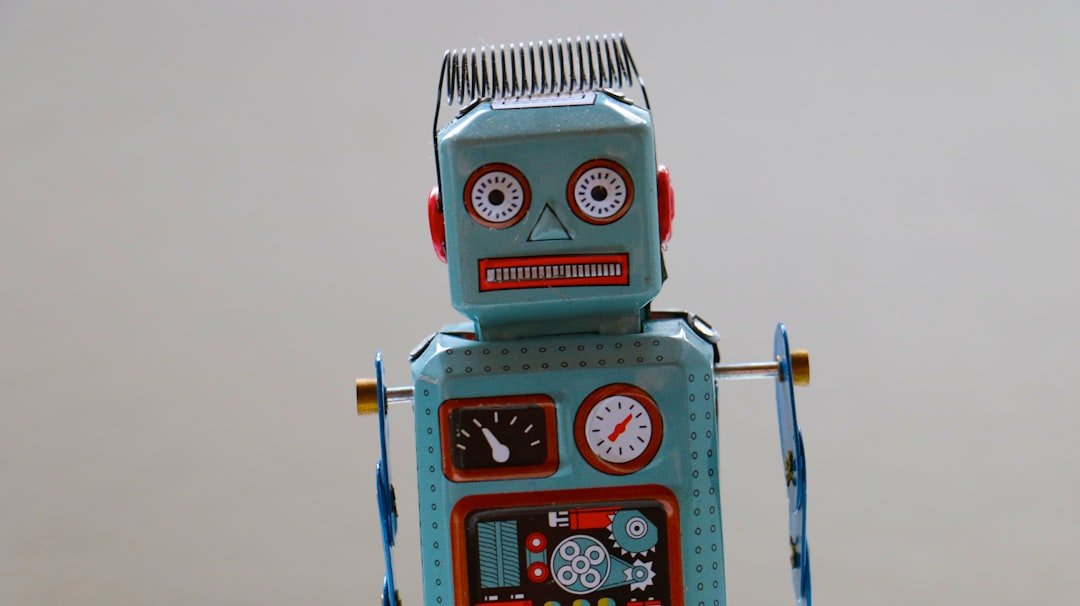
Simply put, hallucination is when AI generates content that it cannot verify without reliable basis, but expresses it in a very confident tone. It may make up a legal clause that does not exist, make up a famous quote, fabricate the title and author of a paper, or splice two unrelated things into a causal chain that sounds reasonable. Unlike human lies, AI does not intentionally lie to you. It has no intention of deceiving and does not know that it is wrong. It is just outputting words in the way it was designed, and that way naturally allows fabrication to occur. The reason why researchers use the term hallucination is that models sometimes paint lifelike but unreal pictures in the air, just like people who experience hallucinations. The terrible thing is that these contents are often mixed with real information, which is a mixture of true and false, making it difficult to distinguish at a glance.
Why it happens: It's predicting the next word

To understand the origin of hallucinations, we must first understand what the big language model is doing. Many people think that AI is like a search engine. It first looks up the answer in a database and then tells you. In fact, it is not at all. The core working mechanism of large language models is to predict the next word. After training on massive texts, it learns a statistical rule: given the previous string of text, which word is most likely to appear next. It then takes that word and predicts the next word based on that, generating the entire paragraph one after another. In other words, every sentence it outputs is essentially a probabilistic solitaire rather than a retrieval of facts. This explains a key issue: the model pursues fluency and reasonableness in language, rather than truth and accuracy in content. When the real answer to a question is not sufficient in its training data, or does not exist at all, it will not stop and say I don't know, but will continue to complete a piece of text that sounds right based on probability. Thus, a smooth, self-consistent, but completely fictitious answer was born.
Why does the fabricated content sound so believable?

This is where AI hallucinations are most dangerous. Humans often show timidity when lying, hesitate in tone, and have flaws in logic, but AI has no psychological burden when making up content. Its writing is still neat, its grammar is still standard, and its structure is still complete. Because the model originally imitates the expression of high-quality human text, it can speak clearly and logically regardless of whether the content is true or false. A fictional research conclusion, it will be equipped with seemingly professional terminology; a non-existent character, it will be given the year of birth and death and representative works; a made-up history, it will be arranged with time, place and causes and consequences. This formal sophistication makes it easy to let down your guard. Our brains have a habit of defaulting to content that is expressed fluently and confidently as reliable content, and AI happens to take fluency and confidence to the extreme. The result is that the more critical the information is and the more unfamiliar it is to us, the easier it is for us to be led away by its serious tone, and instead we lose the vigilance of verification.
In which scenarios are hallucinations most likely to occur?
Hallucinations are not evenly distributed and have obvious high-incidence areas. The first type is unpopular and detailed facts, such as the specific life of a niche figure, the precise terms of a certain policy, and what page of a certain book is written. This information is either scarce or missing in the training data, and the model can only rely on guessing. The second category is scenarios that require precise citations. Typically, AI is asked to give references, paper links, and legal case numbers. It often generates sources that are perfectly formatted but do not exist at all. The third category is numbers and calculations. When it comes to statistical data, financial figures, and year correspondence, the model is easy to be ignored. The fourth category is time-sensitive content. The model’s knowledge stays at the end of training time, and it either doesn’t know what happens after that, or it uses old information to make up for it. The fifth category is when your question itself has a wrong premise. For example, if you ask a scientist how to evaluate something he has never touched upon, the model will often not correct you, but will instead compile an answer based on your assumptions. By recognizing these high-risk areas, you can be more vigilant when you should be most vigilant.
Why is this problem still not solved in 2026?
Many people will ask, if technology is developing so fast, why will AI still talk nonsense in 2026? The reason is that hallucinations and the power of large language models are two sides of the same coin. The reason why a model can write poetry, complete codes, and give creative answers to unseen questions depends on its ability to generate new content from probability, and this generation ability itself contains the possibility of fabrication. Research has generally pointed out that it is extremely difficult to completely eliminate illusions under the current technical framework. It is difficult to create it in a wild and unrestrained manner, and at the same time, it is difficult to make up not a word. In recent years, the industry has indeed used some methods to alleviate the problem, such as letting the model retrieve real information before answering, or training the model to be more inclined to admit that it does not know when it is uncertain. These methods can reduce the frequency of hallucinations, but they usually cannot eliminate them. Therefore, a more realistic attitude is to regard hallucinations as an inherent risk that needs to be lived with for a long time, rather than a temporary glitch that is waiting to be completely solved one day.
How to tell if AI might be talking nonsense
Although there is no cure, identifying hallucinations is an ability that can be practiced. One of the most practical signals is specific and verifiable hard information. Whenever AI gives exact names of people, book titles, dates, data, links, and article numbers, you should treat it as an item to be verified rather than a known fact. The second sign is overconfidence and too much detail. When an answer has too many details that are unnatural and fluent and does not look like thinking, it is worth paying more attention. The third method is cross-validation. Ask the same question again in a different way. If the two answers do not match the key facts, it means that at least one of them is edited. The fourth is to directly ask the source and ask it what the source of this statement is. If the source it gives cannot withstand the search engine inspection, it can basically be determined to be an illusion. The last and most important point is that when it comes to high-risk fields such as medical care, law, finance, and academia, no matter how reasonable what AI says makes sense, you must go back to authoritative channels to verify it yourself, and use AI as an assistant to prompt ideas, rather than the end point of the conclusion.
Several practical ways to reduce hallucinations using cue words
In addition to checking afterward, you can proactively reduce hallucinations during the questioning phase. First, clearly give it a retreat in the prompt word, and tell it to just say it doesn’t know if it’s not sure, and don’t make it up. This sentence can often make the model converge a lot when it’s unsure. Second, directly paste the real information you have to it, and let it answer based on the materials you provide instead of answering from memory. This can greatly reduce its room for free expression. Third, let it reason step by step, requiring it to list the basis first and then give a conclusion. This spreads out the thinking process and makes errors more likely to be exposed. Fourth, it is required to indicate the degree of confidence and indicate whether each key statement is certain or speculative. Fifth, avoid embedding false premises in a question. Try to be neutral when asking questions, and do not induce it to follow your assumptions. None of these methods are complicated, but their combination can significantly improve the reliability of the answer. What needs to be emphasized is that they reduce the probability, not reduce the risk to zero.
How many problems can search enhancements and tool calls solve?
One of the more mainstream mitigation ideas in 2026 is to make the model no longer rely solely on memory, but to call external tools before answering. The most common one is retrieval enhancement. After the model receives a question, it first searches for relevant information in the knowledge base or the Internet, and then uses the searched content as a basis to organize the answer, so that what it says has a traceable source. There is also the practice of letting the model call the calculator to process numbers and call the code execution environment to verify the logic, handing over precise tasks that it is not good at to deterministic tools. Such schemes do significantly reduce certain types of hallucinations, especially factual queries and numerical computations. But it is not omnipotent. If the retrieved data itself is inaccurate, or the model incorporates its own imagination when integrating the data, hallucinations will still occur, but in a more covert form. Therefore, even if you use Internet search AI, when you see the source link attached to it, it is worth clicking in to confirm it, rather than being completely relieved when you see a reference.
How to treat AI hallucinations rationally
Having said so many risks, I am not trying to persuade you not to use AI, but I hope you will use it more clearly. Illusion is a characteristic of this technology at this stage, and understanding it will allow you to use it better. A mature usage mentality is to position AI as a knowledgeable but occasionally blundering assistant. It can help you open up ideas, draft frameworks, provide inspiration, and organize expressions. It can do these things quickly and well. However, in the links where you really need to be responsible for accuracy, such as verifying facts, citing sources, and making key decisions, the initiative must be firmly in your own hands. Looking at it from another perspective, the AI illusion is also reminding us of a more fundamental thing: in an era where content is increasingly easily generated in batches, the ability to make independent judgments and verifications has become a rarer and more valuable quality than ever before. Tools will continue to evolve, and illusions may become less and less common, but people should remain cautious about information, which will probably never go out of style.
FAQ
Is AI hallucination deliberately deceiving?
no. The AI has no intention to deceive and does not realize that it has made a mistake. It only generates text by predicting the next word, and pursues reasonable fluency in language rather than truth in content. When the real information is insufficient, it will use probability to complete the answer, so it makes it up. This is due to the mechanism, not subjective malice.
Is it true that the more powerful the AI, the less likely it is to produce hallucinations?
It cannot be said simply. Stronger models are indeed more accurate in many tasks, but the ability to generate and fabricate are of the same origin, and research generally points out that hallucinations are difficult to completely eliminate. Sometimes the stronger the model, the more likely the lie is to be true, making it more difficult to distinguish. Therefore, no matter how strong the model is, the habit of verification cannot be lost.
Will the AI that searches the Internet stop talking nonsense?
will be reduced, but cannot be completely avoided. Retrieval enhancement gives answers a traceable source, significantly reducing factual illusions. But if the collected data itself is wrong, or if imagination is added to the model during integration, hallucinations will still occur. When you see a source link, it is best to click on it to confirm it, rather than just rest assured when you see a citation.
How can I quickly determine whether an AI answer is an illusion?
Focus on verifiable hard information, such as names, dates, data, sources, and links, and treat them as items to be verified. You can change the way of asking and ask again to see if it is consistent, or you can directly ask the source and then check with the search engine. When it comes to high-risk areas such as medical, legal and financial matters, no matter how reasonable your claims are, you must go back to authoritative channels and confirm them in person.
How to reduce AI fabrication when writing prompt words
You can tell it when asking questions that if you are not sure, just say you don't know and don't make it up; post real information directly to it and let it answer based on the material; ask it to list the basis before drawing a conclusion; let it mark whether each statement is confirmed or speculated; ask questions as neutral as possible, and don't bury false premises to induce it. These methods can reduce the probability, but they cannot reduce the risk to zero.
📝 本文来自抖文 www.douwen.me ,转载请保留出处。
原文链接:https://www.douwen.me/archives/1330/
💬 评论 (7)
Practical tips not fluff.
Loved the FAQ section.
Solid breakdown, very useful.
Sharing this with my team.
Clear and to the point.
Step-by-step is gold.
Bookmarked for reference.