Complete tutorial on AI resume optimization, 6 steps for 2026 job seekers to create a screening resume
Complete tutorial on AI resume optimization, 6 steps for 2026 job seekers to create a screening resume
It is something that almost every job seeker has experienced before submitting dozens of resumes only to receive no results. Many people think that they are not capable enough. In fact, the problem is often that their resumes are not seen at all. Nowadays, a large number of companies use resume screening systems in the recruitment process. Resumes must first pass through the machine before they have a chance to reach HR. Learn to use AI tools to optimize your resume in a targeted manner, which can not only save time on repeated revisions, but also make the content more suitable for the job requirements. This tutorial will break down the entire process into six steps, from principles to specific operations, to help you transform an ordinary resume into a version that can stably pass the preliminary screening.
Why job hunting in 2026 requires more use of AI to modify resumes
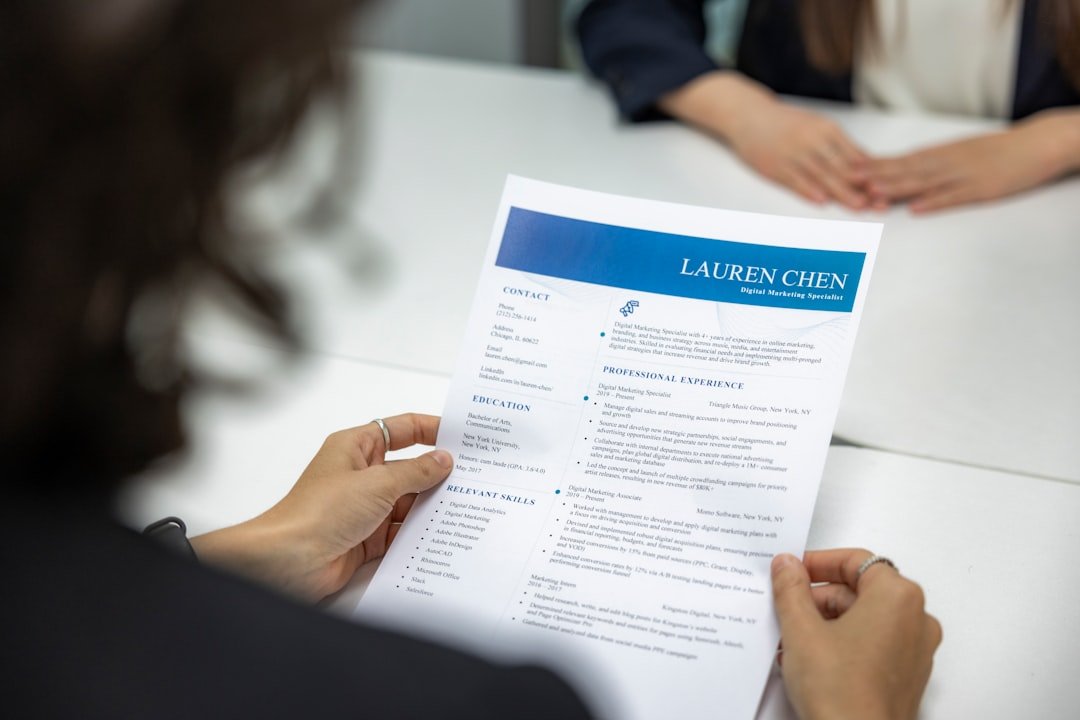
The resume playing field is completely different than it was ten years ago. It is normal for a popular position to receive hundreds or thousands of resumes. It is impossible for HR to read every resume word for word, so machine screening has become a common practice. This means that your resume must first be read by the algorithm and hit by keywords, and then it is people’s turn to judge. Relying on manual adjustment sentence by sentence is slow and easy to miss the core words in the job requirements.
The value of AI tools is that it can quickly understand the semantics of a job description, extract the abilities that the position really values, and then help you map these points to your own experience. It does not make up your experience for you, but helps you reorganize your existing work content into language that is more accurate and suitable for the position. First, it can check and fill vacancies according to job requirements within a few minutes; second, it can rewrite colloquial, journal-style descriptions into clearly structured performance statements; third, it can quickly generate multiple customized versions for different positions. For job seekers, this is equivalent to having an additional writing assistant who is on call and understands recruitment logic.
How does an resume screening system (ATS) work?

ATS is the common name for resume screening and management systems in the recruitment field. Many medium and large enterprises and recruitment platforms are using similar systems to manage massive resumes. Its core logic is not mysterious: the system will first parse the resume file you uploaded into plain text, identify fields such as name, contact information, work experience, skills, etc., and then match and sort according to the keywords and conditions set by the recruiter.
Understanding this mechanism, you can understand why some resumes cannot advance to the next round even though they have good content. The first common situation is that the file format causes system parsing errors. For example, if key information is put into pictures, tables, or text boxes, and the machine cannot read it, it means that it was not written. The second type is keyword mismatch. Skill words that appear repeatedly in job requirements do not appear in your resume, so the matching score will naturally be low. The third type is a confusing structure. The system cannot find clear "work experience" and "educational background" partitions, and it is easy to misalign during analysis. It should be noted that the system parsing capabilities of different manufacturers are different, and the specific performance depends on the actual platform you deliver to, but the above general principles are true in most systems. Making your resume easy for machines to read is the first prerequisite for screening.
Step 1: Feed the job description of the target position to AI for analysis

The starting point for optimization is not to change your resume, but to understand the position first. Copy the complete description of the job you want to apply for, give it to AI, and let it help you break down what this position really cares about. A job description is usually mixed with company introduction, job responsibilities, job requirements, and bonus points. What you need is to filter out the frequently occurring hard skills, soft skills, and keywords.
You can ask AI to help: ask it to list the core skill words that appear in the job description and sort them by importance; ask it to point out which are the hard conditions that must be met and which are the icing on the cake; and then ask it to summarize the two or three ability directions that are most important to this position. After completing this step, you will have a clear "scoring standard" in your hand. When you next change your resume, all adjustments should be based on this standard, rather than piling up content based on your feelings. Many people skip this step and start writing directly. As a result, after a long time of revision, they still haven't touched the heart of the recruiter. Analyzing first and then taking action is the most easily overlooked but most critical link in the entire process.
Step 2: Use AI to extract keyword gaps in your own experience
With the keyword list for the position in hand, the next step is to compare it with your existing resume to identify gaps. Submit your current resume text and the job keywords sorted out in the previous step to AI, and ask it to do a matching check: which job requirements have already been reflected in your resume, which ones you have actually done but not mentioned in your resume, and which ones you really don't have.
This comparison will expose two typical types of problems. One type is "done but not written". You obviously have relevant experience, but you missed it because you didn't realize its value when you wrote your resume. This part needs to be made up. The other type is "wrong words". You write the way you are used to it, but the position uses a different set of terms with similar meanings but the machine cannot match it. This part needs to be replaced with synonyms to move closer to the wording of the position. Pay special attention to a red line: only add things you have actually done, and never make up experiences just to make up keywords. AI can help you express yourself in a more professional way, but the underlying facts must be true. Revealing the truth as soon as you ask in the interview will harm yourself.
Step 3: Rewrite each experience in a results-oriented way
The most common mistake in resumes is to write work experience as a list of responsibilities. Sentences such as "responsible for backend development" and "participate in project management" only explain what you do, but they do not explain how well you do it and what results you bring. What recruiters really want to see is results, and AI can help you rewrite bland job descriptions into persuasive performance statements at this step.
A useful rewriting framework is: what was done, how it was done, and what quantifiable or perceptible results it brought. For example, "responsible for optimizing system performance" was changed to "by reconstructing the core query logic, significantly shortening the page loading time and improving the smoothness of user operations." If you have real numbers at hand, such as efficiency improvement, number of users covered, and time saved, try to bring them with you. Numbers are the most convincing. But we must also stick to the bottom line. Don't make up data that you don't have. You can use real qualitative descriptions such as "significant" and "significant improvement" instead. You can ask AI to help you rewrite all your experience items according to this framework at once, and then you can check them one by one to ensure that every sentence is tenable. After completing this step, the quality of your resume will be visibly improved.
Step 4: Adjust the structure and format so that both machines and humans can read it smoothly
After the content is polished, you have to go back and deal with the structure and format. As mentioned before, the resume screening system is very sensitive to format, so this step is not only to pass the machine, but also to make it comfortable for real people to read. The basic principles are to have a clear structure, clear divisions, and avoid being fancy.
Specifically, the resume is divided into several standard modules, such as personal information, job search intention, work experience, project experience, skills, and educational background. Each module is separated by a clear title so that the system can accurately identify the fields. Work experience is arranged in reverse chronological order, with the most recent at the top. In the skills section, naturally incorporate job keywords, but do not pile them into long meaningless strings. In terms of format, try to use a simple single-column layout, and use complex tables, text boxes, and pictures with caution to carry key information, because these elements are prone to errors during parsing. In terms of file format, check the platform requirements before submitting. Common plain text formats are usually the safest to parse. You can ask AI to help you check whether the overall structure is complete and whether common modules are missing. However, it is recommended that you confirm the final layout in the editor yourself. After all, visual effects machines cannot judge.
Step 5: Write prompt words to make the AI output truly usable
For the same AI tool, whether the prompt words are well written or not has a huge difference in the quality of the output. Many people casually say "help me change my resume", and the results they get are general and useless. If you want AI to give available modifications, the prompt word must clearly explain four things: what is your target position, what is your original content, how do you want it to be modified, and what format do you want it to be output to.
A relatively complete prompt word has roughly the following structure: first describe the role, such as "You are a resume consultant who is familiar with recruitment screening logic"; then give the full text of the position description; then paste the resume content or a certain period of experience you want to optimize; then put forward specific requirements, such as "Please focus on the core skills of this position, rewrite each experience into a result-oriented expression, keep the real facts, do not make up numbers"; finally specify the output form, such as listing it in items. If the changes are not in place the first time, continue to ask questions, tell them what they are not satisfied with, and which direction they want to change. Treat the conversation as a process of repeated polishing with a real consultant. Treat prompt words as an iterative skill to practice, and you will find that the output of AI is getting closer and closer to what you want.
Step 6: Make customized fine-tuning for different positions
When applying for a job, you rarely only apply for one position, and different positions value different things. Using the same resume to mass-apply everywhere is a big taboo. The sixth step, which is also the final step, is to make light customization for each target position based on the "master resume" prepared previously. This step will be much easier with the help of AI.
The method is to keep a main resume with the most complete content. When submitting a certain position, give the job description and the main resume to the AI, and ask it to readjust it according to the focus of the position: bring the most relevant experience to the front, enlarge the length, compress or hide the less relevant content, and then naturally add the core keywords of the position to the corresponding position. For example, with the same product-related experience, for a data-oriented position you would highlight the data analysis you have done, and for an operations-oriented position you would highlight growth and user-side results. One version is generated for each position, and you read it through again before submitting it to make sure that there are no obvious mistakes, such as omitting to change the name of the previous company. Customization may seem troublesome, but it is the key to turning "missing" into "accurate hitting".
Some of the easiest pitfalls when using AI to change your resume
Tools are helpful if used well, but they can be detrimental if used incorrectly. The first pitfall is over-reliance on gorgeous rhetoric generated by AI. Writing a resume in such a cluttered and empty way that real people can tell it is a cliché at a glance will only reduce your points. The second pitfall is making up experience or numbers in order to match keywords. This is an absolute red line. You may be able to get past the initial screening, but you will definitely be exposed during the interview. The third pitfall is the rigid stacking of keywords. Some people insert the words from the job requirements into a corner of the resume intact. It does not read smoothly and neither the system nor the real people buy it. The keywords must be naturally integrated into the real experience description.
The fourth pitfall is to ignore the human reading experience and only think about machines. As a result, the resume is dry and has no focus, and a real person will not be interested in it. Remember that machine screening is only the first step, and it is people who ultimately decide whether you can get interviewed. The fifth pitfall is to directly copy the AI output without checking it after modification. There may be factual errors, residual job titles, inconsistent tone and other issues. The safest way to use it is to use AI as an assistant to improve efficiency rather than as a ghostwriter. You have to go through all the content yourself to ensure that every sentence is true, accurate, and that you can explain it clearly in the interview. Stick to the line of "reality" and AI will be your reliable helper on the road to job hunting.
FAQ
Will using AI to change your resume be discovered by the recruiter and result in points being deducted?
What the recruiter cares about is whether the content of the resume is true and suitable for the position, not what tool you used to write it. As long as what you use AI to optimize is the expression of real experiences and not fabricated, there will be no problem at all. What needs to be avoided is to directly copy the empty clichés generated by AI. The same tone can easily turn people off, so you must polish it again after production to retain your true personal expression.
Which AI tools are suitable for optimizing resumes
General-purpose large language models such as ChatGPT and Claude have the ability to understand job descriptions, rewrite text, and compare keywords, which are enough to complete most of the work of resume optimization. There are also some tools on the market that specialize in creating resumes. Don't worry when choosing. The key is whether it can understand the job requirements and whether it can be rewritten according to your instructions. Whether and how much these tools charge are subject to the official public page.
Is the more keywords AI can add for me, the better?
no. The function of keywords is to make the resume match the job requirements, but stacking too many keywords will make the resume read awkwardly, which will not only affect the reading experience of real people, but may also be judged as abnormal by the system. The correct approach is to naturally integrate the core keywords of the position into your real experience description, so that it reads smoothly and can be recognized by machines. Quality is much more important than quantity.
Without the experience of eye-catching data, can AI help me write with a sense of achievement?
Yes, but only if you don't make up the numbers. If you really don’t have quantifiable data, AI can help you highlight your results in a qualitative way, such as explaining what problems you solved, what processes you improved, and what perceptible changes you brought about. This true qualitative description is equally convincing and far safer than hard-coding a false number. You can handle it calmly if you are questioned during the interview.
I submitted my revised resume but still no response, what’s the problem?
There may be several reasons. First check whether the resume has been customized for the position. A generic version sent out in bulk usually has a lower hit rate. Then confirm whether the format is easy for the system to parse and whether key information is hidden in pictures or complex tables. It also depends on whether your experience matches the job requirements. If the gap in hard conditions is large, it will be difficult to make up for it with optimized expression. It is recommended to review after each batch of applications you send out, continue to adjust based on feedback, and treat job hunting as a continuous iterative process.
At this point, the process has been explained, but a resume is never something that is written once and then finalized. It will slowly become more like the real you as you grow and with each submission.
📝 本文来自抖文 www.douwen.me ,转载请保留出处。
原文链接:https://www.douwen.me/archives/1300/
💬 评论 (9)
Bookmarked for reference.
Practical tips not fluff.
Loved the FAQ section.
Best summary I've read on this.
Easy to follow.
Stats really back it up.
Clear and to the point.
Solid breakdown, very useful.
Step-by-step is gold.