How do children learn in the AI era? 5 new education ideas for parents not to be anxious in 2026
How do children learn in the AI era? 5 new education ideas for parents not to be anxious in 2026
The hot topic among parent groups recently is no longer Mathematical Olympiad classes and online English courses, but whether ChatGPT will cause children to lose their learning ability from an early age. On one side are the "AI Enlightenment Courses" and "Prompt Word Training Camp" launched by the education and training market, and on the other side are the notices to parents issued by schools reminding them that "it is strictly prohibited to use AI to complete homework." Parents are being pulled from both sides, and their anxiety is multiplied, but no one is talking about the real questions that should be answered in the system.
This article attempts to break it down. A child's growth cycle lasts for more than ten years. Any short-term judgment is unreliable. What we should look at is the transfer and invariance of underlying abilities. From the real family samples observed in the past two years, we have sorted out five new ideas that parents can implement. They do not draw a big picture or create panic, but only talk about what is useful and what is not.
AI is not the opposite of education
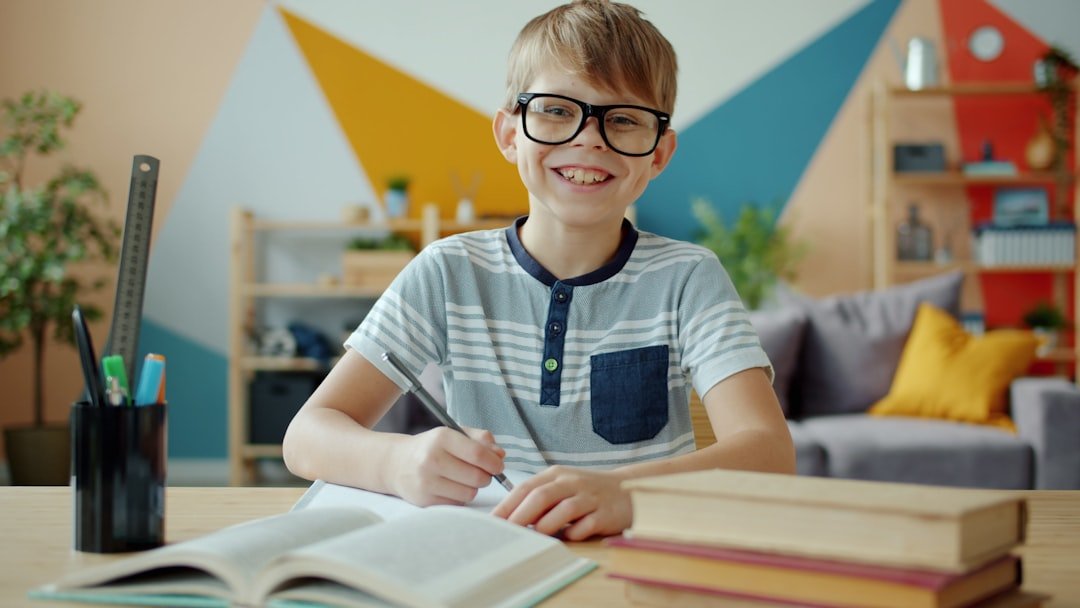
Parents' first concern is often "Whether their children's homework will be useless if they use AI to do their homework?" The logical premise of this worry is that the only function of homework is to train children's thinking ability, and AI ghostwriting is useless. But if you look carefully, the actual role of homework includes at least three levels: training basic abilities, testing mastery, and cultivating self-discipline habits. AI only bypasses the "training basic abilities" layer, and the children still need to complete the last two layers themselves.
By analogy, the popularity of calculators has not eliminated mathematics education, but has allowed mathematics classes to devote more time to logic and applications. There is a high probability that AI will play a similar role, liberating children from a large number of repetitive low-quality exercises and freeing up time for things with more transfer value. What parents should really think about is not "should we ban it?" but "how to redefine homework with teachers." Many schools are already advancing this dialogue.
The first idea is to think of AI as Socrates rather than an answer machine
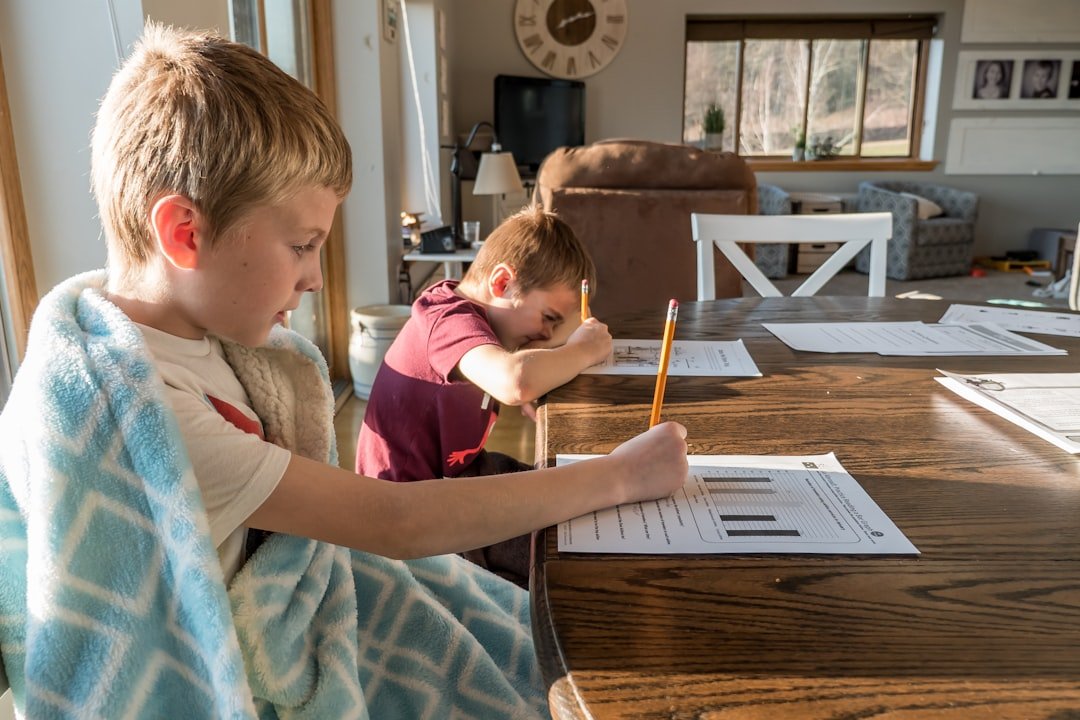
The most common misuse is to use AI as a source of quick answers, which will indeed make children lazier the more they use it. The correct way to use it is to think of it as Socrates and help children find the answers themselves through rhetorical questions. How to do it specifically? You can teach your children to develop two habits when using AI.
First, write the preliminary answer yourself first and then ask the AI for its evaluation, rather than asking the AI first and then copying it. Second, AI is required not to give answers directly, but to guide by asking questions. For example, replace "How to solve this problem" with "Use three questions to guide me to solve this problem myself." In this way, AI becomes a personal tutor that never gets bored, and parents can rest assured that their children's cognitive actions have not been bypassed.
The second idea is to focus on core capabilities that cannot be outsourced.
Which abilities cannot be replaced by AI in the short term? These are the areas in which children need to focus their investment. The first category is body perception and hands-on ability, such as painting, musical instruments, sports, cooking, repairing, and handicrafts. These are experiences that AI is highly unlikely to replace, and they have underlying significance for brain development.
The second category is real interpersonal interaction, emotion recognition, team collaboration, conflict resolution, and leadership. These can only be learned in the process of dealing with people and cannot be replaced by AI simulation. The third category is aesthetics and taste. How many museums have you seen, how many live concerts have you listened to, and how many literary works of different styles have you read? These will evolve into unique judgments later in life, which will never be replicated by AI.
Taking children's limited spare time away from repeated problem solving classes and investing it in these three types of abilities is the most worthwhile strategic adjustment for parents at the moment.
The third idea is to redesign the learning feedback loop
The feedback loop of traditional schools is "listen to lectures, do questions, test, and score", and the cycle is usually two to four weeks. The fundamental reason why this mechanism is not efficient is that by the time the child knows that he is wrong, a long time has passed and the memory and emotions have subsided. AI pushes the feedback loop into real-time.
If a child makes a mistake on a math problem, the AI can immediately explain the cause of the mistake. If writing an essay is not smooth enough, you can immediately ask AI to compare three rewriting ideas. To learn an English word, AI can instantly provide five contextual example sentences. This kind of "high-frequency small-particle feedback" promotes learning far more than the traditional "low-frequency large-particle feedback".
What parents can do is to teach their children to establish this workflow instead of completing it for their children. Once children get used to "asking AI when they don't understand something and letting it explain instead of giving answers", their learning autonomy will become stronger and stronger.
The fourth idea is that mathematics and reading are still the foundation
No matter how powerful AI becomes, the underlying status of mathematics and reading remains unchanged. Mathematics trains structured thinking, and reading trains understanding of others and the world. These two are the carrier of all other capabilities, spanning all eras and technological changes.
Specifically in the AI era, the importance of mathematics has even increased, because understanding how AI works and judging whether AI output is reasonable require mathematical intuition. It is difficult for a person who does not understand probability to judge how the sentence "AI said this will happen 70% of the time" is calculated. Reading is about independent judgment. In an environment of information overload and AI-generated content, the ability to identify positions, motivations, and unspoken assumptions from a piece of text is twice as valuable.
Parents should be firm in their investment in these two things and not be swayed by the argument that "if you already know how to use AI, why should you learn this?"
The fifth idea is to allow children to try out AI in low-risk scenarios
The most easily overlooked point is that parents themselves must first use AI and show it to their children naturally in life. Let the children see their father using AI to write work reports and their mother using AI to plan weekend trips. This kind of subtle influence is much more effective than signing up for a training class. If parents use it skillfully, their children will be more comfortable using it.
At the same time, provide children with a low-risk practice venue. It can be using AI to write a travelogue with your child, draw a family portrait, plan a birthday party, or research a topic that interests your child. There are no consequences if these scenarios are wrong, but they can allow children to build muscle memory for cooperation with AI during their attempts. By the time the child actually enters the learning scene, he already knows where AI should be used and where it should not be used.
Does the school still want to send it?
This is the most specific question parents have. The short-term answer is: you still have to send it, but the criteria for choosing a school should change. Prioritize a few things. The first is the school's attitude towards AI. Schools that adopt a "complete ban" may seem strict in the short term, but will make children disconnect from their peers in the long term. Enlightened schools will explore ways to "let students use AI under supervision." The second is the proportion of project-based learning. What really cultivates ability is doing projects. The proportion of problem solving classes and rote memorization is getting lower and lower.
The third is to pay attention to the teacher-student ratio and the quality of teachers. In the AI era, excellent teachers are not knowledge transmitters, but play a role in stimulating interest, guiding thinking, and providing emotional support. These AI cannot replace them at all. The core value of the school has shifted from "teaching knowledge" to "nurturing people". This is the direction of change.
Will the college entrance examination be changed?
The college entrance examination will not be fundamentally changed in the short term, because it assumes the function of fair selection in society, and there is no more stable replacement for this set of functions than the "unified standardized examination". However, the content will be adjusted, and the questions will be more and more biased towards capabilities that are "difficult to replace with AI", including open-ended writing, interdisciplinary synthesis, and real-life situation application questions.
Parents don’t need to bet on which exam format will appear. As long as their children’s basic abilities are solidly developed, they won’t lose too many points in any form of exam. On the other hand, if you only focus on test-taking skills without practicing the underlying skills, the uncertainty of the AI era will make the return on investment lower and lower.
What the parents of this generation need to do is to learn with their children
The last one, and probably the hardest to do, is accepting that your parents are no longer omniscient. No generation of adults can keep up with the speed of knowledge updating in the AI era. What parents can do is not "I know the answer, let's learn from me", but "I don't understand everything, let's learn together".
This kind of equal learning relationship can give children a real sense of security. They don’t need to pretend that their parents know everything. They can freely admit that they know more than their parents in certain areas, and their parents will not be anxious about it. The family has changed from an "education site" to a "joint exploration base". This is the most worthy role change for parents to try in the AI era.
FAQ
At what age is it appropriate to start exposing children to AI?
There is no unified answer, but it is not recommended to let children use AI alone before the age of ten. What this age group needs more is real-world interaction, physical perception development, and parent-child companionship. After the age of ten, you can gradually try it with the company of your parents. The junior high school stage is a critical period for establishing a workflow. The specific pace depends on the child's maturity, and don't be coerced by comparisons around you.
How to prevent children from being confused by using AI to write homework
The most effective way is not to ban, but to design inspection links that cannot be avoided. For example, after a child hands in his homework, you randomly select questions and ask him to explain his ideas for solving the problems orally. AI can write answers, but it cannot replace children’s verbal expression and real-time thinking. After doing this kind of "reply" check a few times, the child will naturally know that it can't be fooled.
Is it worth enrolling in the AI enlightenment course?
It depends on the course content. If it is to teach prompt word templates and specific tool operations, it is of little significance. These tools are changed every year. If it teaches how to use AI to guide thinking, how to judge whether AI output is right or wrong, and how to use AI to do projects, this kind of class is valuable. Read the syllabus before signing up for the class. If you are teaching your children to adjust the ChatGPT character, you don’t need to sign up.
Will AI widen the gap between rich and poor in education?
Maybe but not necessarily in the direction you want. Wealthy families may invest in AI enlightenment earlier, but they are also more likely to fall into the trap of "over-instrumentation". If children from ordinary families are curious and capable of self-learning, free ChatGPT can already provide guidance that exceeds that of top personal trainers in the past. The variable is parents’ cognition, not income. Instead, ordinary families saw opportunities.
My child says he wants to be an AI engineer in the future, how should he prepare?
Mathematics foundation is the most important. Algebra, geometry, probability and statistics in junior high school and high school should be solid. Secondly, my interest in programming is a natural transition from Scratch to Python. The third step is to read in English. The core papers and documents are all in English. However, children should be reminded that "making AI" does not necessarily mean writing algorithms, it can also be using AI to solve specific industry problems. The demand for the latter will be ten times greater than the former in the future.
Children's future will not simply be "replaced by AI" or "saved by AI." Whether parents can stand firm in this change depends on whether parents can put down the old maps and draw new maps with their children. In the final analysis, this matter is a process for parents to educate themselves first.
📝 本文来自抖文 www.douwen.me ,转载请保留出处。
原文链接:https://www.douwen.me/archives/1296/
💬 评论 (8)
Great resource.
Clear and to the point.
Loved the FAQ section.
Step-by-step is gold.
Sharing this with my team.
Solid breakdown, very useful.
Practical tips not fluff.
Stats really back it up.