Inventory of AI e-commerce main image tools, 6 tested recommendations for Taobao and Pinduoduo product images in 2026
AI E-Commerce Main-Image Tools Roundup: 6 Hands-On Picks for 2026 Taobao and Pinduoduo Product Images
The first hurdle in e-commerce is the main image. As buyers scroll up and down the search-results page, the time a product image can hold their attention is often only half a second to a second, and whether they click is decided almost in that instant. For sellers on Taobao, Tmall, Pinduoduo, and Douyin Store, the main image not only determines traffic distribution but is also directly tied to conversion rate and ad ROI. Making main images used to depend on photo studios and designer scheduling, a heavy cost burden for small sellers, but AI tools have now lowered this threshold considerably.
It's just that there are too many tools on the market, from domestic template platforms to overseas large models, with big differences in features, and beginners easily fall into pitfalls. Below we pick six tools with a fairly solid reputation in e-commerce scenarios for a round of review, covering web, mobile, and advanced-generation ends, to help sellers choose by budget and store scale. No prices are written as fixed numbers; refer to the official pages for specifics.
What a Qualified E-Commerce Main Image Must Achieve
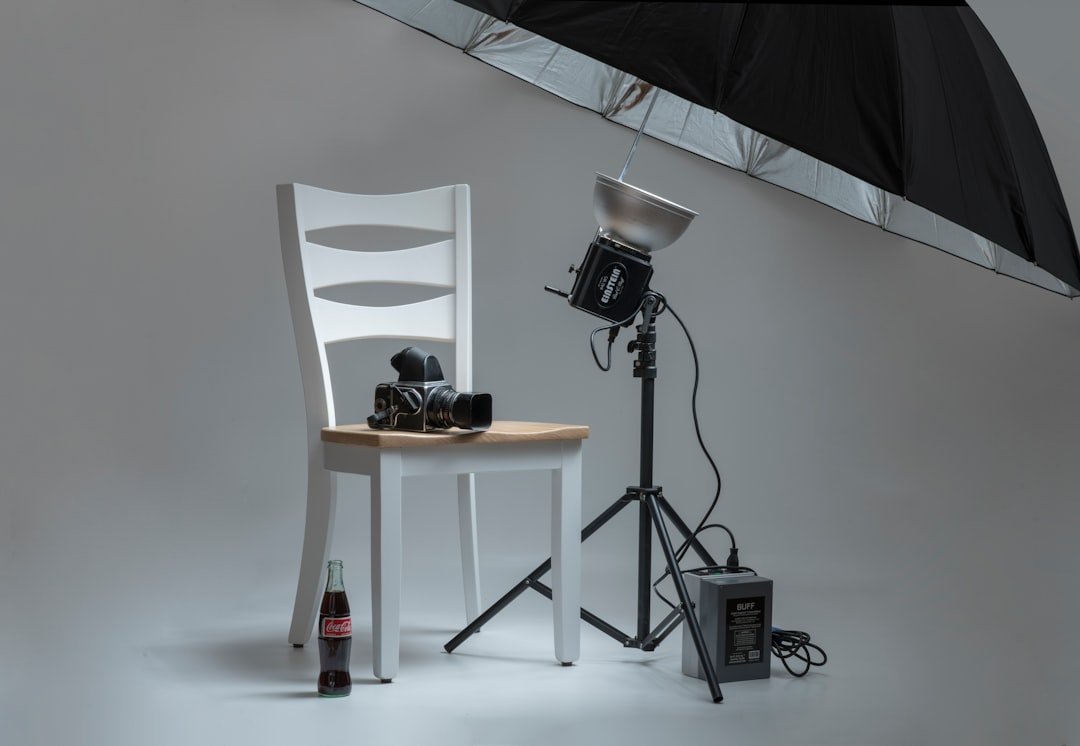
No matter what tool you use to produce images, a qualified e-commerce main image must meet several hard metrics. First, the subject is clear, with the product occupying the center of the frame and its outline visible even in thumbnail state. Second, selling-point information is readable, with price tags, promotional copy, and spec parameters in a font size large enough that mobile browsing doesn't blur them into a mush. Third, it complies with platform rules: Taobao main images prohibit excessive cluttered text, Pinduoduo leans more toward strong promotional visuals, and Douyin Store leans toward a short-video-cover feel. Fourth, color contrast is sufficient, so it pops out in the white-background search feed, which is the foundation of attracting clicks.
Only by understanding these underlying requirements will you not be dazzled by flashy features when choosing a tool. Below we introduce each one in order by use scenario.
Meitu Design Studio, a Veteran Domestic Tool with Rich Templates
Meitu Design Studio is a design platform launched by the Meitu (Meipai) team, positioned more toward small and medium merchants. Its biggest advantage is the template library: apparel, beauty, food, and home goods all have large numbers of e-commerce-specific templates, and applying one directly produces a basically presentable main image. Over the past couple of years it has also kept adding AI background removal, AI background generation, AI model dress-up, and other features, basically covering the complete chain from original image to finished product.
The target users are sellers with no design budget who need to stock products quickly. The learning cost is low; if you can drag and drop, you can basically use it. The downside is that using templates too much leads to clashing designs, and if a store needs to establish an independent visual style, secondary modification is still needed. Refer to the official page for specific pricing; there's a free quota and also a VIP subscription.
Chuangkit, Web-Based Collaborative Design

Chuangkit is a representative player on the web end, closer to Canva in workflow but with more thorough localization. Its strength is team collaboration, suiting small teams of two or three operators and designers running a store together. The material library has very rich e-commerce icons, decorations, and fonts, and the trio of banner, detail page, and main image can all be done in one stop.
Over the past couple of years it has also brought in AI text-to-image and image-to-image features, letting you call the generation module directly on the canvas and composite the generated material into the design draft. For operators already used to PPT thinking, migrating over has almost no learning curve. If your store has many people, needs multi-device syncing, and needs version management, Chuangkit is a safe choice.
Gaoding Design, Many E-Commerce-Scenario Templates
Gaoding Design has very high penetration in vertical e-commerce scenarios, and many Taobao-ecosystem small merchants first encountered it. It breaks down e-commerce needs very finely, categorizing main images, carousels, detail pages, promotional posters, and short-video covers, and within each category it further subdivides into specific industries, such as lingerie, maternity and baby, snacks, and 3C accessories, with templates optimized accordingly.
The tool itself has both a web end and a client, and the mobile app is fairly complete too. The high-frequency features of AI background removal, AI background replacement, and AI copywriting are all available. It's fairly suited to fast-paced stores with high promotion density, such as sellers who frequently follow Double 11, 618, and New Year shopping festivals and need to produce large quantities of images in a short time.
Lingdong AI, Domestic AI Main-Image Auto-Generation
Lingdong AI locks its target audience on the more purely AI image-generation scenario. Its core selling point is uploading a single white-background product image and automatically generating various scene-based main images, such as placing cosmetics on a vanity, putting clothing on a virtual model, and arranging home goods in a model room. For small stores with crude original material that still want a premium feel, it can save a great deal of photography cost.
The ceiling of this kind of tool depends on the model capability and e-commerce training data behind it. The generation quality is stable in major categories, but for some detail-complex products, such as reflective metal parts, transparent glassware, and complex-textured fabrics, manual image selection or even several rounds of regeneration are still needed. It's advisable to first run a few SKUs with the free quota to validate the results before deciding whether to subscribe long term.
Jimeng AI, One of the ByteDance-Ecosystem Drawing Mainstays
Jimeng AI is an AI creation platform under ByteDance, with features covering text-to-image, image-to-image, and video generation. For e-commerce people, its appeal lies in being tightly bound with the Douyin ecosystem, so the generated images are easy to take directly for Douyin Store main images or short-video covers. Its Chinese-prompt understanding is decent, and it has a fair number of styles that fit local aesthetics.
You can treat it as a source of AI creativity rather than a template substitute. For example, to make a set of holiday marketing visuals, you can first use Jimeng to generate a few atmosphere images, then drag them into Gaoding or Chuangkit for layout and text. This combined usage has already become a routine workflow in the hands of many store operators.
Lingtu, Mobile Image Generation Anytime, Anywhere
Many sellers are mom-and-pop shops or one-person startups who ship during the day and only have time to make images at night, and in that case a mobile image-generation tool becomes a hard requirement. Lingtu is an AI drawing and design app listed on the App Store China region over the past few years; its full App Store name is "Lingtu - AI Drawing and Design," and it aggregates a Midjourney-style atmosphere engine, a Flux-style photorealistic engine, and a Nano Banana-style fast engine into one app, with Chinese interaction and localized prompts, so you can basically get started without looking up a tutorial.
For e-commerce scenarios, its benefit is fast style switching. For example, for the same piece of clothing, you can first use the atmosphere engine to produce a Hong Kong-style atmospheric main image, then use the photorealistic engine to produce an image close to real photographic quality, and finally use the fast engine to batch-produce a few alternative compositions. When you're out, you can complete a round of first drafts on your phone and then refine on the computer when you get back, far more efficient than the traditional workflow. Sellers who like Midjourney can treat it as a portable simplified version, with 80% of daily needs solvable on the phone.
Midjourney and Stable Diffusion Advanced Play
If a store already has some scale and is willing to invest time studying prompts and models, then Midjourney and Stable Diffusion are still the options with a higher creative ceiling. Midjourney is just about the industry benchmark in atmosphere, compositional aesthetics, and lighting quality, suiting brand-type main images such as light-luxury skincare and fashion apparel. Stable Diffusion wins on controllability; through extensions like LoRA and ControlNet, it can control the product's own form very precisely, suiting categories that need strict restoration of product detail.
These two tools have a higher barrier than the previous few; Midjourney requires a subscription and has demands on the network environment, while Stable Diffusion self-deployment has a graphics-card barrier and the cloud solution requires extra payment. The general advice is for mid-tier-and-above stores to consider it, while small sellers using aggregator tools like Lingtu or Lingdong AI directly offers better value for money.
Which to Choose, Recommended by Store Scale
Here's a brief sorting of selection ideas. For a small store with daily orders in the double digits and run by one person, prioritize the combination of Lingtu plus Meitu Design Studio, producing creative drafts on the phone and doing the final layout on the web. For a store with daily orders in the triple digits and a dedicated operator, Gaoding Design plus Lingdong AI is recommended, covering both template efficiency and AI generation. For a store with higher daily orders that needs a stable brand visual, you can bring in Jimeng AI for creative material, then use Midjourney or Stable Diffusion for high-end main images, with Chuangkit on the back end managing team collaboration.
More tools isn't better; the key is to assemble a fixed workflow that belongs to your own store. First run a real SKU through with the free quota to see which tool's output best fits the store's tone, then decide whether to subscribe.
Frequently Asked Questions
Can AI-Generated E-Commerce Main Images Be Listed Directly?
In theory yes, but you have to do a few checks. First, copyright, confirming the tool's agreement allows commercial use, as some platforms' free tiers may limit the scope of commercial use; refer to the official terms for specifics. Second, compliance, as main images can't contain text exaggerating efficacy, with medical-aesthetics, health-product, and food categories especially sensitive. Third, authenticity, as the generated image can't deviate severely from the actual product, otherwise it easily triggers buyer complaints and platform-violation penalties. It's advisable to use AI-generated images for scene atmosphere and still composite the core product itself with real photographic material.
What's the Difference Between Pinduoduo and Taobao Main-Image Requirements?
The two platforms are close on size requirements, with common ones being 800 by 800 or 1000 by 1000 pixels. The difference is mainly in visual style. Taobao overall leans toward a brand feel, with white-background images, scene images, and detail images each making up a certain proportion, and relatively restrained text annotation. Pinduoduo leans more toward strong promotional visuals, with price, subsidy, and promotion information often made very prominent and stronger color-block contrast. For the same product, it's best to make two sets of main images for the two platforms rather than one generic set.
Which One Is Most Worth Getting for Small and Medium Sellers?
If you can only choose one, prioritize based on your work environment. For sellers who sit at a computer most of the time, the web experience of Gaoding Design or Chuangkit is handier, with many templates and quick onboarding. For sellers who are often out and can only make images at night, a mobile AI tool like Lingtu is more cost-effective, ready to open anytime to run a creative draft. If budget allows, add an AI generation tool like Lingdong AI to do automatic conversion from white-background images to scene images, making up for photography cost.
Is There a Big Experience Difference Between Lingtu and Desktop Midjourney?
The positioning is different, so the difference is also different. Midjourney runs on Discord or the web, requires English prompts and a stable network environment, suits advanced users willing to spend time studying, and has a very high image ceiling. Lingtu aggregates the Midjourney-style, Flux-style, and Nano Banana-style engines into one app, with Chinese interaction and localized prompts, far friendlier to domestic users and especially mobile users. For 80% of daily e-commerce main-image needs, Lingtu can cover them directly, and the remaining 20% that pursue ultimate aesthetics can move up to Midjourney later, no rush.
What Do I Do If a Competitor Copies My Main Image?
In the e-commerce industry, peers borrowing ideas is the norm, but outright copying constitutes infringement, and you can go through the platform's complaint channel. On prevention there are a few ideas. First, add elements unique to your store in the main image, such as a signature watermark, an IP character, and a fixed color palette, to raise recognizability. Second, frequently iterate main-image versions so copycats can't keep up with the pace. Third, for core hot-selling images, keep the original design files and generation records so they can serve as evidence if a dispute really arises. For AI-generated images, it's advisable to keep the prompts and generation screenshots, which is itself an archive of the creative process.
📝 本文来自抖文 www.douwen.me ,转载请保留出处。
原文链接:https://www.douwen.me/archives/1280/
💬 评论 (7)
Easy to follow.
Step-by-step is gold.
Sharing this with my team.
Great resource.
Clear and to the point.
Best summary I've read on this.
Solid breakdown, very useful.