Interpretation of the 2026 World Cup groupings, advance prospects for the top 32 and highlights of the group stage
2026 World Cup Group Breakdown: A Preview of the Round-of-32 Prospects and Group-Stage Highlights
The reason the 2026 World Cup has been discussed repeatedly from a year or two before kickoff isn't just that it has once again returned to North America, but that it has made real changes at the format level. This is the first time in history a World Cup is co-hosted by three nations—the hosts being the United States, Canada, and Mexico—with the tournament spanning 16 host cities across the North American continent; it's also the first edition since FIFA expanded the field to 48 teams, going from the old 32 teams in 8 groups to 48 teams in 12 groups, plus a newly added round of 32 in the knockout stage, so the entire format framework has been rebuilt. Viewers expect clashes of giants and the emergence of dark horses, content creators need talking points and controversies, and local fans care about broadcast time differences and how to watch. This article doesn't predict scores or fabricate specific group draws; it sorts out where this edition's highlights lie across macro dimensions—format changes, host-nation situations, the traditional powerhouse landscape, rising continental forces, scheduling challenges, and the domestic-fan perspective—covering it all in one go.
What's new about the three-nation co-hosted format

Three nations co-hosting means the number of host cities expands from the past single-host's ten-or-so to 16, spanning most major U.S. cities plus Toronto and Vancouver in Canada and Mexico City, Guadalajara, and Monterrey in Mexico. The geographic span among the three nations is enormous—from Vancouver in Canada to Mexico City is almost the entire width of the North American continent—posing challenges to team travel, media itineraries, and traveling fans unlike any previous edition. The format itself expands from 32 teams to 48, groups increase from 8 to 12, with each group keeping a four-team structure; to accommodate the expansion, the knockout stage adds a round of 32 before the round of 16, meaning the top two of each group plus a number of best third-placed teams advance to the next round. The total number of matches is markedly higher than the previous edition, which is both a commercial expansion and an extension of the tournament's length. For participating teams, the group stage has a somewhat higher margin for error than before, but the consecutive-match pressure in the knockout stage is greater. For fans, the schedule is denser, with highlights almost every day, but it also means any team must play more matches from group stage to final than before.
The impact of expanding to 48 teams on the group stage
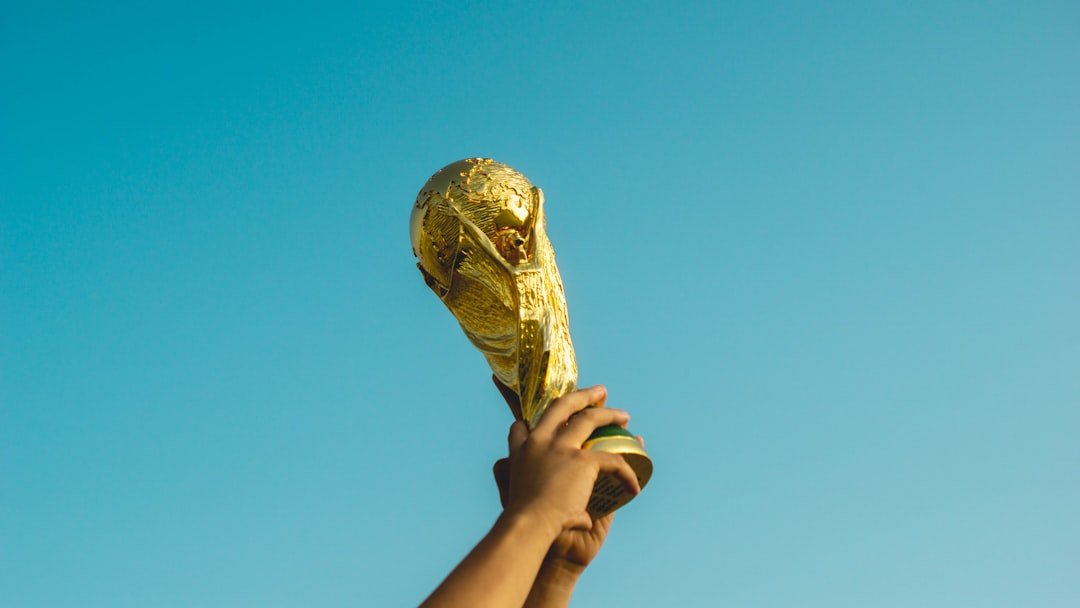
The most intuitive impact of going from 32 to 48 teams is pushing more teams that previously couldn't reach the World Cup onto the main stage. In the past, Asian, African, CONCACAF, and Oceanian berths were fairly tight, and many regional powers missed the finals due to qualifying mishaps; after expansion, the berths for each confederation have increased to varying degrees, with the Asian, African, and CONCACAF expansions especially notable, and Oceania securing a relatively stable direct berth for the first time. This structural change has a two-sided impact on the actual feel of the group stage. On one hand, the group stage will feature more new faces unfamiliar to fans, and these teams, taking the field with the excitement of a first appearance, often produce surprising content; on the other hand, some fans worry the overall gap in level widens, with more lopsided matches in the group stage. From a tournament-operations view, expansion is a clear signal that FIFA wants to extend the World Cup's influence to more regions and grow its commercial footprint—no need to dodge that point. As for whether the pros outweigh the cons at the competitive level, that depends on the actual performances once the tournament is underway, and the group stage will be the first window of observation.
The group-stage prospects of the three host nations
Under FIFA's usual draw rules, host nations are listed as seeded teams, each leading a group as its core. The three hosts in 2026 are the United States, Canada, and Mexico, meaning all three will receive seeded-team treatment, with home advantage and relatively friendly scheduling in the group stage. The three differ in strength tier: Mexico is a traditional CONCACAF power with a long record of World Cup appearances and relatively stable strength; the U.S. has invested continuously in men's football over the past dozen-plus years, with a sound league system and an increasing number of new-generation players playing abroad, so its overall competitiveness is markedly higher than before; Canada, after returning to the finals stage in the most recent edition, has shown decent form, and this edition, as one of the hosts, gains the preparation convenience of a direct berth. All three will play their group stage in their most familiar environment, with home-fan support, climate adaptation, and low travel pressure—obvious advantages. Whether they advance smoothly and how deep into the knockouts they go depends on their group opponents after the draw and the teams' own on-the-day form, and the psychological pressure of being a host is also a variable not to be ignored.
The overall situation of Europe's traditional powerhouses
Europe is the heartland of world football, and traditional powerhouses like France, England, Germany, Spain, Portugal, Italy, the Netherlands, and Belgium have long occupied the top of the FIFA rankings. After this edition's expansion, Europe's berths increase accordingly, meaning more European teams can reach the finals. Under the draw rules, several top European teams will be placed in different groups as seeds, to avoid a powerhouse civil war in the group stage—a long-standing FIFA practice. From a preparation-cycle view, results at Euro 2024 and performances in various 2025 friendlies and the Nations League roughly sketch each team's form, but the World Cup stage has always had its own logic: a European Championship winner doesn't necessarily carry form into the World Cup, and conversely a team that underperformed at the Euros may suddenly catch fire at the World Cup. There are several dimensions to watch with European teams this time: one, whether deeply talented squads like France and England can hit full form; two, whether traditional powers with greater recent volatility, like Germany, Italy, and the Netherlands, can find stable output; three, how teams flying the banner of a core star, like Portugal, handle the generational transition. These are all topics worth starting to observe in the group stage.
South America's twin giants Argentina and Brazil: title defense and revenge
The South American region is a center of conversation every World Cup, and especially so this edition. Argentina, as the defending champion of the previous World Cup, takes the field with the goal of retaining the title; no matter how the core squad transitions, they'll be one of the most-watched teams of this edition. Brazil carries the regret of an early exit last time and has a strong internal demand to win back lost pride. Beyond these two, South American sides like Uruguay, Colombia, and Ecuador are also regulars, with overall depth of strength higher than a typical confederation. South American teams' hallmark on the World Cup stage is combining technique with physicality—not necessarily superior in physical conditioning, but outstanding in ball sense and creativity—and they often produce fairly watchable matches in the group stage. The highlights this edition: against the backdrop of a title defense, Argentina faces high-intensity targeting from all opponents, and any mistake in a key match will be magnified infinitely; whether Brazil, under a new coaching staff, can rediscover the attacking flair that belongs to them is a question fans have long cared about. From the draw rules, top South American teams will likewise be spread across different groups to avoid meeting early; a true South American civil war will most likely come in the middle-to-late knockout stage, also one of the most likely highlights once this World Cup reaches the quarterfinals and semifinals.
Expansion opportunities for Asian teams
Asian teams reaped one of the biggest dividends of expansion at the 2026 World Cup, with the AFC region's finals berths increasing from before, meaning more Asian nations have a chance to stand on the World Cup stage. Japan and South Korea have long been Asian football's benchmarks, with an increasing number of Europe-based players and an overall tactical level in the top Asian tier; teams like Iran, Australia, and Saudi Arabia are also Asian regulars, each with a different style; after expansion, teams that have rarely appeared on the World Cup stage—such as Uzbekistan, Jordan, and Qatar—gain more chances to make the finals. There are two main highlights for Asian teams in the group stage: one, whether the Japan-South Korea tier can again reach the knockout stage or even go deeper as in the most recent edition; two, whether newly qualified World Cup teams can play memorable matches. Long-discussed topics around Asian football—league level, youth-training systems, pathways to playing abroad—get magnified instantly on the World Cup stage; a beautiful win can bring long-term dividends to a nation's football, and a poor loss triggers prolonged reflection. From the Chinese fan's perspective, Asian teams' matches carry a natural closeness in both broadcast time slots and emotional investment, and this edition is expected to be a key focus for fans in the Asian region.
Highlights of African teams
African teams have grown ever more present on the World Cup stage in recent years—from the past when only one or two African sides could reach the knockouts, to recent editions where African teams reaching the quarterfinals and semifinals is no longer news. Teams like Morocco, Senegal, Cameroon, Nigeria, Ghana, Tunisia, Algeria, and Egypt each have signature performances from different eras, and this edition, with expansion, Africa's berths increase further, meaning more African nations can appear. African teams' common traits are outstanding physical attributes and strong individual ability, with a high proportion of players based in Europe, and their overall style actually causes more trouble for European teams. Morocco's performance in the most recent edition broke the ceiling that "an African team can reach the semifinals," and this edition many African sides will take the field aiming for the knockouts. Another charm of watching African teams is that they generally treat the World Cup as a major national event, with intense atmosphere on and off the pitch, and African teams' group-stage matches are often among the most emotionally invested for spectators. Overall, this edition's African teams have more solid overall depth than before and are worth watching early.
The challenge of cross-continental scheduling on player fitness
The unique nature of three-nation co-hosting brings an unavoidable topic: the geographic span of the schedule and its challenge to player fitness and recovery. The North American continent has an enormous north-to-south span—the straight-line distance from Vancouver in northern Canada to Mexico City is nearly 4,000 kilometers—and adding the time differences and climate variations among different cities, a team's travel between its three group-stage matches may involve flights across multiple time zones and shifts in environment. Mexico City sits at over 2,000 meters in elevation with thin air, posing extra aerobic demands on teams from sea-level countries; the southern U.S. has high summer temperatures and humidity, and some matches may be played during the day, with the apparent temperature heavily taxing players; several Canadian cities have relatively cool climates, but night games may still be affected by cold air. This cross-continental schedule places higher demands on teams' recovery strategies, rotation depth, and medical-team quality, and teams lacking squad depth will show fatigue as early as the final group-stage round. This is also why the squad-size limit for this edition may expand further, as each team needs more players to support rotation under long-distance travel. From a tactical view, the group stage is more likely to see rotated starters, with true full-strength clashes concentrated in the knockout stage.
How Chinese fans view this edition
Domestic fans' attention to the World Cup has never depended on which year the hosts are; the real talking points are whether their own national team is competing and whether the broadcast time slots are friendly. China's men's national team did not qualify for the finals in this World Cup's qualifiers—a point already discussed many rounds among domestic fans, not to be elaborated here. For a World Cup without their own team, the emotional anchor of watching shifts: some choose to support traditional powers with long-standing emotional memories like Argentina, Brazil, Portugal, and Germany; some choose to support Asian neighbors like Japan and South Korea; some prefer to follow newly qualified African and Asian rising forces—all kinds of emotional projection are normal. On broadcast time slots, North American match times converted to Beijing time fall roughly in the pre-dawn-to-late-morning band, meaning staying up late to watch will be the mainstream posture for domestic fans this edition; a few early matches may fall in the morning or noon Beijing time, suitable for office workers to catch a glimpse. The platforms holding domestic World Cup broadcast rights are expected to still be mainly the CCTV system, with new-media platforms producing accompanying short and long video commentary; this part depends on the specific announcements from FIFA and domestic rights holders before the tournament. Overall, domestic fans' expectations for this edition fall more on good matches, good goals, and fun talking points—the simplest viewing pleasure of a World Cup without one's own team.
Frequently Asked Questions
How many teams are in the 2026 World Cup in total?
The 2026 World Cup is the first in World Cup history to expand to 48 teams, half again larger than the past 32-team scale. These 48 teams come from Europe, South America, Asia, Africa, CONCACAF, and Oceania, with specific berth allocations determined by FIFA in advance and qualifying teams produced through each confederation's qualifiers. After expansion, nations that previously had little chance of reaching the finals gained more tickets, with Asia, Africa, and CONCACAF being the main beneficiaries of this round of expansion, and Oceania securing a relatively stable direct berth for the first time. Which 48 teams qualify should follow the final list FIFA announces after qualifying concludes.
How many matches are played in the group stage?
This edition's World Cup uses a format of 48 teams in 12 groups, four teams per group, with a single round-robin within each group, so each team plays three matches in the group stage. By this structure, the total number of group-stage matches is markedly higher than the past 32-team, 8-group scale. After the group stage, the top two of each group plus a certain number of best third-placed teams advance to the round-of-32 knockout stage—the newly added knockout round this edition—and from this round on it's single-elimination, all the way to the round of 16, quarterfinals, semifinals, and final. The tournament's total number of matches therefore increases over the previous edition, and the overall schedule length is extended; how many matches there are per day should follow the official schedule announcement.
Are all three host nations seeded teams?
By FIFA's convention, host nations are set as seeded teams in the World Cup draw; this edition has three hosts—the United States, Canada, and Mexico—so all three will most likely be seeded teams, each leading a group. The benefit of being seeded is avoiding other seeds in the draw, with group opponents produced from the second, third, and fourth pots, theoretically yielding a relatively balanced distribution of opponents. Host nations also often get certain conveniences in venues and scheduling, for example having group-stage matches arranged at venues closer to their home cities. These arrangements are routine practices at the tournament-operations level, with specific details following the official announcement at FIFA's draw.
Is China's team competing this edition?
China's men's national team did not qualify for the finals in this World Cup's AFC qualifiers, so there's no sight of China's men's team among the 48 teams in this edition's finals. Domestic fans have discussed this for quite a while, and this situation is a separate matter from the increase in Asian berths brought by expansion—expansion doesn't directly equal qualification, and true qualification has to be decided through matchups with other Asian teams across multiple qualifying phases. For a World Cup without China's team, domestic fans can choose to support a team they've long loved, or shift their attention to Asian neighbors, newly qualified teams, or stars they follow—the emotional anchor of watching can be flexibly adjusted.
How do you watch the 2026 World Cup broadcast in China?
The main domestic channels for watching World Cup broadcasts generally include the CCTV system's TV and official online platforms, as well as new-media platforms holding the corresponding rights. Which platforms hold this edition's online broadcast rights, whether there's a paid-viewing arrangement, and whether multi-language commentary is offered all have to wait for the specific plans announced by rights holders and platforms as the tournament approaches. Based on past editions' experience, domestic viewers can generally watch HD live broadcasts via TV channels and watch online live and on-demand on officially licensed new-media platforms, with some platforms offering multi-angle, multi-commentator versions. By time slot, North American match times converted to Beijing time mostly fall in the pre-dawn to late-morning band, and specific matches need to be scheduled according to the published timetable.
📝 本文来自抖文 www.douwen.me ,转载请保留出处。
原文链接:https://www.douwen.me/archives/1246/
💬 评论 (7)
Stats really back it up.
Practical tips not fluff.
Thanks for the detailed comparison.
Great resource.
Solid breakdown, very useful.
Sharing this with my team.
Easy to follow.