Does AI video generation have copyright? 5 questions you must understand before commercial use in 2026
Does AI-Generated Video Have Copyright? 5 Questions You Must Understand Before Commercial Use in 2026
As tools like Sora 2, Veo 3, Runway, Kling, and Jimeng have dramatically improved in capability, more and more independent content creators, small brands, advertising agencies, and educational institutions are putting AI-generated video clips directly into their own content. Short-video intros, ad assets, product demos, concept films, instructional footage, finished clips generated in minutes and uploaded to platforms, look staggeringly efficient and extremely low-cost. But think one layer deeper and you find a problem you cannot get around: does AI-generated video actually have copyright, and is there legal risk when using it commercially? This question cannot be answered by intuition. It touches the current state of copyright ownership of the generated content itself, the compliance controversy around models' training data, and the differences among various platforms' user agreements and the divergence of judicial practice across countries. This article sorts out the 5 most frequently asked core questions based on the situation in 2026, so that creators planning commercial use can do the math before they start, rather than discovering they stepped on a landmine after the fact.
The Current State of Copyright Ownership for AI-Generated Video: China-US Differences Are Clear
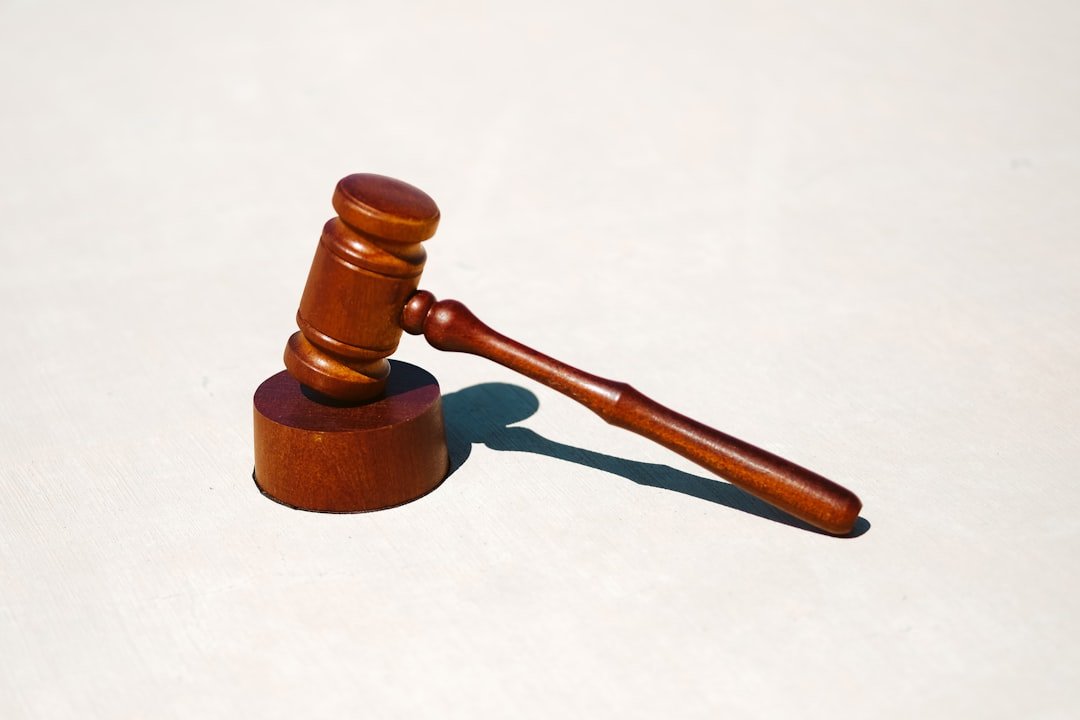
The first unavoidable foundational question is exactly who owns the copyright to AI-generated video itself, and the judgment logic differs quite markedly across countries, so you cannot apply one unified answer to all regions. In the United States, the multiple guidance documents issued by the Copyright Office over the past few years lean toward the view that content generated entirely automatically by AI, lacking sufficient human creative contribution, does not enjoy copyright protection; only when a human makes a substantive creative contribution to the generation process, such as writing a creative prompt, performing substantive post-editing, or making key choices and trade-offs, is it possible for the resulting portion of the content to enjoy copyright. This line means that if you merely input a simple prompt and have the AI generate a clip to use commercially, under the U.S. legal framework that clip may not be claimable by you alone as a copyright-protected work, and in theory others may take it and use it too. In China, judicial practice has already produced rulings affirming that certain AI-generated content is protected by copyright, with the core logic being whether the human made an original intellectual investment in the generation process, such as repeatedly adjusting prompts, combining multiple generation results, and making aesthetic judgments and trade-offs. The difference between the two sides means the same AI-generated video may have an entirely different legal status in China versus the U.S., which is the first thing you must clarify before commercial use; as to what law applies to your specific case, defer to local law and professional legal advice.
What Do Platform User Agreements Say? The Rules Vary Enormously
Setting aside copyright ownership at the level of national law, whether you can use AI-generated video commercially also depends on what the tool's own user agreement says, and the rules vary more than you might imagine. Different platforms such as OpenAI, Anthropic, Google, Runway, Kling, Jimeng, and Pika each have their own clauses on the ownership of generated content, commercial-use authorization, and restrictions. Some platforms explicitly grant the user ownership or usage rights of the generated content, some platforms retain partial rights to the generated content, some platforms make a clear distinction between commercial-use rights for the free and paid versions, and some platforms impose additional restrictions on assets involving real-person likenesses, brand trademarks, or sensitive content. As to whether a specific tool can be used commercially, what the commercial scope is, and whether there is a paid threshold, you can only check the latest terms on the tool's own official public page. This typically appears in internal documents under sections like "Terms of Service," "Usage Terms," or "Service Agreement," with keywords including ownership, commercial use, commercial-use authorization, and content attribution. Do not trust the offhand claim in short-video reviews that "such-and-such tool can be used commercially for free"; terms are adjusted dynamically, and treating the official page as authoritative is the prudent approach.
Commercial Risk Points: Several Dimensions to Self-Check Before Running Campaigns

Setting aside the complexity at the legal and agreement levels, what really determines whether a commercial move runs into trouble is whether the project itself triggers common risk points. The first category of risk is real-person likeness: footage generated from prompts mentioning specific celebrities, public figures, or private likenesses involves portrait-rights issues in most jurisdictions, and whether or not the model reproduces the likeness successfully, commercial use is not advised. The second category is brand trademarks: real brand logos, trademarks, or product appearances showing up in the generated footage may involve trademark rights and unfair competition, and advertising assets are especially sensitive. The third category is IP derivatives: directly invoking movie, anime, or game character names in prompts to have the model generate the corresponding image is a high-incidence zone for infringement risk without authorization. The fourth category is platform content moderation: even if there is no problem at the legal level, major distribution platforms have their own moderation rules for AI-generated assets, and in areas involving false information, healthcare, finance, and minor protection, platform moderation is often stricter than the law. The fifth category is inducement and misleading: if the realistic footage AI generates is mistaken by viewers for real filming, it may trigger problems like false advertising and misleading consumers, and assets with a commercial purpose especially need to actively add labels. Using these five as a pre-campaign self-check list blocks most basic risks.
The Training-Data Infringement Controversy: AI Video's Uncertainty From the Source
Discussing AI video copyright cannot avoid the hidden thread of training data. Several mainstream text-to-video models on the market have been repeatedly discussed within the industry over the source of their training data, with the core controversy being that the models used large amounts of unauthorized online video content during training, while the creators and rights holders of this original content received neither permission nor compensation. Around this, the industry has already seen a number of lawsuits and regulatory actions, and some model vendors are updating their training-data policies; for specific progress and rulings, defer to the public information from courts and regulators in each jurisdiction. The practical impact of this controversy on end users is that even if you used a model-generated video in a compliant way, if the generated result obviously borrows from or reproduces identifiable elements of an unauthorized training sample, in theory there is still a risk of being traced by the original rights holder, and this risk currently has no fully clear handling path in judicial practice. According to industry feedback, in most cases the risk probability is relatively low, but for assets used in large-scale commercial campaigns, it is necessary to factor this uncertainty into risk assessment rather than treat it as nonexistent.
Safe Practice One: Choose Tools With Clear Terms and Explicit Commercial Authorization
The first practice to reduce the risk of commercial AI video use begins with tool selection. Different tools vary greatly in the clarity of their commercial authorization; prioritize those that explicitly state commercial authorization on their official public page, clearly distinguish commercial-use rights between free and paid versions, and clearly state copyright ownership. Some platforms with big-company backing usually have more standardized terms, while the terms of niche or emerging tools may be vague or frequently changing, so before commercial use you must read the terms in full, paying attention to a few key points: whether the generated content belongs to the user, whether it is allowed for commercial projects, whether there are restrictions on the types of generated content, and whether it provides commercial-related indemnification clauses. For projects involving large commercial campaigns or long-term brand-asset building, it is advisable to bring legal counsel in to review the terms when choosing a tool, to avoid having no backstop if problems arise later. Short-video creators making daily content face relatively controllable risk, but should not choose tools purely on impression either; at minimum, save a screenshot of the core sections of the chosen tool's terms so you have evidence on hand if a problem arises.
Safe Practice Two: Manual Secondary Creation of Key Assets to Reduce the Pure-AI Proportion
The second safe practice is to adjust your workflow, treating AI-generated video as a source material rather than a direct finished product. Specifically, use AI-generated video clips as base material, and through editing software do color grading, add subtitles, add voiceover, slice, and mix with live-shot material, so that the final product reflects an obvious human creative contribution in structure, rhythm, and visual language. The legal significance of this practice is that, under the current rules of multiple jurisdictions, a human's substantive creative contribution to a work is a core element of copyright protection, and content that has undergone deep secondary creation is often more solid in copyright-ownership determination than pure AI generation. From a content standpoint, manual secondary creation can also avoid the finished product fully exposing AI traces, making it more acceptable to both viewers and platform moderation. There is no quantitative standard for how far secondary creation must go to count as "enough," but the direction generally recognized in the industry is not to directly publish the raw generated clip, not to let AI content exceed a certain proportion, and to ensure key footage has identifiable human traces; this approach is more reliable in practice than relying solely on tool terms.
Safe Practice Three: Active Labeling and Platform-Moderation Compliance
The third safe practice is to actively label AI content and follow platform-moderation rules. In 2026 major content platforms' labeling requirements for AI-generated assets are increasingly clear; Douyin, WeChat Channels, Xiaohongshu, Bilibili, YouTube, and others all to varying degrees require creators to actively declare assets containing AI-generated content, with some providing dedicated publishing tags and some adding an AI-content option at submission. For commercial assets, especially ad-campaign content, actively labeling per platform rules is a basic action for avoiding moderation risk; specific labeling requirements and penalty rules defer to each platform's official documentation and are not uniform across platforms. Beyond active labeling, the content itself must avoid directions the platform explicitly prohibits; false information, exaggerated healthcare claims, financial inducement, inappropriate content for minors, and deepfakes of celebrities are all red lines in platform moderation, and stepping on them gets content removed or even the account penalized, even if there is no legal problem. Running "proper labeling plus content compliance" in parallel blocks the vast majority of platform-level risk.
Safe Practice Four: Recordkeeping and Traceability, So You Can Prove Your Case if Problems Arise
The fourth practice is to establish a complete generation-record mechanism so you have the ability to prove your case when trouble arises. This specifically includes retaining each AI-generated video's original prompt, the tool version used, the generation time, whether it underwent secondary creation, and the specific content of that secondary creation, and archiving this information together with the finished product. The significance lies on two levels: one, when a copyright dispute arises, you can prove your creative contribution and the legitimacy of your use process; two, when faced with an allegation of suspected infringement or false information, you can quickly clarify the full sequence of events. Recordkeeping requires no complex tools; a simple spreadsheet or note-taking app is enough, and the key is to build the habit rather than scramble to piece together evidence from chat logs at the last minute. According to industry feedback, large brands and ad agencies have generally established internal AI-asset usage ledgers, and a lightweight version applies equally to independent creators and small teams; this step looks like a hassle, but its value when trouble actually strikes far outweighs the everyday effort.
Safe Practice Five: Seek Professional Legal Advice Before Large Campaigns and Sensitive Industries
The fifth practice sounds the most plain and is the most overlooked: when involving large commercial campaigns, long-term brand-asset building, or sensitive-industry assets, spending some money to consult a professional lawyer beforehand is far more economical than handling a dispute afterward. The field of AI content copyright is currently in a rapidly evolving stage worldwide, with judicial precedents, regulatory policies, and industry conventions all continuously updating, and any "standard answer" you read online may not apply to your specific project. A professional lawyer can give targeted compliance advice based on your project's location, target market, content type, distribution channels, and other specifics, laying out the potential risk points clearly, and such advice is virtually irreplaceable for medium-to-large projects. Small-scale individual creation can handle day-to-day compliance with a self-check list and tool terms, but once a project reaches a certain scale, this legal-consultation fee is worth the investment.
2026 Trends and Future Uncertainty
With these 5 questions laid out, you can see that the overall situation of AI video copyright is one of a rapidly evolving legal framework, continuously tightening platform rules, and gradually forming industry self-discipline. Observable trends include several. First, copyright authorities and legislatures in various countries are successively rolling out dedicated rules for AI-generated content, and the directions in China, the U.S., and Europe are not entirely aligned but all moving toward greater clarity. Second, large model vendors face mounting pressure on training-data compliance, generated-content labeling, and commercial-authorization transparency, and according to industry feedback, each is updating its policies and tools to respond to this pressure. Third, platform-level AI-content moderation will become increasingly fine-grained, with the use of labeling, traffic throttling, ranking demotion, and removal becoming more widespread. For creators, these trends mean that a practice considered fine today may need adjustment half a year later; commercial AI video is not a one-and-done deal but a long-term matter requiring continuous attention to rule changes. Treating this as a dynamic issue, regularly updating your workflow and compliance awareness, is more valuable than getting one answer clear once and for all.
Frequently Asked Questions
Can copyright be claimed in China for AI-generated video?
Yes, but certain conditions must be met, the core being whether the human made an original intellectual investment in the generation process. China's judicial practice has already produced rulings affirming that certain AI-generated content is protected by copyright, with the core logic being whether the human made an original intellectual investment in the generation process, such as repeatedly adjusting prompts, combining multiple generation results, and making aesthetic judgments and trade-offs. If you merely input a simple prompt and directly output a result, lacking obvious human creative contribution, claiming copyright will be relatively difficult. As to whether you can claim copyright in your specific case and how to prove it, defer to professional legal advice; this provides only directional understanding.
Can AI video be used directly as ad-campaign material?
Yes, but with prerequisites. These include that the tool's user agreement permits commercial use, that the generated content does not involve high-risk elements like real-person likenesses and brand trademarks, that AI content is actively labeled per platform moderation rules, and that content red lines like false advertising are avoided. For ad campaigns involving large budgets or sensitive industries, consulting a professional lawyer beforehand and retaining complete generation records is a routine practice for reducing risk. Small and medium creators running daily content campaigns face relatively controllable risk, but should still complete the basic compliance actions above and not skip the self-check step entirely just because the scale is small.
Can I put a celebrity's name in the prompt when generating video with an AI tool?
Not advised. Prompts involving specific celebrities, public figures, or private likenesses will in most cases trigger portrait-rights issues, regardless of whether the generated result reproduces the likeness successfully. Some mainstream tools' safety mechanisms will themselves refuse such prompts, and even if generation succeeds, using the result for commercial purposes carries relatively high legal risk. If the creative intent itself requires a similar image, the prudent approach is to replace the specific person's name with a fictional character description, or go through proper authorization channels to obtain explicit permission from the person or their agency.
Do the commercial terms of different AI video tools really vary a lot?
The differences are indeed quite large; each platform has its own rules on the ownership, commercial scope, and content restrictions of generated content. Some tools explicitly grant the user ownership or usage rights of the generated content, some retain partial rights to it, some make a clear distinction between commercial-use rights for free and paid versions, and some impose additional restrictions on assets involving real-person likenesses, brand trademarks, or sensitive themes. Before commercial use you must go to the chosen tool's official public page and read the latest terms in full; do not trust the offhand unified answer given in short-video reviews, because terms are adjusted dynamically and treating the official page as authoritative is the most prudent approach.
What should I do if AI video content is accused of infringement?
Stay calm and first see clearly the specific content of the accusation. Common situations include being accused of the generated content infringing someone's portrait rights, a brand's trademark rights, or an original work's copyright; the handling approach breaks into several steps: first stop the dissemination of the disputed content or take it down to avoid expanding the infringement; then review your own generation records, confirm the prompt, tool version, and secondary-creation process, and prepare evidence to prove your case; then contact the AI tool platform you used to confirm whether the platform terms provide any backstop support for such disputes; for disputes involving large sums, consult a professional lawyer as soon as possible and decide, based on the specifics, whether to negotiate a settlement or pursue legal proceedings. Throughout the process, keep complete records, avoid improper responses through public channels, and handing the matter to a proper procedure is key to reducing losses.
📝 本文来自抖文 www.douwen.me ,转载请保留出处。
原文链接:https://www.douwen.me/archives/1224/
💬 评论 (7)
Practical tips not fluff.
Easy to follow.
Solid breakdown, very useful.
Clear and to the point.
Stats really back it up.
Bookmarked for reference.
Loved the FAQ section.