Can Cristiano Ronaldo and Messi still play in the 2026 World Cup? The suspense of the last dance between the two superstars
The 2026 World Cup is seen by many fans as the final stage for a generation of superstars. Cristiano Ronaldo is already past 40, and Messi is nearing 39; whether these two legends, who played more than two decades in top leagues and split most of the Ballon d'Or trophies of the past dozen years, can still take the field at the 2026 World Cup has been one of the most discussed topics among fans over the past two years. The 2026 World Cup, expanded to 48 teams, co-hosted by three North American nations, and contested in summer heat, sees these objective factors and the two players' physical condition jointly determine the form their last dance will take. This article surveys both players' possibilities across four dimensions, player condition, national team, coaching preference, and public-opinion pressure; it does not predict outcomes, only organizes the known information clearly, to help you understand the story behind this World Cup.
1. Messi's Situation in 2026
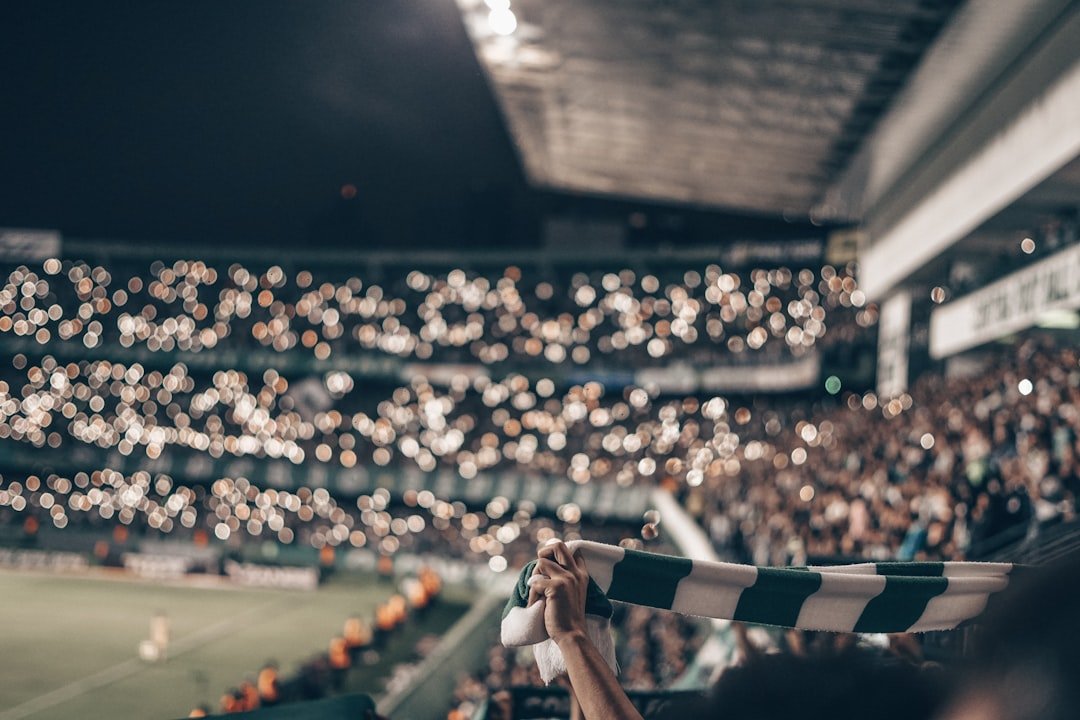
Messi led Argentina to the title at the 2022 Qatar World Cup, completing the most important piece of his career. After winning, he did not immediately retire from the national team but continued as captain, leading the squad in preparation for the 2026 Copa América and subsequent matches. Starting in 2024 he hinted in interviews that the 2026 World Cup would be his farewell stage, but gave no firm commitment.
In early 2026 Messi is nearing 39, and in club matches for Inter Miami he can still contribute crucial goals and assists, keeping his physical condition better than peers his age. Argentina's core lineup has been basically stable since the Qatar title, with mid-generation players like De Paul, Mac Allister, and Álvarez having grown into pillars; even if Messi's competitive form declines, his role as spiritual leader within the team's system remains irreplaceable.
Scaloni is the manager who led the team to the title, and he has rich experience using Messi, knowing how to keep him at his best in key matches: rotating him in group-stage games and deploying him fully in pivotal ones, a rhythm-control approach already proven effective at the 2024 Copa América.
2. Ronaldo's Situation in 2026
Ronaldo's trajectory is entirely different from Messi's. He never got his World Cup title; at the 2022 Qatar World Cup, Portugal stopped in the quarterfinals, eliminated by Morocco, and Ronaldo, coming off the bench, did not change the result. Afterward he transferred to Al Nassr in Saudi Arabia, moving away from the center of Europe's top leagues, maintaining a high goal frequency in the Saudi league but in matches whose physical intensity is below the Premier League or La Liga.
At Euro 2024, Portugal again stopped in the quarterfinals, and Ronaldo went through a goal drought that tournament, his performance in crucial moments far below his career peak. But he remains the team's spiritual leader, and the respect and reliance placed on him by Portugal, from manager to teammates, has not changed. Since Roberto Martínez took over as Portugal manager, debate over whether to use Ronaldo has continued; the mainstream view is that he will certainly make the final 2026 World Cup squad, but his specific starting position and playing time face challenges.
Ronaldo's maintenance of his condition owes much to his strict body management; staying prolific in the Saudi league at 40 is a phenomenon that defies statistical common sense. But the physical intensity of top national-team competition is another dimension, and whether he can sustain effective output over 90 minutes will get its final test at the 2026 World Cup.
3. Argentina's Qualification and Squad Stability
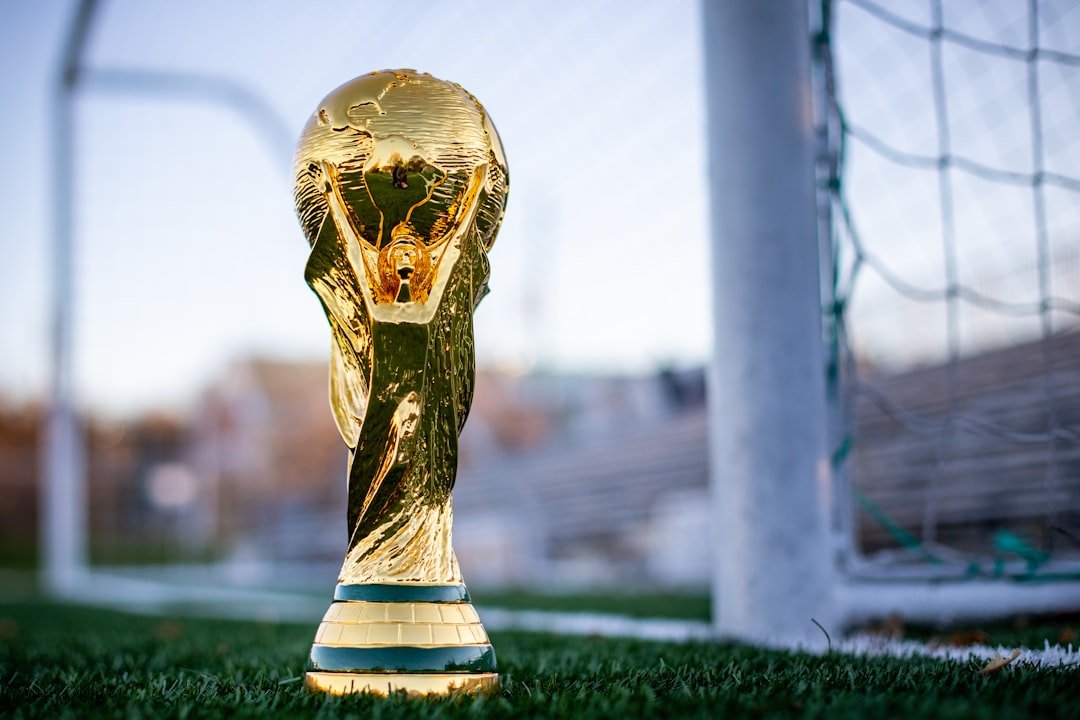
Argentina's qualification is essentially beyond doubt. Argentina performed steadily in the South American qualifiers in 2024 and 2025, with core players in normal form and most of the 2022 world-champion core squad retained. If Messi keeps his current condition, the probability of his appearing at the 2026 World Cup is very high; the only question is how much playing time.
Scaloni's thinking on using Messi is relatively clear, and judging by the signs of recent matches, starting him for 60 to 70 minutes and then substituting him out is a common arrangement. In the knockout stage he adjusts according to the opponent's strength; in crucial heavyweight clashes he may play the full match, and against weaker teams in the group stage he may reduce his appearances. This flexible usage both protects Messi's body and ensures his output in important matches.
Defending the title will not be easy for Argentina; with expansion to 48 teams the number of rounds increases, requiring 8 matches from group stage to final, a heavy physical drain on veterans. But the core team with title-winning experience has a clear psychological edge, and combined with Scaloni's flexible tactics, Argentina remains one of the front-runners in the group of title contenders in 2026.
4. Portugal's Qualification and Tactical Adjustments
Portugal's qualification is also beyond doubt. In the European qualifiers Portugal has a relatively easy group, and advancing on the strength of their quality is no problem. Since Martínez took charge, Portugal has made some tactical adjustments, with several more options in the attacking combinations in the midfield and forward areas; mid-generation players like Bruno Fernandes, Bernardo Silva, Leão, Félix, and Gonçalo Ramos are all capable of changing a match on their own.
Ronaldo's positioning in the tactics is the core puzzle. If he starts, Portugal's attacking rhythm must revolve around him, with wing crosses and set pieces becoming the main attacking methods. If he comes off the bench, he can still be a disruptor in the final 20 to 30 minutes, creating chances on the strength of experience and set-piece ability. Martínez will repeatedly test both approaches in friendlies and the Nations League before the 2026 World Cup, with the final choice depending on Portugal's overall squad cohesion at the time.
Portugal went out in the Euro 2024 quarterfinals, and some fans pinned the blame on veterans taking up starting spots. This public-opinion pressure will continue before the 2026 World Cup, and Martínez needs to balance between sentiment and reason.
5. A Scientific Reading of the Two Players' Physical Condition
Whether a veteran can play in a World Cup is essentially a question of physical conditioning. The World Cup group stage has 3 matches played within 5 to 7 days, knockout games are usually spaced 3 to 4 days apart, and the span from opening to final is about 30 days. This congested schedule is a challenge even for players under 30, and is all the more a test of the physical limit for veterans aged 38 to 40.
Modern sports science has extended veterans' competitive lifespans. Refined management of nutrition, sleep, heart-rate monitoring, muscle recovery, and injury prevention has lengthened top players' careers by 3 to 5 years compared with the previous generation. Messi's dietary control and Ronaldo's sleep management have long been public training models. The two players' ability to sustain high-level output to ages 38 to 40 is no accident but the result of scientific training.
But the passing of the physical peak cannot be reversed. A decline in short-burst explosiveness, a drop in the ability to sustain high-intensity duels over long periods, and longer injury-recovery times are physiological laws. A coaching staff's use of veterans must be built on objective data, with subjective sentiment yielding to objective condition, in order to let the team produce the best result.
6. Both Players' Historical Standing Is Already Secure
No matter the 2026 World Cup result, the historical standing of Messi and Ronaldo is already set in stone. Messi has 8 Ballon d'Ors, a World Cup title, Champions League titles, a Copa América title, and nearly every individual honor. Ronaldo has 5 Ballon d'Ors, 5 Champions League titles, a European Championship title, league titles in every league he played, and the all-time record for goals in men's international football.
The meaning of this World Cup for the two is not to add to a résumé but to put a period on the end of a career. If they lead their team to the title, that is most perfect; if they are eliminated in the semifinals, there is no regret; if they go out unexpectedly in the group stage, at least they made one last appearance. Fans' hope is to watch them stand on the highest stage and present their twenty years of love for football to the world in full.
7. A New Generation of Stars on the Same Stage
The 2026 World Cup is not only Ronaldo and Messi's farewell but also a stage for a new generation of stars to prove themselves. Mbappé's core position in the French team is already secure, and he must pick up the "successor to the king of football" narrative in the era of farewell to the veterans. Haaland has not yet left enough of a mark on the World Cup stage, and 2026 is his first crack at the World Cup as a top European center forward. With his position at Brazil consolidated, Vinícius needs to prove that club performance can translate into national-team results. Bellingham's elevation to the core of the England team is also accelerating.
This side-by-side of old and new is the World Cup's natural charm. On one side is the last dance of the previous generation's kings, on the other the relay start of the new generation; the 2026 World Cup has the conditions for this historical narrative, and no matter who wins, the storyline is stronger than the last edition's.
8. Coaching Preferences and Public-Opinion Pressure
Scaloni and Martínez are two managers with different styles. Scaloni is a pragmatist who emphasizes the team system and flexibly adjusts the lineup, and his title at Qatar showcased his precise management of Messi. Martínez leans toward the tactical-theory school, having led Belgium's national team for years, and after taking over Portugal is considered relatively conservative.
Public sentiment toward the two also differs. Argentine fans' support for Messi is almost absolute; after the title his standing in Argentina transcended the competitive realm, almost a national symbol. Portuguese fans' feelings toward Ronaldo are more complex, mixing respect and love with criticism of his taking up resources. This climate of opinion subtly influences the managers' personnel decisions: Scaloni faces no external pressure in using Messi, while Martínez, in using Ronaldo, must weigh the public backlash if results fall short.
9. The Impact of the 2026 World Cup's Hosting Environment on Veterans
The practical challenges of the three-nation North American co-hosting are a higher frequency of inter-city travel for teams, more complex time-zone-adaptation demands, and high physical drain from the summer heat in some host cities. These objective factors affect veterans more obviously than young players.
Specifically as to host cities, summer temperatures in some U.S. cities may top 35 degrees Celsius, the high altitude of Mexico's plateau cities tests endurance, and Canada is relatively cool but switching with U.S. cities brings time-zone and climate differences. Organizers will try to factor these in when arranging the schedule, but completely avoiding them is unrealistic. The two veterans' coaching staffs need to do targeted pre-tournament training, adapting to the climate at the host venues in advance, to tune their condition to its best.
10. How Fans Should View the Two Players' Final Stage
Returning to the fans' perspective, what is most worth cherishing at the 2026 World Cup is that the two simply being there is already history. Whether they go out in the group stage or win the title, seeing them wear the national-team jersey for the last time in a World Cup is itself a rare scene in football history.
Do not let the result hijack your perception. Hope for the best while accepting the worst; the joy of watching is not only in where the trophy goes but in every pass, every run, and every goal along the way. Messi's lightness, Ronaldo's power, and the football aesthetic of the era the two together represent are fading from the top stage at an irreversible pace, and 2026 is the last chance most likely to preserve this aesthetic in full.
11. Frequently Asked Questions
Can Messi still play at the 2026 World Cup?
Based on current condition, the probability is high. Messi can still contribute crucial goals at Inter Miami, his body management is well maintained, and Argentina's system leaves room for him. Scaloni has rich experience using him, and in 2026 he will most likely participate as a core player, but his number of starts and playing time will be flexibly adjusted by match. Whether he can actually play depends on his real condition and injury situation in the months before the 2026 tournament.
Can Ronaldo still play at the 2026 World Cup?
Making the final squad is all but certain; his specific playing situation has variables. Ronaldo can still stay prolific in the Saudi league at 40, and his physical condition is top among peers his age. Portugal's reliance on him has both emotional and quality factors, and Martínez will not easily leave him out of the final squad. But his starting position and playing time face challenges, and he may serve more as an experienced supplement from the bench.
Is this their last World Cup?
In theory, yes. At the 2030 World Cup the two would be 43 and 45 respectively, and by the standard of active top players, that age makes participating in a World Cup impossible. Both have hinted in multiple public interviews that 2026 is their last. Unless they change their stance or some miraculous continuation of form occurs, 2026 is most likely the last time fans see Ronaldo and Messi both present on the World Cup stage.
Who is more likely to win, Argentina or Portugal?
By squad depth and recent results, Argentina is more favored. Argentina won both the 2022 World Cup and the 2024 Copa América, with a stable core squad, Messi adding the boost of a spiritual leader, and Scaloni's tactics mature. Portugal's squad has outstanding individual ability, but its results in major tournaments have fluctuated noticeably in recent years, lacking Argentina's kind of stable team tactics. If you had to set odds, Argentina sits slightly ahead of Portugal in the group of title contenders, but the World Cup itself is full of surprises, and no strong team can be taken lightly.
Who can succeed them after they retire?
No one can take over the place of their entire era, but the new generation has several successor candidates. Mbappé, Haaland, Vinícius, Bellingham, Yamal, and others have already shown top-level quality at their clubs and national teams. But the special thing about Ronaldo and Messi is that the rivalry of these two contemporaries raised the ceiling of the whole industry, and the new generation has not yet formed a twin-star pairing of equal height; the word "successor" itself may fall to just one person, or be filled jointly by several.
📝 本文来自抖文 www.douwen.me ,转载请保留出处。
原文链接:https://www.douwen.me/archives/1204/
💬 评论 (9)
Easy to follow.
Step-by-step is gold.
Sharing this with my team.
Practical tips not fluff.
Solid breakdown, very useful.
Stats really back it up.
Loved the FAQ section.
Thanks for the detailed comparison.
Bookmarked for reference.