Why is Musk eyeing Chinese car companies? 2026 BYD Xiaomi SU7 Hongmeng Zhixing Three Kingdoms
Starting in the second half of 2025, Musk has frequently commented publicly on Chinese automakers. One moment he calls BYD the most threatening rival in the world, the next he warns that Xiaomi's SU7 going overseas will cause trouble, and he has even singled out Harmony Intelligent Mobility Alliance's pure-electric sedans. Why is Musk so nervous? This article cracks open the Chinese new-energy "three-kingdoms" battle among BYD, Xiaomi SU7, and Harmony Intelligent Mobility Alliance across three dimensions — market share, technology comparison, and geopolitics — and examines what it really means for Tesla. This article does not cite highly volatile specific sales figures and only discusses directional trends; go by each company's latest public earnings reports for exact numbers.
BYD: the real gap behind being the global number one

BYD took the global number-one spot in EV sales for full-year new-energy sales in 2025, a fact supported by public industry data; go by each company's monthly flash reports for the latest exact figures.
Three key directions make Musk nervous. First, BYD's Blade Battery leads the industry on cost and safety; go by the manufacturer's technical releases for exact energy-density specs. Second, BYD's R&D investment stays consistently high, with its share of revenue long at the top of the industry. Third, BYD's overseas sales have grown markedly, surpassing Tesla to become the EV sales champion in markets such as Brazil, Thailand, and Australia.
More importantly, BYD has a product matrix in the low-end market that Tesla cannot reach — the price band of models like the Seagull and Dolphin is a range Tesla has not yet entered.
The disruptive force of the Xiaomi SU7

Xiaomi launched the SU7 in March 2024, and it quickly became a phenomenon-level product in China's EV market. Go by Xiaomi's official disclosures for cumulative 2025 delivery figures. The different tiers of the SU7 Pro and Max are priced to cover the mid-to-high-end range, directly targeting the Model 3 Long Range.
Three directions that caught Musk off guard. First, the SU7 challenges the Model 3 Performance on paper specs such as acceleration; go by official announcements for exact acceleration times. Second, Xiaomi's HyperOS gives the full-scenario interconnection of home appliances, phones, and cars a locally differentiated edge — Chinese users having their appliances, phones, and cars unified under a single ID is its unique ecosystem. Third, Lei Jun's ToC marketing firepower in the Chinese market far exceeds Musk's own presence; the reach of the SU7 launch event and the marketing cadence of Xiaomi cars are both industry-level phenomena.
Xiaomi has not yet gone overseas, but its plan to launch in Europe has been officially confirmed — go by official announcements for the exact timeline — and this is one of the roots of Musk's concern.
Harmony Intelligent Mobility Alliance's technical trump cards

Harmony Intelligent Mobility Alliance is the automotive brand alliance deeply empowered by Huawei, encompassing sub-brands such as AITO, Luxeed, Stelato, and Maextro, with sales steadily ramping in 2025; go by official disclosures for exact figures.
Three points that make Musk nervous. First, Huawei's ADS intelligent driving completed an end-to-end architecture upgrade in 2025, and its experience on complex domestic city roads is among the strongest tiers in China, already approaching or locally leading overseas solutions in some scenarios. Second, Huawei's HarmonyOS cockpit experience is industry-top in voice interaction, AI assistant, and continuous dialogue. Third, the Harmony Intelligent Mobility model has traditional automakers contribute manufacturing capability while Huawei provides the software and electrical/electronic architecture, with partner automakers spanning Seres, Chery, BAIC, and JAC; this model of "a software plus electrical/electronic supplier deeply involved in defining the whole vehicle" is unique to China.
What makes Harmony Intelligent Mobility Alliance formidable is that it represents a new model of a Tier 1 turning into an OEM; if this model continues to prove out domestically, it can be replicated in markets such as Saudi Arabia and Southeast Asia.
The synergy among the three Chinese automakers
The combined sales of BYD, Xiaomi, and Harmony Intelligent Mobility Alliance already make for a very considerable volume, and 2026 is still expected to grow; go by each company's latest sales disclosures for exact multiples.
More importantly, the three companies' product matrices cover the full price band from economy to luxury, spanning nearly every class from A0 to D segment. This all-out offensive makes it very hard for Tesla to find a market segment that is not covered at all.
The three are also synergizing on technology. Through cross-supply-chain integration and talent flow, BYD's Blade Battery, Xiaomi's intelligent cockpit, and Huawei's intelligent driving are rapidly amplifying the overall technical momentum of Chinese new-energy vehicles.
Musk's countermeasures
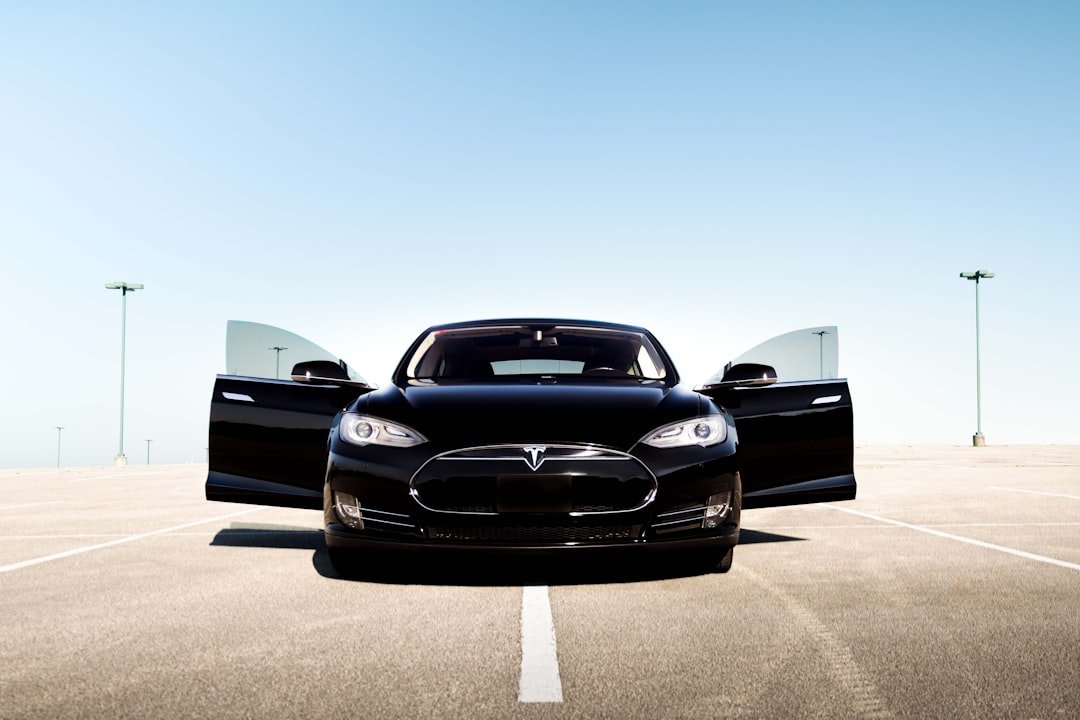
In the second half of 2025, Musk publicly laid out three countermeasures.
First, launch cheaper models that directly hit the price band the Chinese automakers occupy. Go by Tesla's official announcements for exact model code names, starting prices, and launch dates.
Second, keep upgrading FSD and accelerate toward higher levels of autonomous driving, countering the Chinese automakers' product matrix through a technology-generation gap.
Third, push the Optimus humanoid robot and the xAI large model, expanding from a single automotive business to a comprehensive AI solution and reducing dependence on a single automotive business.
None of these three directions can pay off in the short term. The mass-production timeline for cheaper models has been debated by the market repeatedly, FSD still has compliance and performance differences across markets, and Optimus is still a distance from scaled mass production. This means Tesla will continue to face the Chinese automakers' offensive from 2026 to 2028.
The weaknesses of the Chinese automakers

We cannot only praise the Chinese automakers. Three weaknesses must be seen clearly.
First, overseas brand power is still weak. BYD's sales in Europe are growing fast, but brand awareness is still far below BMW, Mercedes, and Tesla, and brand building requires long-term investment.
Second, intelligent driving overall still has a gap. Harmony Intelligent Mobility Alliance's ADS is one of the strongest in China, but it still has a way to go on long-tail scenarios such as Western highway conditions.
Third, the high-end supply chain still partly relies on overseas sources. Domestic-production rates for core components such as chips, sensors, and lidar keep rising, but important parts still have to be imported. If geopolitical conflict escalates, the core supply chain is a soft spot for the Chinese automakers.
The geopolitical variables
US-China trade friction puts Chinese cars going overseas in three specific predicaments.
First, the US market. Whether tariffs or new regulations, direct export of Chinese whole vehicles to the US is basically unrealistic, leaving only detours through Mexico or Southeast Asia.
Second, Europe's anti-subsidy tariffs. Chinese automakers generally face anti-subsidy duties in Europe; go by the EU's official announcements for exact rates. They are not fatal but erode profit.
Third, barriers in emerging markets such as India. Localized-production requirements, technology-transfer negotiations, and parts-content limits will all lengthen the ramp-up period.
These political barriers mean that even with strong products, Chinese automakers still face a relatively long ramp-up period when going overseas.
Who will win this three-kingdoms battle
Based on the 2026 landscape, three judgments.
First, in the Chinese market BYD, Harmony Intelligent Mobility Alliance, and Xiaomi divide the high and low ends among them, and Tesla's domestic share is expected to keep facing pressure. Go by industry data such as the CPCA for exact percentages.
Second, in the Southeast Asian and Latin American markets, BYD and SAIC build an advantage through localized production, and Tesla will become increasingly passive in these markets.
Third, in the North American and European markets, Tesla still dominates but growth is slowing, with more pressure coming from domestic players such as Rivian and Lucid and from Europe's own brands.
Overall, before 2030 Tesla will remain the benchmark brand for EVs globally, but its market share will decline, and the combined share of the three Chinese companies will rise significantly; go by each market's public statistics for exact proportions.
What it means for ordinary consumers
Three concrete benefits.
First, a price war. After the three Chinese companies go on the global offensive, EV prices will keep falling, and the price of an equivalent-class model will be considerably cheaper than a few years ago.
Second, the spread of intelligence. Features that were once high-end options on luxury brands — intelligent driving, vehicle connectivity, OTA updates — will trickle down to the mainstream price band.
Third, better after-sales experience. To protect its share, Tesla will increase investment to improve service quality, while Chinese automakers build direct-sales stores and after-sales networks overseas. Consumers are the biggest winners of this three-kingdoms battle.
Frequently Asked Questions
Is Musk genuinely worried about Chinese automakers, or is it a performance?
Partly genuine worry and partly performance. The evidence for genuine worry is that he has repeatedly listed "Chinese EV competition" as a major uncertainty in internal remarks. The performance part is that his public praise of Chinese automakers also carries the intent of pressuring the US government to relax restrictions on Chinese parts, because part of Tesla's Shanghai factory supply chain is still in China. On balance, Musk's concern about Chinese automakers is real, but his public expression also carries political theater.
Can the Xiaomi SU7 really take down the Model 3?
In the domestic market the SU7 has already formed clear share competition with the Model 3; go by each company's disclosures for exact monthly sales comparisons. In overseas markets you cannot see it in the short term. The SU7's domestic advantages stack price, the Mi-fan ecosystem, and national pride. Building a brand, a charging network, and after-sales from scratch overseas means it cannot catch up to the Model 3's global standing within a few years. But the Chinese market is the world's largest single market, so once replaced there, Tesla's revenue inevitably takes a hit.
Can the Harmony Intelligent Mobility model be replicated overseas?
In theory yes, in practice with challenges. Three challenges: overseas automakers are unfamiliar with the HarmonyOS ecosystem, so integration costs are high; Huawei itself is under US sanctions, so overseas partners have political concerns; and ADS has insufficient training data for overseas road conditions, so localization has to be redone. A feasible path is for Huawei to pilot in markets such as Saudi Arabia, Southeast Asia, and Brazil first, and consider Europe after a few years of success. North America is basically a no-go in the short term.
Is BYD's Blade Battery really better than Tesla's battery?
Each has its strengths. BYD's Blade Battery is based on lithium iron phosphate, with low cost, high safety, and a long cycle life, suited to the mass market. Tesla's ternary lithium batteries have higher energy density, faster acceleration, and better low-temperature performance, suited to high-performance scenarios. On overall value, BYD is better; on overall performance, Tesla is stronger. For family commuting, BYD is the economical choice; if you chase performance, buy Tesla.
Will Chinese automakers be sanctioned by the US?
In the short term they will face partial sanctions, but full sanctions are hard in the long run. Three reasons: Chinese automakers are already deeply embedded in the global supply chain, so full sanctions would hurt the enemy by a thousand and oneself by eight hundred; cheap Chinese EVs make a real contribution to global decarbonization; and Chinese automakers have already built an established advantage in third-world markets. The most likely scenario is that the US uses tariffs, subsidy policy, and national-security reviews to restrict Chinese cars from entering the US domestic market, but does not suppress them globally.
Inspiration: Ruan Yifeng's "Tech Lover Weekly," issue 385, https://www.ruanyifeng.com/blog/2026/02/weekly-issue-385.html
📝 本文来自抖文 www.douwen.me ,转载请保留出处。
原文链接:https://www.douwen.me/archives/1110/
💬 评论 (6)
Easy to follow.
Loved the FAQ section.
Thanks for the detailed comparison.
Stats really back it up.
Best summary I've read on this.
Practical tips not fluff.