ElevenLabs complete voice cloning tutorial, 2026 multilingual dubbing in 6 steps
ElevenLabs has been one of the steadiest players in the AI voice-cloning space over the past two years, and it is widely used in podcasts, audiobooks, short-video voice-over, game NPC voices, and more. The problem is that domestic users are generally unfamiliar with ElevenLabs' interface, pricing, and compliance boundaries. This article uses six practical steps to take you from sign-up to producing your first multilingual voice-over, and along the way explains which uses will get your account banned. This article does not cite specific pricing tiers that may go out of date; go by the current official page.
What ElevenLabs is, and why it has suppressed its rivals for two years

First, the product positioning. ElevenLabs is a British AI voice company whose core technology is end-to-end speech synthesis based on large models. Compared with Google TTS and Azure Speech, ElevenLabs has the edge on three points.
First, high emotional naturalness. Its multilingual model can automatically judge tones of excitement, sadness, questioning, and emphasis from context, sounding almost indistinguishable from a real person.
Second, short samples are enough for voice cloning. It can produce a usable cloned result from a short sample, and the cloned voice can then speak all supported languages.
Third, seamless multilingual switching. The same voice can speak English, Chinese, Japanese, Spanish, French, and many other languages, with no need to record new samples for each language.
The trade-off is that the price is not cheap relative to rivals. Go by the official site for the exact free-tier character quota and paid-tier monthly fees. Compared with human voice-over at tens of dollars per minute and up, it still works out far cheaper over the long run.
Step one: the small details of sign-up and adding a card

Sign up at elevenlabs.io directly with a Google account; users in mainland China need a VPN.
Free-tier limits: a small character quota each month, you can only use preset public voices, you cannot upload a voice clone, and generated audio carries an ElevenLabs watermark and cannot be used commercially.
Paid-tier card binding: Visa and Mastercard both work; UnionPay support varies with risk-control adjustments, so go by the official site. Apple Pay is fairly stable on iOS. Different tiers unlock different features — basic cloning, professional cloning, commercial licensing, PVC (Professional Voice Cloning), and so on — which change with the official tier descriptions.
Refund policy: the company supports refunds under certain conditions; go by the current official terms for exact rules.
Step two: the four voice sources in Voice Lab

Once inside Voice Lab you can choose among four voice sources, picking different ones for different scenarios.
The first is the Voice Library, a public library of voices shared by many users; filter by accent, style, age, and gender, and once added to your account it is immediately usable. This is the most recommended route for beginners doing short-video voice-over, since you do not have to record anything yourself.
The second is Instant Voice Cloning (IVC), which clones quickly: upload a minute or two of clean audio and you get a cloned voice in short order. The similarity between the cloned voice and the original is good enough for demo voice-over, though the perceived result varies considerably with sample quality and language differences.
The third is Professional Voice Cloning (PVC): upload a longer recording, and after training the resulting voice is almost identical to the real person, but it requires a higher tier and authorization confirming it is your own voice.
The fourth is Voice Design, which generates from a text description: enter "a 30-year-old British woman, gentle and languid" and it generates a brand-new voice, suited to virtual characters.
Step three: the quality bar for uploaded recordings
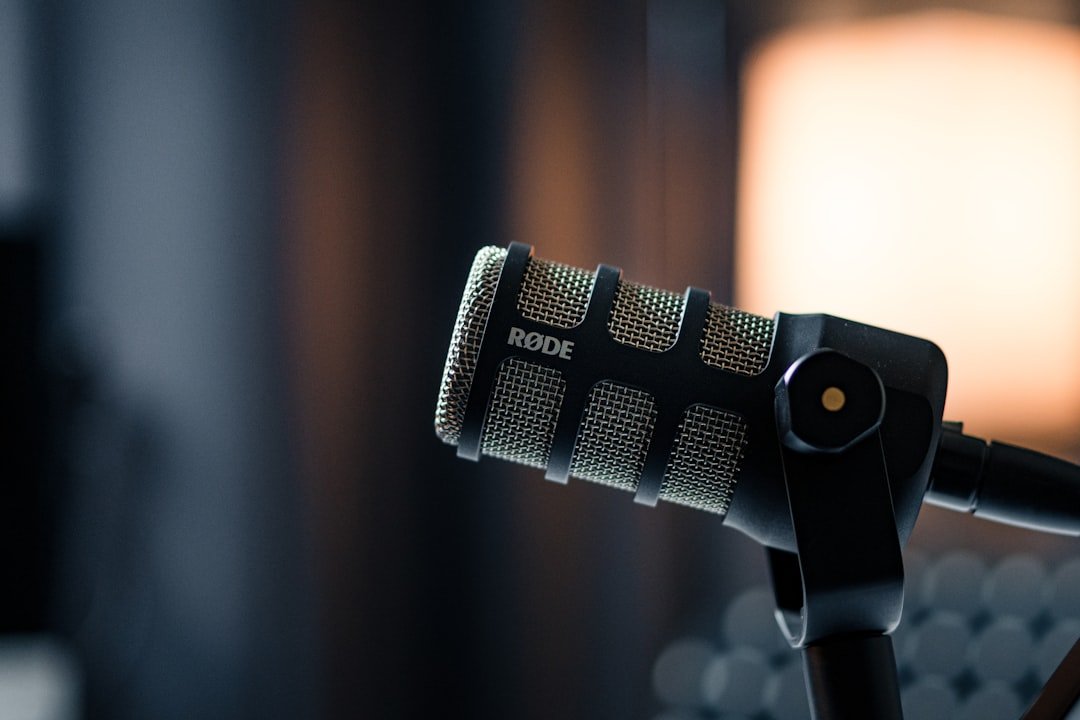
Voice-cloning quality depends heavily on the quality of the recording you upload, and cutting corners here cannot be fixed later.
Recording equipment: your phone's built-in microphone will do, but an external one is recommended; a mid-range condenser or dynamic mic produces fairly good results.
Recording environment: minimize echo, lay blankets in the corners of a small room or hang curtains, and stay away from air conditioner, fan, and computer-fan noise. Loud-background settings like a subway or a cafe are absolutely off-limits.
Content choice: reading about a minute of prose works best; do not recite poetry or read a news script, because such content has overly dramatic intonation that teaches the model unnatural emphasis patterns. We recommend reading content in your everyday speaking style, such as a self-introduction, a product explanation, or a podcast clip.
Post-processing: before uploading, use Audacity to denoise, remove mouth-click sounds, and normalize the volume. One-click optimization tools like Adobe Podcast also work.
Step four: the five core parameters in Settings
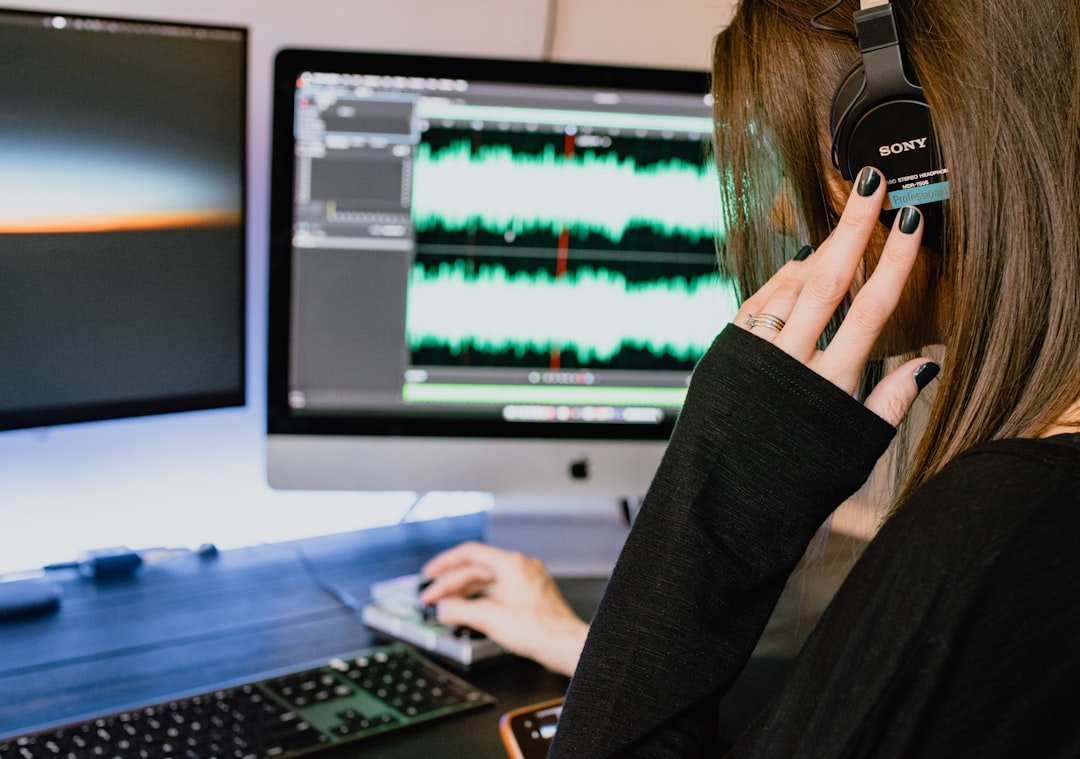
A few parameters significantly affect the result when generating audio.
Stability: low values let the voice's emotion fluctuate more, suited to performance content such as audiobooks and narrative videos; high values keep the voice steady and consistent, suited to corporate promos and tutorial narration.
Similarity Boost: high values make the cloned voice closer to the original, but may amplify noise in the original recording; low values make the voice more natural but stray from the original.
Style Exaggeration: amplifies or flattens the original voice's characteristics; turn it on only when you need to "exaggerate" the original's traits.
Speaker Boost: when enabled, the similarity between the generated voice and the reference sample increases further, at the cost of slower generation; recommended for commercial projects.
Output Format: MP3 is the default; for video, use WAV to preserve audio quality and leave room for post-production mixing.
Step five: tips for multilingual switching

Multilingual switching is one of ElevenLabs' biggest selling points, with a few pitfalls to avoid.
Choose the Eleven Multilingual v2 model rather than Eleven Turbo v2; Turbo is faster, but Chinese pronunciation occasionally has residual British or American accents.
Chinese input: just paste in Chinese characters, but watch the punctuation. Commas and periods produce natural pauses, and exclamation and question marks carry emotion, but ElevenLabs does not necessarily recognize the Chinese enumeration comma, title marks, or quotation marks, so replace them with spaces or English commas.
Minor languages such as Japanese, Korean, and Vietnamese: the model supports them but pronunciation occasionally has issues; Japanese geminate consonants, Korean final consonants, and Vietnamese tones can all be wrong. We recommend having a native speaker proofread after generation.
Mixed languages: ElevenLabs handles Chinese-English mixing fairly well, but the model gets muddled when the density of mixed Chinese and English is too high.
Step six: commercial compliance and the red lines for account bans
ElevenLabs has repeatedly drawn public attention over AI voice-fraud incidents, and its risk controls in 2026 are far stricter than in the early days. There are a few red lines you absolutely cannot cross.
You cannot clone the voice of a real person without authorization. This includes but is not limited to celebrities, politicians, corporate executives, and influencers. Even if it is only for personal entertainment, you will be banned immediately if detected.
You cannot use a cloned voice for phone fraud, fabricating evidence, or impersonation. ElevenLabs embeds a watermark in generated audio that can be identified by AI voice-detection tools.
PVC professional cloning must be of yourself. When uploading, you record a confirmation phrase, and the system checks whether the voiceprint of this phrase matches the uploaded training samples.
Commercial-license scope: which tier allows commercial use, and the commercial terms for public Voice Library voices, follow the current official page.
Frequently Asked Questions
ElevenLabs is so much more expensive than domestic AI voice tools — is it worth it?
It is worth it for long content and multilingual scenarios. The Chinese voice-over quality of domestic tools is already decent, but English and minor languages are clearly a notch below ElevenLabs, and emotional naturalness is somewhat lower too. If you are doing pure-Chinese short-video voice-over, the free Jianying (CapCut) is enough; but for audiobooks, podcasts, and overseas marketing videos, ElevenLabs still has no real substitute.
Is it legal to clone my own voice for everyday video voice-over?
It is legal. You hold full rights to your own voice. But note two things. First, the training sample you upload must be recorded by yourself; you cannot use a podcast clip or livestream recording someone else posted, even if it is your voice. Second, for commercial use you must pick a commercially licensed tier; audio generated on the free tier cannot be used commercially.
Will a podcast generated with ElevenLabs get me banned when Spotify detects it?
You will not be banned simply for being AI voice, but you must label it. Mainstream podcast platforms like Spotify have updated their terms to require that AI-generated or cloned voice content be clearly disclosed in the description. Go by the platform's current terms for exact rules.
Is a short sample really enough to clone a voice?
It is usable but with limited results. The similarity of a voice cloned from a short IVC sample is good enough for general scenarios, and most listeners cannot tell it is a clone; increasing the sample length usually improves similarity. If you want to get as close to the real person as possible, you can only go the PVC professional-cloning route, which requires a longer sample and a higher tier.
How do you call the ElevenLabs API, and what is the latency?
The official ElevenLabs API uses the elevenlabs library in Python, with the core being the generate function specifying voice, text, and model_id. On latency, streaming generation has low time-to-first-byte, suited to real-time voice-agent conversation scenarios; non-streaming whole-segment generation takes a duration corresponding to the word count. The Turbo model has lower latency and suits real time, while Multilingual v2 has slightly higher latency but better quality.
📝 本文来自抖文 www.douwen.me ,转载请保留出处。
原文链接:https://www.douwen.me/archives/1082/
💬 评论 (8)
Step-by-step is gold.
Clear and to the point.
Stats really back it up.
Bookmarked for reference.
Best summary I've read on this.
Great resource.
Easy to follow.
Practical tips not fluff.