Preview of the South American teams in the 2026 World Cup, analysis of the 10 teams' probabilities of winning the championship
The 2026 World Cup's expanded 48-team format gives South America 6 direct slots plus 1 inter-confederation playoff berth. The ten South American teams range from traditional powerhouses like Brazil, Argentina, and Uruguay to underdogs like Bolivia and Venezuela, the latter making its first-ever appearance or only just squeaking in. This article analyzes the South American teams by tier, detailing title odds, key players, coaching tactics, and bookmaker trends.
Reference data. FIFA world rankings as of April 2026. CONMEBOL South American qualifying data for the 2024 to 2026 cycle. Each national team's record in its last 12 international matches. Average odds from European bookmakers. Assessments combine the real situations of the 7 South American teams that qualified directly plus Bolivia in the playoff.
Top Tier: Argentina and Brazil
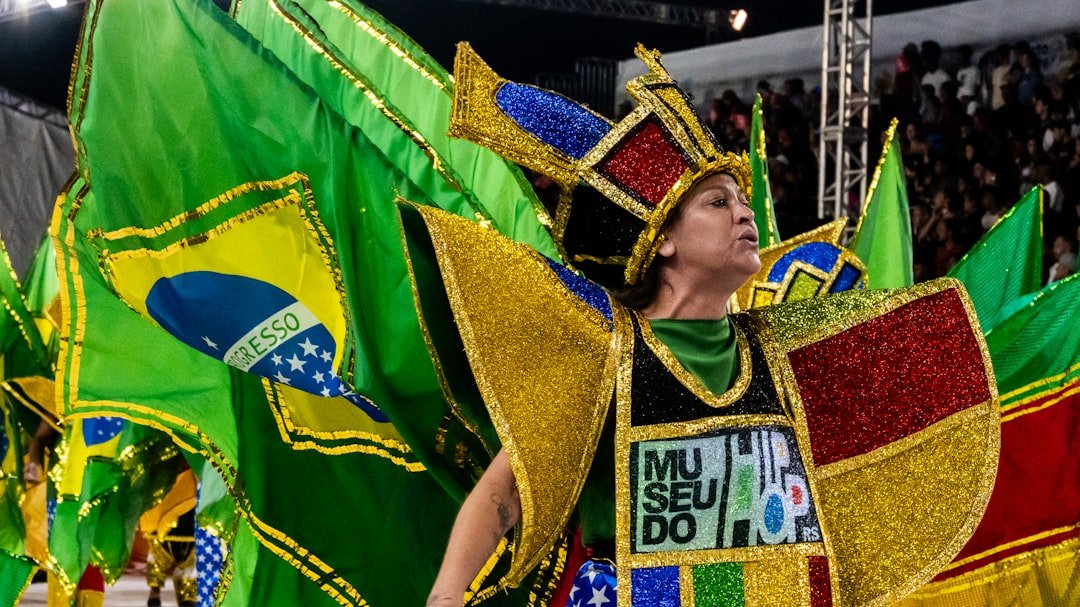
Argentina. FIFA No. 1. A treble winner as 2022 World Cup defending champion and 2024 Copa América champion. Messi, at 38, can still play, serving as the spiritual leader and set-piece taker within the tactical system. The attack is loaded with Lautaro, Álvarez, and Di María. Mac Allister, Enzo, and De Paul make the midfield steady. Romero and Otamendi anchor an experienced defense. Coach Scaloni is one of the great tactical masters in world soccer today. Argentina's title odds of 5.5 make it the second-biggest favorite, behind only Spain.
Argentina's concern: Messi's age. If Messi's form declines during the World Cup, the team needs to find a new tactical core. Whether Lautaro can take over is key. Also, Argentina has historically been strong domestically but less so abroad; against European sides, especially France and England, its psychological edge isn't that great. But on overall makeup, Argentina is one of the top favorites to win.
Brazil. FIFA No. 3. Eliminated by Croatia in the 2022 World Cup quarterfinals, considered the weakest Brazil squad in history. But the 2024 to 2026 rebuilding cycle shows clear progress. Vinícius, 25, is a Real Madrid star. Rodrygo, Raphinha, and Endrick form a new-generation attacking line. Casemiro and Bruno Guimarães anchor the midfield. Marquinhos and Gabriel handle the defense. Goalkeeper Alisson is world-class. Coach Ancelotti officially took over the Brazil national team in 2024, a landmark decision.
Brazil's World Cup odds of 6.0 tie it as the third favorite. But Brazil's problem isn't the squad, it's the mindset. Since the five-star title in 2002, Brazil has not won across 6 World Cups, falling to European teams every time. Whether Ancelotti can help Brazil break the psychological curse is key.
Both of these South American giants are title contenders; it wouldn't be surprising if either won, but neither is a sure thing.
Second Tier: Uruguay and Colombia
Uruguay. FIFA No. 11. Semifinalist at the 2024 Copa América. After coach Bielsa took over, Uruguay shifted its tactical system from the defensive counterattack of old to high-pressing. Young players like Núñez, Araújo, Valverde, Bentancur, and Pellistri execute the tactics well. But Bielsa stepped down in 2025 for health reasons, and a new coach has taken over. World Cup odds of 25.
Uruguay's traditional strength is physical toughness and resilience in key matches. As 1930 and 1950 World Cup champions, it was the third South American nation to win the trophy. Reaching the quarterfinals this time is likely; the semis would require a breakout.
Colombia. FIFA No. 14. Runner-up at the 2024 Copa América, losing to Argentina. James, at 35, is still the midfield core. Luis Díaz, the Liverpool man, is the strongest weapon on the flank. Muñoz, Lerma, and Cuesta form an iron triangle in defense. Coach Lorenzo led the team to a record 28-match unbeaten run. World Cup odds of 30.
Colombia is the most underrated South American team this World Cup. With a favorable group draw, its chance of reaching the semis is 30%.
Third Tier: Ecuador and Paraguay

Ecuador. FIFA No. 32. Eliminated in the 2022 World Cup group stage. A high ranking in the 2026 qualifiers and early qualification reflect its progress. The coach leads the team with clear tactics. Caicedo, 24, is a Chelsea midfielder and a world-class ball-winner. Hincapié, Valencia, and Plata all play in Europe's top five leagues. The youthful squad averages 26 years old. World Cup odds of 80.
Ecuador's goal of getting out of the group and reaching the round of 16 is a reasonable expectation. Reaching the quarterfinals would require a dark-horse performance.
Paraguay. FIFA No. 41. Qualified only on goal difference in the final round of the 2026 qualifiers. After 10 years without a World Cup, it returns this time. Almirón, the Newcastle winger, is the key player. Sosa anchors the midfield. But the overall squad quality ranks toward the bottom of the ten South American teams. Coach Gareca is an experienced veteran who led Peru to the 2018 World Cup. Odds of 250.
Paraguay's World Cup goal is to get out of the group and win one match. Reaching the round of 16 would already be exceeding expectations.
Fourth Tier: Venezuela and Peru
Venezuela. FIFA No. 46. A milestone first-ever World Cup qualification. For years Venezuela was the only South American qualifying team never to have reached a World Cup. This time it finally realized the dream thanks to the 48-team expansion. Rondón and others are key players. The coach leads the team with clear tactics. But the overall squad quality is second-to-last among the ten South American teams. Odds of 500.
Venezuela's goal is to not embarrass itself. Playing all three matches and scoring one goal would be a huge success. Ten thousand Venezuelan fans will travel to the host venues to cheer the team on. This is a historic moment.
Peru. FIFA No. 38. After being eliminated in the 2018 World Cup group stage, it returns this time. The coach has been in charge for 18 months with a mediocre record. Several veterans are key players but the average age skews old. The transition to youth is still under way. Odds of 400.
Peru likewise counts getting out of the group and winning one match as a success. Its overall competitiveness is the weakest of the ten South American teams.
Fifth Tier: Chile and Bolivia
Chile. FIFA No. 52. It did not qualify directly this World Cup and is in the playoff. Chile has declined markedly in recent years. Vidal, at 38, has retired from the national team, and Sánchez and others are over 35. The new generation of players can't match their predecessors' ability. Coach Gareca took over in 2024 but with an unremarkable record.
Chile's playoff opponent will be the Asian No. 5 or the Oceania champion, depending on the final draw. In theory it can win through. But even if it reaches the World Cup, its odds are as high as 800, making it an also-ran.
Bolivia. FIFA No. 76. Like Chile, a playoff team. Bolivia's only advantage is high-altitude play, with a home venue in La Paz at 3,577 meters of altitude. Away on the lowlands, its strength drops noticeably. If it gets through the playoff to the World Cup this time, playing one match and scoring one goal in the group stage would already be a huge victory. With odds above 1,000, it's an also-ran.
Historically Bolivia has reached only 3 World Cups, the most recent in 1994. Appearing at a World Cup again after 31 years carries great meaning for Bolivian fans.
Overall Playing Style of South American Teams
The soul of South American soccer is technique, individual ability, and improvisational creativity.
Ball control. Traditional powers like Argentina, Brazil, and Uruguay all emphasize possession and short passing. Unlike the high-pressing popular in Europe, South American teams focus more on building an advantage slowly through midfield organization.
Flank breakthroughs. Wingers like Vinícius, Di María, and Díaz are all world-class. South American attacks often tear open defenses from the flanks.
Set pieces. South American players are a notch below European teams overall on set pieces. This is a point where European teams may exploit them at the World Cup.
Defense. Apart from Argentina's solid backline, most South American teams have defensive flaws. Colombia, Uruguay, and Ecuador all occasionally make defensive errors in key matches.
Fitness. South American players are slightly behind European players in fitness, because the long, intense South American qualifying campaign drains energy.
Mentality. Since winning the 2022 World Cup, Argentina has a strong psychological edge. Brazil, by contrast, carries a heavy mental burden. Other South American teams are psychologically weaker against European sides.
The Key X-Factors
X-factor 1. Messi's final stage. This is the last World Cup that Messi, at 39, will play. Whether he can carry Argentina one last time is the suspense. If he's in good form, Argentina's title chances rise by 20%.
X-factor 2. Vinícius's maturity. Brazil's top star, at 25, is in his golden years. If Vinícius can deliver consistently, Brazil returns to its peak.
X-factor 3. Ancelotti's tactics. This five-time Champions League winner taking over the Brazil national team is a new experiment. Whether he can inspire the Brazilian players' performance is the key variable.
X-factor 4. Colombia's dark-horse credentials. Coach Lorenzo led the team to a 28-match unbeaten run; if that continues into the World Cup, Colombia could reach the semifinals as a dark horse.
X-factor 5. Uruguay's transition. After losing Bielsa, will Uruguay's tactical system fall apart? Can the new coach continue the high-pressing style?
X-factor 6. The North American home climate. This World Cup is co-hosted by Canada, Mexico, and the United States. Mexico City's altitude of 2,240 meters is an advantage for South American highland teams like Bolivia. The lowland climates of U.S. and Canadian cities suit European teams better. Climate affects different teams differently.
A Comprehensive Forecast of South American Title Chances
First tier, possible champions. Argentina 12%, Brazil 10%; combined, these two give South America a reasonable 22% chance of winning the title.
Second tier, reaching the semis. Colombia 8%, Uruguay 6%; the two South American second-tier teams also have the ability to break through to the semis.
Third tier, reaching the quarters. Ecuador 5% to reach the round of 16, Paraguay 2% to reach the round of 16. Both teams hope to get out of the group and win 1 to 2 matches.
Fourth tier, also-rans. Venezuela, Peru, Chile, and Bolivia have a 10% to 30% chance of getting out of the group. Participation matters more than results.
It's a reasonable expectation that 1 to 2 South American teams reach the semifinals overall. Their combined title chance is about 24%, meaning a one-in-four probability that the title goes to a South American team.
Historical comparison. Brazil's 2002 title was South America's most recent. Argentina was runner-up in 2014, Brazil reached the quarters in 2018, and Argentina won again in 2022. The trend of South American and European teams trading the throne at the World Cup continues in 2026.
Future Transfers and Value of South American Players
Top 5 Argentine players by market value. Mac Allister €120M. Lautaro €110M. Enzo €100M. Álvarez €90M. Tagliafico €60M.
Top 5 Brazilian players by market value. Vinícius €200M, the highest in South America. Rodrygo €100M. Raphinha €90M. Casemiro €40M. Alisson €40M.
World Cup performance affects the transfer window. After winning the 2022 World Cup, the values of Lautaro, Álvarez, and Mac Allister doubled. Players who perform well in 2026 will likewise rise in value.
South American players are a main market for European clubs. Each year more than 200 young South American players join European clubs. The World Cup is the stage where these players get discovered.
Frequently Asked Questions (FAQ)
Who is South America's biggest favorite for the 2026 World Cup?
Argentina is South America's biggest favorite. FIFA No. 1 in the world, with the form of a treble: 2022 World Cup defending champion and 2024 Copa América champion. Its title odds of 5.5 are second only to Spain, making it the second-biggest favorite globally. Although Messi is 38, he can still play, and the new lineup of Lautaro, Álvarez, and Enzo is mature. Coach Scaloni is a tactical master. On overall makeup, Argentina is the South American team most likely to win the 2026 World Cup. Brazil is the second favorite at odds of 6.0, but having failed to win across 6 World Cups in nearly 20 years, it carries a heavy mental burden.
Can Brazil win a sixth title?
The probability is about 10%. Brazil's squad quality is second in South America, with a loaded attack of Vinícius, Rodrygo, and Raphinha, and starters at Europe's top clubs throughout the midfield and defense. New coach Ancelotti is a five-time Champions League winner and Brazil's first-ever European coach, a huge change. The problem is that since the five-star title in 2002, Brazil has not won across 6 World Cups, falling to European teams every time. The mentality is the biggest obstacle. If Ancelotti can fix the players' mindset and break the European curse, a Brazil title isn't impossible. But the probability is lower than Argentina's.
Can Venezuela win a match in its first World Cup?
There's hope but it won't be easy. Venezuela is FIFA No. 46, third-from-bottom in strength among the ten South American teams. Drawn into a weak group, say with second- or third-tier Asian teams like South Korea, Iran, or Iraq, its chance of winning one match is 30%. Drawn into a strong group, say with France, Argentina, or Senegal, its chance of winning one match is below 10%. But even with 0 wins, 0 draws, and 3 losses, Venezuela's first-ever World Cup appearance is itself national history. Ten thousand Venezuelan fans will be on-site. This is the pure joy that soccer brings to a nation.
Can Chile and Bolivia qualify through the playoff?
Chile's chance is 60%. Bolivia's chance is 20%. Although Chile has declined badly, FIFA No. 52 is still higher than the Asian No. 5 and the Oceania champion. Chile has the edge on raw strength in a playoff. Bolivia at FIFA No. 76 is weaker, but if the opponent is the Oceania champion, say New Caledonia or the Solomon Islands, Bolivia still has a chance. If the opponent is at the level of Japan, South Korea, or Australia, it has basically no shot. The specific draw will decide their fates.
Who is more likely to win, a South American or a European team?
A European team is more likely. Historically, across 22 World Cups, European teams have won 12 times and South American teams 10 times. The last two tournaments, 2022 Argentina and 2018 France, alternated between South America and Europe. This time 14 European teams are at the World Cup, against 7 South American teams plus 1 in the playoff. By team count and overall strength, Europe is a notch stronger. Five European teams, Spain, France, England, Portugal, and Germany, all have odds in the top 10. Three South American teams, Argentina, Brazil, and Colombia, are in the top 10. The champion will most likely come from Europe, but Argentina remains a reasonable bet to take a shot at it.
📝 本文来自抖文 www.douwen.me ,转载请保留出处。
原文链接:https://www.douwen.me/archives/1056/
💬 评论 (9)
Solid breakdown, very useful.
Clear and to the point.
Step-by-step is gold.
Easy to follow.
Bookmarked for reference.
Best summary I've read on this.
Stats really back it up.
Great resource.
Loved the FAQ section.