How to distinguish true and false information in the AI era, preventing AI rumors and deep forgery in 2026
🇨🇳 阅读中文版How to distinguish true and false information in the AI era, preventing AI rumors and deep forgery in 2026
The biggest change in the past two years may not be that AI can help us write, draw, or make videos, but that it has made "fake" too cheap. In the past, it took a professional team and expensive equipment to forge a celebrity speech; now ordinary people can use tools on their mobile phones to generate a fake video or voice in a few minutes. As a result, the information environment has become unprecedentedly turbid. It is becoming increasingly difficult to distinguish how much of the content we see every day actually happened and how much was pieced together by algorithms and models. Learning to distinguish between true and false information is no longer a professional skill for media people, but a lesson that every ordinary person must make up for.
Why AI is making fake information harder to spot
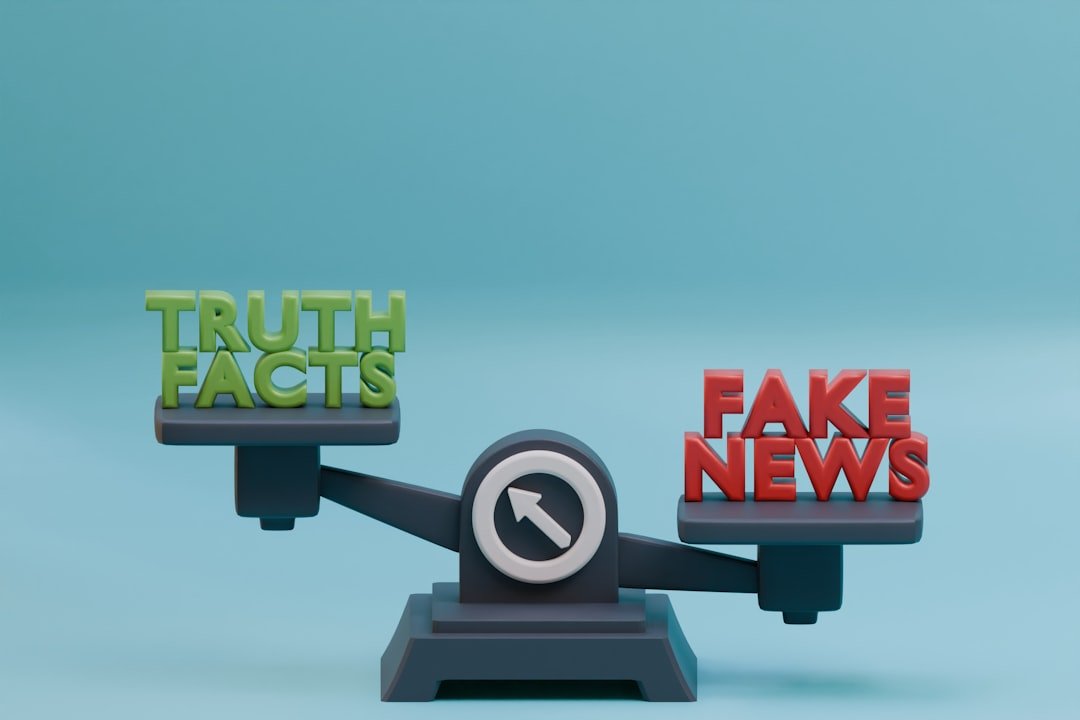
Fake news in the past often had flaws: the text was awkward, the pictures were vague, and the logic was inconsistent. You can see the clues if you pay a little attention. AI changes that. The text it generates is smooth and decent, the tone is accurate, the pictures are rich in details, and the mouth shapes and expressions of the characters in the video can also match. In other words, AI has raised both the "production threshold" and the "recognition threshold" of false information. The production side is getting easier and easier, and the identification side is getting more and more difficult. This is a scissor gap that is very unfriendly to ordinary people.
More troubling is the issue of scale. A person can't write a few stories in a day by hand, but with the help of models, fake content can be mass-produced and distributed. With the communication mechanism of social platforms, the illusion that "many people are talking about it" can be formed in a short time. When a piece of information is seen repeatedly, people will instinctively find it more credible. This psychology is fully exploited by counterfeiters. Therefore, in the AI era, we must be wary not only of a single piece of false news, but also of the overwhelming information torrent that creates the illusion of consensus.
What are the common types of AI fraud?
To identify false information, you first need to know roughly what it looks like. There are several common categories that everyone should be aware of. The first category is fake news text generated by AI, which usually imitates the tone of formal media and reports an event that did not happen in a serious way, and sometimes fabricates "experts" and "data" to increase credibility. The second category is deep fake videos, which transplant real people’s faces or voices into other images to make it look like they said or did something.
The third category is AI face-changing, which is often used to impersonate acquaintances, celebrities or even public officials, which is quite harmful. The fourth category is fake pictures generated by AI, such as "on-site photos" and "satellite pictures" that do not exist at all, used to support a false event. The fifth category is fake voices, which imitate a specific person’s voice to make a call or make a voice call. This category is especially dangerous in scams involving money. These types often do not appear alone, but are used in combination: a fake video is accompanied by a fake report, plus a few fake pictures, and the layers are added to make it more difficult to question. Understanding these routines is the first step in identifying them.
How to identify the first move: look at the source

The simplest and most effective way to distinguish between true and false is to ask "where does this information come from?" Regular news usually has a clear publishing organization, a signed reporter, and a verifiable time and place; while fake news often comes from vague sources, either "online", "someone said", or from an account or website you have never heard of. When you see sensational content, don’t rush to believe it or read it. Instead, focus on the source of the information: who said it, how does he know it, and is there any first-hand evidence?
Be especially wary of sources that deliberately imitate authority. Some fake websites will have a name that is very similar to that of well-known media, or use similar page layout, making people mistakenly think that it is an official release. There are also some contents that are labeled as "internal information from an organization" or "disclosed by people familiar with the matter", which sound mysterious and credible, but are actually impossible to verify. A simple habit is: when encountering important information, go directly to the authoritative channels you trust to find the original text, rather than relying on second-hand paraphrasing. If a major event is true, it will usually be reported through formal channels instead of just being circulated in some unknown corner.
How to identify the second trick: cross-validation
A single source is never enough, this is the basic skill of identifying information. The so-called cross-validation is to check the same thing through multiple unrelated channels to see if the statements are consistent. If only one company is talking and other authoritative channels are silent, then the credibility of this information will be questioned. Important events that really happened are usually reported by multiple media from different angles, and the details corroborate each other; while fabricated stories often can only circulate in small circles.
When doing cross-validation, be careful not to mistake "mutual reprinting" as "mutual confirmation". There seem to be many accounts on many platforms saying the same thing, but if you look closely, they all quote from the same original source, which is essentially a single source. The truly meaningful verification is to find multiple channels for independent collection and investigation. For specific statements involving numbers, time, and location, it is even more important to compare them item by item to see if the details given by different sources are consistent. Once you find that they are contradictory, or the more you check, the more ambiguous they become, then there is reason to suspect that this is a piece of processed information.
How to identify the third trick: Look at the details and flaws
Although AI fraud is becoming more and more realistic, the details are still often revealing, and you can find many clues if you pay close attention. When looking at AI-generated pictures, you can pay more attention to the number of fingers, the arrangement of teeth, the continuity of jewelry and textures, and whether the text in the background is clear and readable. Models often handle these areas unnaturally. When watching deepfake videos, pay attention to whether the characters blink naturally, whether the mouth shape and voice really match, and whether there is any strange blurring or jittering around the edges of the face when the light changes.
Textual disinformation also has flaws. The content written by AI is sometimes logically smooth but empty, piling up a lot of seemingly professional expressions but unable to withstand questioning; when encountering specific names, institutions, and references, they are often vague or inconsistent. When you hear suspicious speech, you can pay attention to whether the tone is too smooth, whether there are unnatural pauses and emotional fluctuations. Of course, with the advancement of technology, these flaws will become fewer and fewer, so looking at the details can only be used as an auxiliary means and cannot be used as the sole basis for judgment. Its value is that once an obvious anomaly is discovered, it is enough for you to increase your vigilance and conduct further verification.
How to identify the fourth trick: reverse search
Reverse search is a verification tool that is easy for ordinary people to use. When you see a suspicious picture, you can use the "search by picture" function of the search engine to see when and where it first appeared. Many of the so-called "scene photos" are actually old pictures from other events many years ago that have been remade; some are taken from movies, TV series, and game screens, and the original photos can often be revealed quickly after reverse searches. You can also check the key screenshots in the video in this way.
For text information, you can also put key sentences or unique sayings directly into the search box to see where it comes from and whether it has been refuted. Many rumors that have been circulating for a long time have actually been verified by authoritative agencies, and you can find clarifications with just a little search. Developing the habit of "search first before believing" can block a considerable amount of false content. Counter-searching does not require professional skills and only takes a few dozen seconds, but it can often put the brakes on before you forward it, preventing you from accidentally becoming a link in the rumor spreading chain.
Practical anti-fraud practices: Be extra vigilant when it comes to money and identity
The most practical significance of identifying false information is to protect your wallet and identity. The core routine of the scam has actually not changed much over the years, only the packaging has changed. No matter how realistic the video, voice or file the other party uses, as long as the topic comes to transferring money, borrowing money, providing verification codes, and asking for ID documents, you must be on full alert. A sound rule of thumb is this: When it comes to money and important identity information, never act on the basis of a phone call or a video, no matter how familiar and trustworthy it may seem.
In particular, we should remind you that video calls and voices can now be faked. There have been reports that some people received video calls from "acquaintances" or "leaders", and the other party's face and voice matched, but it turned out to be a scam using AI face-changing and synthesized speech. Therefore, the old experiences of "seeing is believing" and "listening to identify people" are no longer absolutely reliable today. When encountering such a request, the most effective way is to switch to another independent channel for verification: after hanging up the phone, call the person back using the number you have saved, or confirm in person or through other methods that both parties are familiar with. Taking one more step to confirm can often prevent a loss.
Tools can assist identification, but don’t rely solely on them
There are already some tools on the market that claim to be able to detect AI-generated content and identify deep fakes. They can indeed provide some help, but they must be aware of their limitations. This type of detection is essentially "using a model against a model", and while generation technology has been advancing, detection tools may not always be able to keep up. Just because a piece of content is judged by a tool as "suspected to be generated by AI" does not mean that it is necessarily false; conversely, just because the tool says "no problem" does not guarantee that it is true. It's OK to treat test results as reference clues, but it's dangerous to treat them as final conclusions.
A more reliable approach is to combine the tools with the methods mentioned above. The tool helps you do a preliminary screening and suggests which content is worth a second look. To make a real judgment, you still need to rely on the basic skills of looking at the source, cross-validation, detailed observation and reverse search. Technology can alleviate some of the burden, but it cannot do the thinking for you. In the final analysis, the initiative to distinguish between true and false should be in your own hands, rather than outsourced to a button. Developing this kind of tool-independent judgment will only become more and more important in the future.
How should ordinary people develop information literacy?
In the long run, the key to identifying false information is not skills, but the underlying ability of information literacy. It includes several habits: stop when encountering content that stimulates strong emotions, because fakers are best at using anger, fear, and sympathy to make people lose their minds and let down their guard; do not regard "I want to believe" as "it is true" and admit that you will be deceived by information that meets expectations; leave a little room for "it may not be accurate" in any statement, and be willing to revise your opinion in the face of new evidence.
Information literacy also means taking responsibility for your own communications. Asking "Have I verified it?" before forwarding is actually doing your part for the entire information environment. Every forwarding without judgment may make a piece of false news travel an extra mile; and every restraint and verification are adding a little clarity to the turbid water. We cannot prevent the development of AI counterfeiting technology, but we can decide whether to be gullible or cautious when facing information. In an era where it is increasingly difficult to distinguish between true and false, maintaining this sobriety may be the most practical protection that ordinary people can give themselves and those around them.
FAQ
Are AI-generated pictures really invisible at all?
It’s not completely invisible yet. Many AI images still appear unnatural in details such as fingers, teeth, jewelry textures, and background text. Careful observation can usually reveal clues. However, with the rapid advancement of technology, these flaws will become fewer and fewer, so we cannot just rely on looking at the details, but we must also combine source verification and reverse search to make judgments.
The face and voice I saw on the video call matched each other, could it still be fake?
It's possible. Nowadays, AI face-changing and synthetic voice can make the face and voice more realistic. It has been reported that there have been scams in which people pretend to be acquaintances or leaders to make video calls. Therefore, when money or important information is involved, do not act based on just a video call. It is best to hang up and call back using the number you originally saved, or use an independent channel to verify in person.
Are tools for detecting AI content reliable?
It can be used as a supplement, but it cannot be relied upon entirely. Such tools essentially use models to identify models, and the generation technology is constantly being updated, so detection may not always keep up. Just because the tool says "suspected AI" doesn't mean it's necessarily false, and it says "no problem" doesn't mean it's necessarily true. A safer approach is to use the tool results as reference clues, and then use sources, cross-validation and other methods to make your own judgments.
How to quickly determine whether a sensational news is a rumor
Don't be in a hurry to write or forward. The first step is to look at the source and ask who said it and whether there is first-hand evidence; the second step is to cross-verify with multiple unrelated authoritative channels to see if the statements are consistent; the third step is to conduct a reverse search on the key content or pictures to see if the rumors have been refuted. In three steps, most obvious rumors can be identified.
What are the most common habits that ordinary people should develop to prevent fake information?
The most important thing is to "verify first, then believe, and then forward." You should especially pause when encountering content that strongly arouses emotions, as this is often a common tactic for fraud. At the same time, admit that you will also be misled by information that meets your expectations, and retain a little room for doubt in any statement. Turning these into instinctive reactions is more effective than memorizing any number of recognition skills.
📝 This article is from DouWen www.douwen.me . Please retain the source when reposting.
Original link: https://www.douwen.me/archives/1392/
💬 Comments (7)
Bookmarked for reference.
Clear and to the point.
Thanks for the detailed comparison.
Easy to follow.
Step-by-step is gold.
Great resource.
Loved the FAQ section.