Which mobile phone voice assistant is smarter? 2026 Doubao Xiaoai Classmate Siri actual test comparison
🇨🇳 阅读中文版Which mobile phone voice assistant is smarter? 2026 Doubao Xiaoai Classmate Siri actual test comparison
We have been accustomed to this for many years by turning on our mobile phones and shouting just one sentence to get things done. But to be honest, most of the time, voice assistants in the past could only complete fixed commands such as "set an alarm clock" and "turn on the flashlight", and would get stuck on slightly more complex problems. After entering the era of large models, the situation began to change significantly. Nowadays, when we use mainstream mobile voice assistants such as Doubao, Xiaoai, and Siri, the experience is completely different from a few years ago. They are no longer just tools triggered by keywords, but more like conversation partners who can understand the context, chat, and help you come up with ideas. This article wants to combine the real experience of daily use and put these three assistants together for a qualitative comparison to see how smart the mobile voice assistants will be in 2026 and how people with different needs should choose.
What changes happened to the voice assistant after the large model was connected?
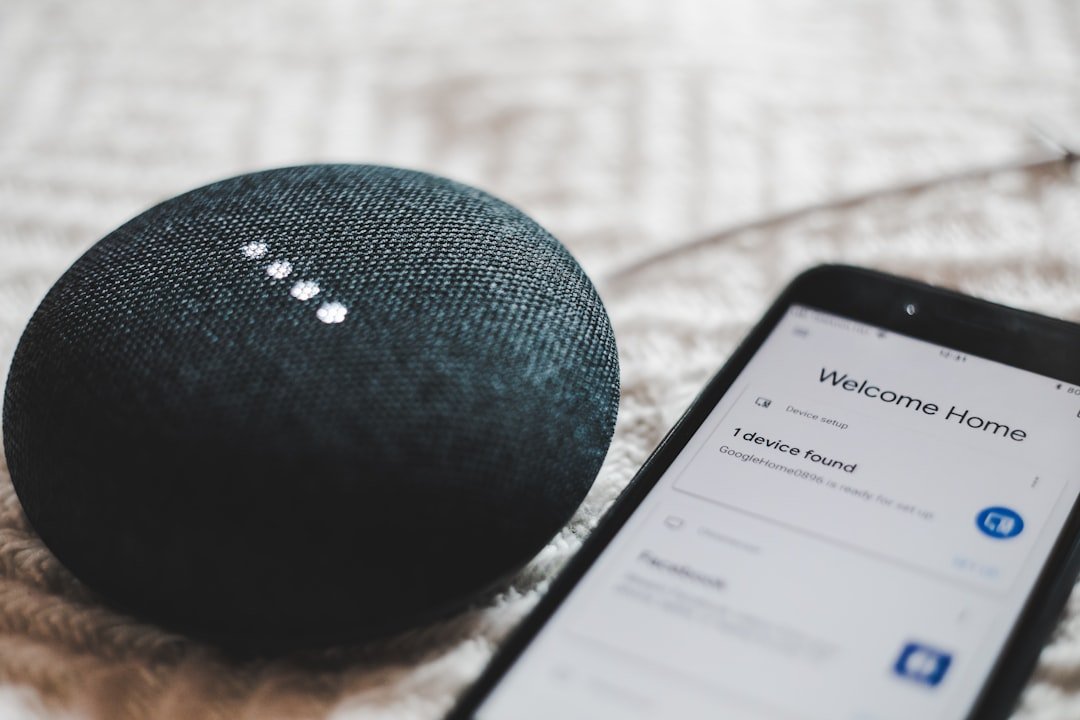
The most intuitive change is that the assistant starts to "chat". In the past, when you asked the assistant an open-ended question, such as "Where is a good place to take your children to play on weekends?", you would often get a reading of web search results, or even directly tell you "I did not find relevant content." Now after accessing the large model, the assistant can understand your intentions, give a structured suggestion based on common sense, and can continue to expand based on your questioning. This transition from "retrieval" to "generation" is the core upgrade of this generation of voice assistants. According to public information, several mainstream manufacturers have integrated their own or cooperative large language model capabilities into voice assistants in the past two years. The trend is to make conversations more natural and continuous.
Another change is multi-turn dialogue and contextual memory. In the past, you had to shout the wake-up word again every time you said a sentence, and the assistant did not remember what you asked in the previous sentence. The current assistant can basically take over the context in a conversation. If you say "Is there a parking lot near it?", it knows that "it" refers to the place just mentioned. This continuity makes voice interaction feel like a real "conversation" for the first time, rather than a mechanical response of questions and answers. Of course, there are still differences between different assistants in terms of memory length and understanding accuracy, which is also one of the key points of the subsequent comparison.
Doubao: ByteDance’s conversational assistant positioning

Doubao is an AI assistant product launched by ByteDance. Its positioning is more of an all-round conversational AI, not just a voice portal in the mobile phone system. Its strength lies in the natural language dialogue itself. The coherence of the chat and the organizational ability of the answers are relatively outstanding. When you ask it to write copy, give ideas, explain concepts and other content-generating tasks, the experience is usually smooth. For people who often need to use AI to help with word work, or who like to chat with AI, Doubao's performance in the "smart" dimension is often impressive.
However, it should be noted that Doubao is essentially an independent application, rather than a native assistant deeply bound to a certain mobile phone system. This means that it is not as smooth as the assistant that comes with the mobile phone manufacturer in terms of cross-application calls and system-level control. For example, operations such as directly helping you change system settings and deeply linking the native functions of the phone will be limited. But looking at it on the other hand, just because it does not depend on a specific mobile phone brand, it can be installed and used no matter what brand of mobile phone you use. This cross-platform feature is also a major advantage of it. To put it simply, Doubao is more like a "smart brain installed on a mobile phone" with strong conversational skills, but system-level control is not its home field.
Xiaoai: the smart housekeeper in Xiaomi ecosystem
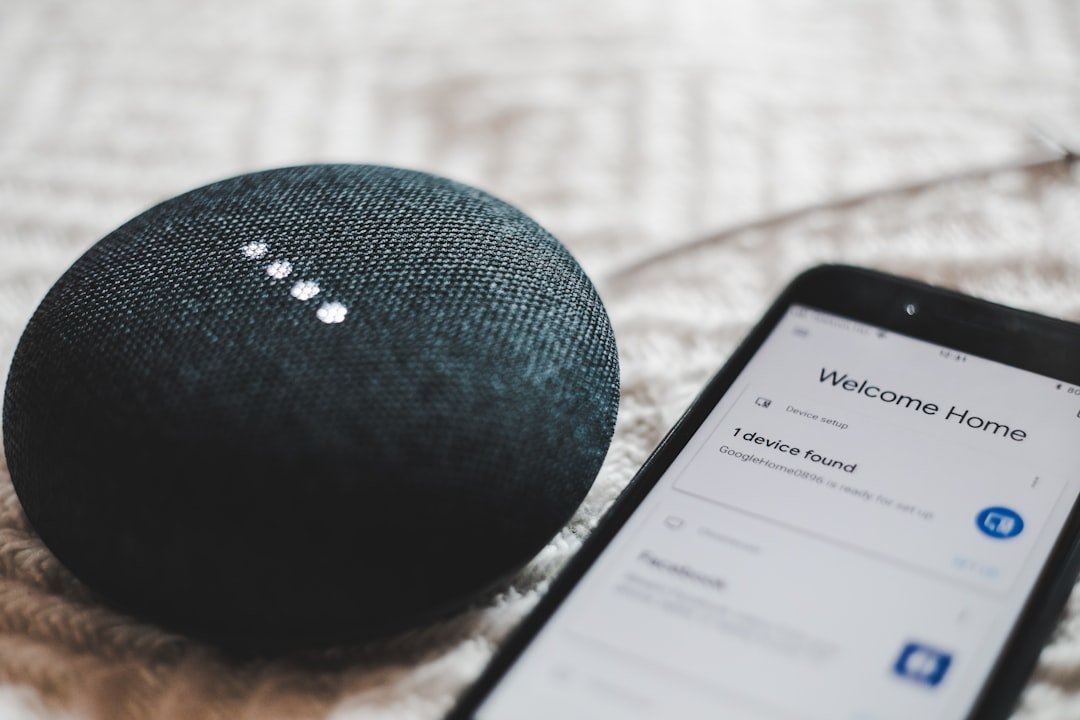
Xiaoai is a voice assistant launched by Xiaomi. Its biggest feature is that it is deeply integrated with Xiaomi’s hardware ecosystem. If you use a lot of Mijia smart devices at home, from lights, air conditioners, sweeping robots to TVs and speakers, then the value of Xiaoai will be greatly amplified. Controlling all the devices in the house and setting linkage scenes in one sentence, these operations are quite smooth in the Xiaomi ecosystem. This is an experience that is difficult to replace with independent applications like Doubao. Xiaoai’s positioning is essentially the smart butler of Xiaomi’s ecosystem, and its intelligence is largely reflected in its “ability to work” rather than just “its ability to chat.”
In recent years, Xiao Ai has also been upgrading to large-scale models. According to public information, Xiaomi has continued to enhance Xiao Ai's natural dialogue and understanding capabilities. The trend is to gradually move closer to more natural dialogue from the past command-oriented interactions. So now with Xiaoai, you can not only let it control the devices at home, but also chat with it about open-ended questions. The two abilities are being integrated. For users who deeply use Xiaomi and Mijia products, Xiaoai is almost the default optimal solution, because it combines "smart dialogue" and "actual device control" in the same entrance.
Siri: the system-level assistant of Apple ecosystem
Siri is Apple's built-in voice assistant on iPhone, iPad, Mac, Apple Watch and other devices. Its biggest advantage is that it is deeply integrated into the Apple system and can be easily invoked on almost every Apple device. Siri has a high degree of integration in system-level operations. It can set alarms, send messages, check calendars, and control HomeKit smart homes. It can handle these tasks related to Apple's native functions relatively stably. For users who are already in the Apple ecosystem and use iPhones and other Apple devices at the same time, Siri's cross-device relay experience is its unique moat.
Regarding Apple’s progress in AI, we need to be cautious here. The specific function release details and timetable are subject to Apple’s official announcement. This article does not make up any information. Judging from public information, the trend is that Apple is also introducing stronger AI capabilities into the system experience, making the assistant's understanding and conversation capabilities more natural. Apple has always emphasized privacy, and many processes tend to be completed locally on the device. This is also a feature that is often mentioned in terms of privacy. Therefore, when evaluating Siri, instead of struggling with a function that is not yet clear, it is better to understand it as an assistant that is most deeply bound to Apple's ecosystem, has the highest degree of system integration, and has a relatively conservative privacy attitude.
Horizontal experience of natural conversation ability
If we only look at the dimension of "how was the chat?", several assistants have their own emphasis. As a conversational AI, Doubao's coherence in open chat, content generation, and multiple rounds of questioning usually gives people a strong impression, and you can clearly feel its ability to "organize language". Xiao Ai and Siri, as mobile phone system-level assistants, used to be more focused on command execution. However, with the access to large model capabilities, their performance in natural dialogue is also improving. The trend is to increasingly understand human speech instead of just recognizing fixed sentences.
It should be noted that natural conversation ability is difficult to quantify with a score. The actual experience is affected by many factors such as question type, network conditions, version iterations, etc., so here we only provide a qualitative description without giving running scores. My overall feeling is that in pure chat and content creation scenarios, independent AI application assistants are often more handy; in scenarios involving "hands-on help you operate your phone or device", the advantages of system-level assistants are more obvious. These two types of abilities have different focuses, and it is difficult to simply say who is definitely smarter.
Nuances of Chinese Understanding
For Chinese users, Chinese understanding ability is an unavoidable indicator. Doubao and Xiaoai are both products of domestic manufacturers. They have a natural home field advantage in understanding Chinese context, Internet buzzwords, and localized expressions. When dealing with some colloquial, dialect-tinged or "Chinese" expressions, they are usually more in line with our habits. This can be felt more clearly in daily use. For example, if you ask a question in a more casual and less standard way, most of them can understand it.
Siri has also continued to improve in Chinese understanding over the years. Daily Chinese commands and conversations are basically no problem. However, whether the experience can fully keep up with some very localized and colloquial expressions varies from person to person and is also related to specific scenarios. In general, if your usage scenario involves a lot of spoken Chinese and local content, the "down-to-earth" level of understanding of domestic manufacturers' assistants is often more comfortable; if your needs are more standardized instructions and cross-device collaboration, this difference is not so critical.
Comparison of smart home control capabilities
Smart home is one of the application scenarios with the strongest sense of value for voice assistants, and it is precisely this that tests the ecology the most. Xiaoai relies on Mijia's huge device system, and it is almost seamless to control devices within the Xiaomi and Mijia ecosystems. This is its core battlefield. Siri is connected to compatible smart home devices through the HomeKit/home system, and the linkage between the Apple ecosystem and devices that support Apple standards is smooth, making it suitable for users who originally built a smart home based on the Apple system.
As an independent AI application, Doubao is not its home field in directly controlling smart home hardware. Its strengths are dialogue and content capabilities. So just looking at smart home control, it basically depends on which camp your home devices belong to: if you use Mijia, rely on Xiao Ai, if you use the Apple system, use Siri to control it through the home. This also reminds us that choosing a voice assistant is often not about choosing an app alone, but choosing a whole ecosystem. Which system the device is purchased in, the assistant is often determined accordingly.
Trade-offs brought about by ecological binding
Ecological binding is the root of the difference between these assistants. Siri and Xiao Ai are both typical "ecological assistants". The former is bound to Apple, and the latter is bound to Xiaomi and Mijia. The advantage of this kind of binding is deep linkage at the system level and device level. The disadvantage is the high cost of migration. Once you go deep into a certain ecosystem, most of these conveniences cannot be taken away when you change brands. Doubao represents a "cross-platform assistant" that does not rely on specific hardware and can be used on any mobile phone. It has a high degree of freedom, but the price is that it is difficult to achieve deep control at the system level.
This is actually a typical trade-off. For people who pursue deep linkage and are willing to stay in an ecosystem for a long time, an ecological assistant will bring a smooth experience; for people who value freedom, hope to change their phone without changing their habits, and mainly use the assistant as a smart brain, a cross-platform assistant is more suitable. There is no absolute better choice. The key depends on whether you care more about "depth" or "freedom". Once you understand this underlying logic, it will become much clearer how to choose the model later.
Different postures of privacy dimensions
Privacy is a topic that more and more people are concerned about. Apple has always emphasized privacy protection and tends to complete more processing locally on the device. This is its consistent attitude in external communication, and it is also one of the reasons why many privacy-conscious users choose the Apple system. The assistants of domestic manufacturers also have their own policies and instructions on privacy. It is recommended that the specific data processing methods be based on the privacy terms officially announced by each company. This article does not speculate on undisclosed technical details.
Objectively speaking, any assistant that has access to large model capabilities in the cloud will most likely involve uploading data to the server for calculation when processing complex requests. This is a common feature of this type of technology and is not a problem unique to any one company. As a user, the more practical approach is to read each company's public privacy policy to understand what data will be collected, whether you can turn off certain functions, and whether you can manage and delete your own history. Instead of struggling with general judgments about who is more secure, it is better to focus on the controllable privacy options provided by the product in your hand.
Selection suggestions based on mobile phone brand and needs
When it comes to actual choice, the most worry-free idea is to follow the mobile phone brand. For those who use iPhones, Siri is the choice that is always at hand and most closely integrated with the system. It is very convenient for daily commands and collaboration across Apple devices; for those who use Xiaomi phones and have Mijia devices at home, Xiao Ai is almost the best by default, which can both chat and manage devices throughout the house. This is the logic of ecological assistants. It is usually not wrong to follow the hardware.
And if you care more about dialogue and content generation capabilities, or the experience of your mobile phone brand’s built-in assistant is average, then independent AI applications such as Doubao are a good supplement. It does not require a mobile phone, just install it and use it. It is often a good experience to use it as a smart conversational brain. In other words, when choosing a model, ask yourself two questions: Do I mainly use the assistant to "control devices" or "chat services"? Do I want to be bound to an ecosystem? Think about these two points, and the answer will basically come out.
Mixing and matching is the pragmatic way to play
In fact, in real life, there is no need to use only one assistant. A more pragmatic approach is to mix and match: use the system-level assistant that comes with the phone as a "butler", responsible for setting alarms, sending messages, and controlling smart homes, which are closely related to systems and devices; then install an independent AI application like Doubao as a "smart brain" to handle complex tasks that require serious chatting, writing, and coming up with ideas. The two divide their labor and each takes advantage of their strengths.
The advantage of this combination is that you don't have to force a product to be the best in all dimensions, but let each tool do what it does best. The system assistant is better at being summonable and deeply linked, while the independent AI is better at dialogue and content capabilities. There is no conflict between the two. After all, this generation of voice assistants are smart enough to really help, but they each have their own personalities and boundaries. Maybe one day in the future, these boundaries will be completely opened. We only need to talk to the mobile phone, and no one will have to worry about the rest. And that day seems not far away.
FAQ
Which one is the smartest, Doubao, Xiaoai, or Siri?
It's hard to have an absolute answer, as they have different focuses. Doubao, as an independent conversational AI, often performs well in natural chatting and content generation; Xiaoai and Siri, as system-level assistants, have more advantages in controlling devices and system linkage. "Smart" depends on which ability you value. For pure chatting, look for conversational assistants, and for work control, look for ecological assistants.
Can I use Siri on my Android phone?
cannot. Siri is Apple's exclusive voice assistant, only available on iPhone, iPad, Mac, Apple Watch and other Apple devices. If you use an Android phone, you can choose the assistant that comes with the phone brand, or install a cross-platform independent AI application like Doubao to get a similar conversation experience.
Does Xiaoai Classmate have to be equipped with a Xiaomi device to use it?
Not necessarily, but matching it with Xiaomi and Mijia devices can maximize its value. The core advantage of Xiaoai is its deep linkage with the Mijia ecosystem, making it very smooth to control smart devices throughout the house. If you don't use Mijia equipment, it can still complete basic tasks such as conversations and queries, but it lacks the biggest highlight of smart home control.
Is using voice assistant privacy safe?
Assistants connected to large cloud models usually involve data upload calculations when processing complex requests, which is a common feature of this type of technology. Apple relatively emphasizes local processing and privacy protection, and domestic manufacturers also have their own privacy policies. It is recommended to refer to the privacy terms officially announced by each company, pay attention to whether you can manage and delete your own historical data, and choose products that provide more controllable options.
Can I use multiple voice assistants at the same time?
It's absolutely possible, and it's a more pragmatic way to play. You can use the system assistant that comes with your phone to handle system-level tasks such as setting alarms and controlling devices, and then install an independent AI application to handle complex tasks that require serious dialogue and content creation. The two have complementary divisions of labor and each draw on their own strengths. There is no need to force one product to meet all needs.
📝 This article is from DouWen www.douwen.me . Please retain the source when reposting.
Original link: https://www.douwen.me/archives/1374/
💬 Comments (9)
Step-by-step is gold.
Sharing this with my team.
Bookmarked for reference.
Great resource.
Clear and to the point.
Loved the FAQ section.
Thanks for the detailed comparison.
Practical tips not fluff.
Solid breakdown, very useful.