A complete tutorial on AI video subtitle generation and translation, 6 steps for overseas video localization in 2026
🇨🇳 阅读中文版A complete tutorial on AI video subtitle generation and translation, 6 steps for overseas video localization in 2026
In the past few years of making videos overseas, more and more creators and brands have discovered that no matter how good the pictures are, if the audience cannot understand or understand them, communication will be stuck at the door of language. Subtitles may seem like just a line of small words at the bottom of the screen, but behind them lies the big question of whether the content can cross national borders and whether it can be read by search engines and platform algorithms. With the help of AI tools, transcription and translation that originally took a professional team several days to complete can now be completed by one person in an hour or two. This tutorial breaks down video localization into six steps, from audio extraction to multi-platform adaptation. It explains step by step what to do in each link and what pitfalls are easy to fall into.
Why subtitles and localization are so important
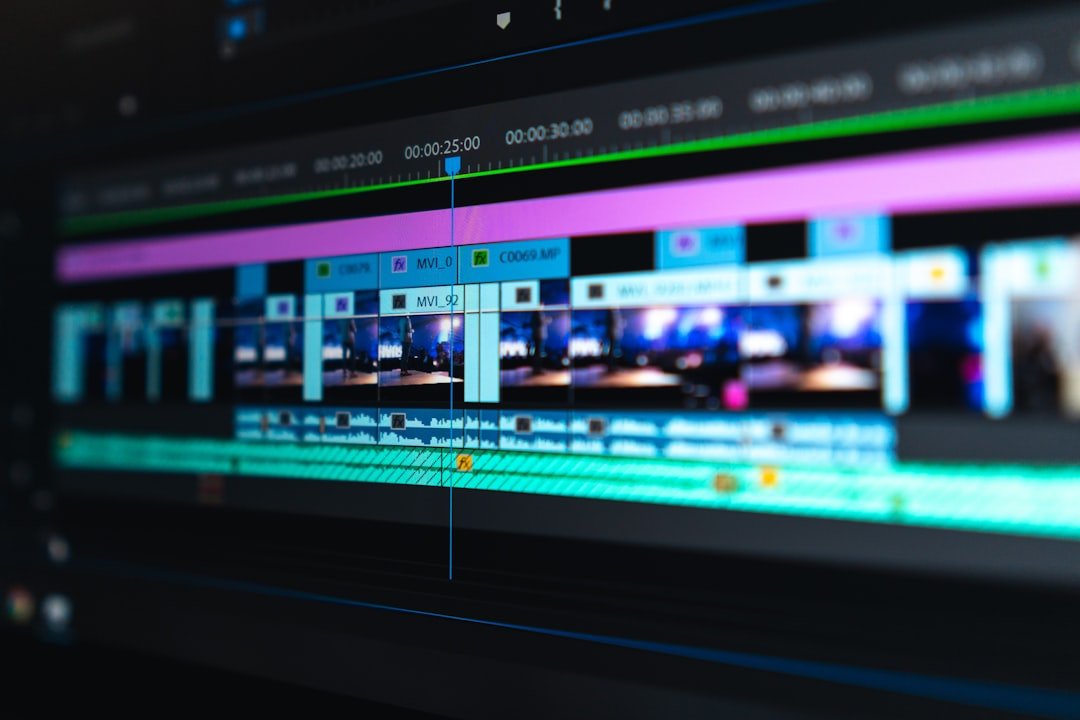
Many people regard subtitles as a dispensable accessory, but in fact they perform far more functions than assisting hearing-impaired audiences. For overseas content, subtitles are first of all a language bridge, allowing people who do not understand your native language to follow the content; secondly, they are the entrance to search and recommendations. Platforms such as YouTube and TikTok usually read subtitle text to understand the video topic, which in turn affects recommendations and search rankings. Videos without subtitles are equivalent to throwing away a large chunk of searchable text information.
Another often overlooked point is viewing the scene. According to public information, a considerable proportion of videos on social platforms are viewed in a muted state. It is inconvenient for users to play sounds on the subway, in the office, or before going to bed. At this time, subtitles are almost the only carrier that can convey information. Localization is a step further on the basis of subtitles. It not only translates the words, but also considers local expression habits, measurement units, and cultural references. Done well, overseas audiences will feel that the content is tailor-made for them, rather than a forced translation of a foreign language clip. Once you understand this meaning, you will have a sense of direction for every subsequent operation.
Step One: Audio Extraction and Automatic Transcription

The starting point of localization is to turn the words in the video into text. If you only have video files at hand, you can first use editing software or command line tools to export the audio tracks separately into audio files. A common method is to export as wav or mp3. The individual audio files are smaller and purer, which makes them faster and more accurate when fed to transcoding tools. Of course, many AI tools now support direct uploading of videos and will automatically extract audio tracks, so this step can be omitted.
The transcription part is where AI comes into play most clearly. Give the audio to a speech recognition tool, and it will output a time-stamped transcript, which is the most primitive prototype of subtitles. Common solutions on the market include the open source Whisper series models and various online transcription services. They can usually recognize mainstream languages such as Chinese and English, and the accuracy of clear human voices is already quite usable. It should be reminded that the quality of transcription is highly dependent on the original audio. Materials with loud background noise, multiple people talking, and strong accents will significantly increase recognition errors. Therefore, after getting the automatic manuscript, do not use it directly. The next step of proofreading is essential.
Step 2: Proofread the original subtitles

The automatically transcribed text is essentially the machine's best guess, and even the best models will make mistakes. The proofreading step is the most labor-intensive step in the entire process, and it is also the foundation for subsequent translation quality. If the original text contains typos, missing words, and confusing sentence fragmentation, then no matter how accurate the translation is, it will only be based on errors, and the errors will be magnified along the way.
There are several types of issues to focus on when proofreading. First, proper nouns. People’s names, place names, brand names, and product models are most easily misheard by machines. You need to check the correct spelling one by one. The second is homophones and near-synonyms. This kind of mistake is very common in Chinese. It sounds smooth when read but wrong when written. The third is sentence segmentation and punctuation. Automatic transcription often connects a long series of sentences together or breaks them in strange positions, which needs to be re-segmented according to semantics and ventilation. Fourth, proper deletion of modal particles, repeated words, and lags in spoken language can make the subtitles cleaner. While proofreading, it is recommended to adjust the duration and line breaks of each subtitle to ensure that there are no more than two lines per screen and a moderate number of words per line, making it easy to read. The extra time spent on this step will be paid back tenfold later.
Step 3: Translate into target language
After the original text is proofread, the translation process begins. The current mainstream approach is to use AI translation as a base first, and then polish it with artificial or stronger language models. The problem with using basic machine translation directly is that it often translates sentence by sentence literally. When encountering colloquialisms, puns, and industry terms, the translation is easy to be stiff or even wrong. Mistakes such as translating brand names as common words also occur from time to time.
There are several practical ideas to improve translation quality. First prepare a terminology comparison table to fix the standard translation methods of brand names, product names, and proprietary concepts, and let the tool execute according to the table to avoid the same word being translated into several ways in different subtitles. Then, give the translation tool enough context, and translate the entire paragraph or even the entire article together, which can maintain semantic coherence better than translating sentence by sentence. For content intended for a specific market, you can ask that the translation adopt local customary expressions rather than literal correspondence. After the translation is completed, be sure to review it again, focusing on checking whether there are any missing translations, whether there are any Chinese residues, and whether links and labels have been damaged during the translation process. By treating AI as an efficient first-draft assistant rather than a hands-off master, translation can be both fast and stable.
Step 4: Timeline Alignment
There is no problem with the text content. The next step is to make the subtitles and the sound on the screen match up perfectly. The timestamp generated by automatic transcription usually has a rough framework, but after proofreading and translation, the text length has changed, and the original time point often needs to be fine-tuned again. If the subtitles appear too early, it will be a spoiler. If they appear too late, the audience will be confused. The goal of alignment is to synchronize the subtitles with the speaking rhythm.
In actual operation, you can use the waveform diagram of the subtitle editing software to visualize the start and end of the sound, and drag the entry and exit points of each subtitle accordingly. A typical trouble caused by translation is that the length of different languages varies greatly. A short Chinese sentence may be too long to be translated into English or German. The original time window cannot be filled, and the sentence will pass before it is finished. At this time, either extend the subtitle dwell time appropriately or streamline the wording of the translation. Also pay attention to leaving a little space between the two subtitles to avoid the previous one disappearing before the next one pops up, causing a flickering feeling. If the alignment is done well, the audience will hardly notice the existence of subtitles, and their attention will always be on the content. This is exactly the senseless experience that localization pursues.
Step 5: Suppress hard subtitles or embed soft subtitles
After the subtitles are ready, you need to decide in what form they will be combined with the video, which is directly related to whether different platforms can display them normally. There are two common ways. Hard subtitles burn text directly into the screen and become part of the video pixels. The advantage is that it can be seen wherever you go, it will not be lost, and the style is completely controllable. The disadvantage is that it cannot be changed after it is written, and the audience cannot switch the language or turn it off. Soft subtitles are independent subtitle files. Common formats include srt, vtt, etc., which are provided together with the video. The player or platform is responsible for rendering. The advantages are flexibility, multi-language switching, and the file can be read by search engines.
How to choose depends on the distribution channel. When uploading to platforms such as YouTube that support external subtitles, soft subtitles are preferred, which not only provide multi-language versions, but also help the content be indexed by the platform. If you want to send some short video scenes that are only recognized as movies and do not support external subtitles, or if you want to ensure that they are displayed in any environment, it is safer to use hard subtitles. In actual operation, many people prepare with both hands. The main platform transmits soft subtitles, and then presses a version of hard subtitles when distributing to other channels. No matter which type, you need to preview it on different devices before exporting to make sure that the font size, color, and stroke are all clearly readable on dark and light backgrounds.
Step 6: Multi-platform adaptation
To spread the same video to multiple platforms, it is not as simple as copying and uploading several copies of the video. Each platform has quite different requirements for frame size, duration, subtitle format, and safe zone. Whether the adaptation is done well or not directly determines the presentation effect of the content on each platform. The placement of subtitles is completely different between long video platforms with a horizontal screen and short video platforms with a vertical screen. The bottom of the vertical screen is often blocked by interface buttons and copywriting, and the subtitles should be moved up accordingly to leave a safe area.
Subtitle file formats also need to be adjusted per platform. Some platforms accept srt, some prefer vtt, and some simply require subtitles to be written into the upload form or backend. When adapting to multiple languages, it is best to prepare a separate subtitle file for each language and mark the language code to facilitate platform identification and audience switching. It is also recommended to localize text information such as cover, title, and description, and keep it consistent with the subtitle language, so that the whole thing looks professional. According to public information, platform algorithms usually combine video text information to determine the topic and audience. Keeping these details in place will help the algorithm push the content to the right people more accurately. Although the adaptation is trivial, it is a final step and worth the effort.
What dimensions should you consider when choosing tools?
Faced with the wide variety of subtitles and translation tools on the market, instead of chasing new and hot trends, it is better to first think clearly about what you value. The first dimension is the language coverage of transliteration and translation. Make sure it supports your source language and all target languages. This is especially important when there are needs for small languages. This needs to be verified in advance. The second dimension is accuracy and editability. Can the tool allow you to easily modify text and adjust the timeline? Editability is often more practical than one-click generation without being able to change it.
The third dimension is the ability to import and export formats. Whether it can output common formats such as srt and vtt determines whether it can be seamlessly integrated into your subsequent editing and publishing processes. The fourth is collaboration and batch processing. If it is a team job or a large number of videos need to be processed, batch uploading, batch exporting, and multi-person collaboration are critical. The fifth is data security. When it comes to unpublished video material, you should pay attention to the data storage and privacy policy of the tool. Finally, there is the cost. Based on your own production, you can figure out whether it is more cost-effective to pay by the time or by monthly subscription. Making a list of these dimensions and trying them out is much more reliable than listening to others' recommendations. After all, what suits others may not necessarily suit your workflow.
Practical tips for multilingual and minority languages
When localization expands from one or two mainstream languages to more languages, especially minority languages, the difficulty will rise sharply. AI transliteration and translation of mainstream languages have been trained with massive amounts of data, and the quality is generally good; while for some languages with fewer users, model training data is limited, making both recognition and translation more error-prone. Faced with this situation, instead of completely trusting the machine, it is better to treat it as a first draft and find someone who understands the language to review it. Even if you just randomly check key paragraphs, you can stop many low-level mistakes.
There are a few more tips worth remembering. For languages with different writing directions, such as text written from right to left, it is necessary to make sure that the subtitle software and playback platform can render it correctly, otherwise typesetting errors will occur. Content involving units of measurement, currency, and date formats must be converted into local customs during localization rather than copying the original text. Literal translations of culturally related memes, slangs, and brand associations often fail, and you need to find local equivalents or even re-create them. For accounts that continue to produce, it is recommended to accumulate commonly used terms and expressions in each language into your own corpus. The more you accumulate, the less effort you will have later. The competition in the minority language market is often not that fierce. If localization is solid, it will be easier to stand out.
Common pitfalls: proper nouns and sentence fragments
After talking about so many processes, I will finally talk about the two most frequent rollover points, because they may seem trivial, but they affect the perception the most. The first is a proper noun. Names of people, places, companies, product names, technical terms, these AIs have the highest error rate when transcribing and translating. They either mishear and write incorrectly, or they take it upon themselves to translate the brand name into a common meaning. The solution is to establish and maintain a comparison table of proper nouns, clarify the standard writing and translation of each word, and feed it to the tool before each processing or check it one by one during proofreading, which can avoid most embarrassing mistakes.
The second is sentence fragmentation. Subtitles are not meant to put the entire paragraph in as is, but to be divided according to the audience's reading rhythm. If a subtitle is too long, the audience will jump away before it is finished; if it is cut at an inappropriate place, such as splitting a word or a phrase in the middle, it will be awkward to read. Good sentence segmentation should follow the natural pauses of semantics and breathing, so that each subtitle is a complete and easy-to-read small unit. Try to have one or two lines per screen. There are no shortcuts to these two pitfalls, it all depends on patience and meticulousness. After all, AI has improved efficiency, but whether the content can truly impress audiences in another language still depends on how much attention people are willing to spend on these details. Technology will always be updated, and the dedication to carefully deliver a piece of content to strangers is probably the most difficult thing to replace on the road to sea.
FAQ
Can subtitles automatically generated by AI be used directly?
It is usually not recommended to use it directly. AI transcription is a best guess based on the audio and is prone to errors when encountering noise, accents, multi-person conversations, or proper nouns. Automated drafts are suitable as first drafts, saving the time of typing from scratch. However, typos, sentence fragments, and proper nouns must be manually proofread before publication, and then used for translation, otherwise errors will be amplified along the way.
Should videos be exported overseas using hard or soft subtitles?
It depends on the delivery platform. Platforms that support external subtitles give priority to using soft subtitles, which are flexible, can be switched in multiple languages, and the text can be indexed by the platform; for scenes that only recognize movies or scenes that need to be displayed in any environment, it is safer to use hard subtitles. Many people will prepare with both hands. The main platform will transmit soft subtitles, and other channels will press a version of hard subtitles.
What should I do if the quality of machine-translated subtitles is unstable?
You can first prepare a terminology table to fix the translation of brand names and proprietary concepts, then give the translation tool the entire context instead of translating sentence by sentence, and finally review it manually to check for missed translations, Chinese residues, and damaged link tags. If you treat AI as an efficient first-draft assistant rather than a hands-off shopkeeper, the quality of your translations will be much more stable. For small languages, it is best to find someone who understands the local language for spot checks.
What to do if the length of subtitles after translation in different languages does not match
The length varies greatly in different languages. A short Chinese sentence may be too long to be translated into English or German, and the original time window cannot be filled. You can appropriately extend the subtitle dwell time, or simplify the wording of the translation so that it can be read to the end. Use the waveform diagram of the subtitle software to fine-tune the entry and exit points according to the start and end of the sound, and leave a little space between the two subtitles to avoid flickering.
What adjustments need to be made to subtitles when distributing across multiple platforms?
Mainly adjust frame adaptation and subtitle format. The position of subtitles in horizontal and vertical screens is different. The bottom of vertical screens is often blocked by the interface, and subtitles should be moved upward to leave a safe area. The subtitle format can be selected between srt and vtt according to the platform requirements. When there are multiple languages, each language will have a separate file and the language code will be marked. It is also recommended that the cover title description be consistent with the subtitle language.
📝 This article is from DouWen www.douwen.me . Please retain the source when reposting.
Original link: https://www.douwen.me/archives/1370/
💬 Comments (7)
Loved the FAQ section.
Great resource.
Bookmarked for reference.
Thanks for the detailed comparison.
Sharing this with my team.
Clear and to the point.
Easy to follow.