Does AI-generated content need to be tagged? Detailed explanation of 2026 platform rules and legal requirements
🇨🇳 阅读中文版Does AI-generated content need to be tagged? Detailed explanation of 2026 platform rules and legal requirements
Needed, and this matter is changing from a suggestion to a mandatory requirement. If you use AI to write articles, draw pictures, dubbing, or make videos, the current trend is that more and more content platforms and regulators require you to label this content as AI-generated or AI-assisted generation. In the early years, everyone was still discussing whether to standardize or not. By 2026, mainstream platforms have generally written AI logos into creative specifications, and some countries and regions have also begun to promote this matter through legislation or administrative guidelines. For ordinary creators, the answer is actually very simple: if you can bid on it, you must bid on it. This is not only for compliance, but also to protect your own account and avoid being judged as misleading or illegal content due to lack of tags. Below we explain clearly the trends, rules, risks and specific practices one by one.
Why should trends be marked?
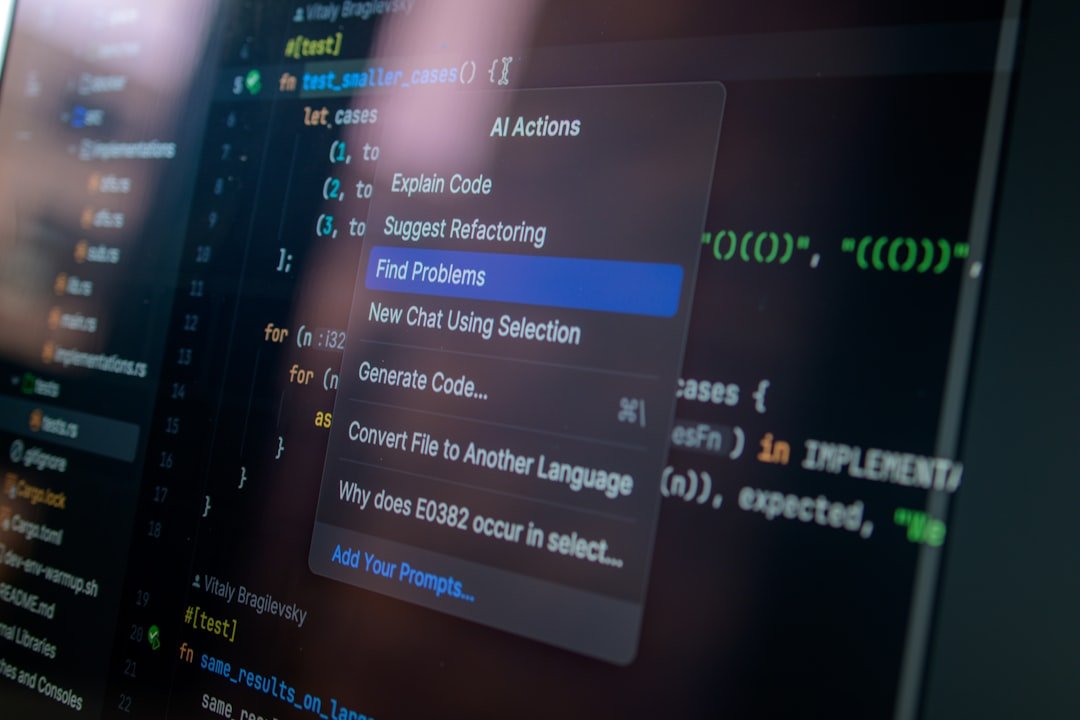
There are two core reasons, one is the user's right to know, and the other is to prevent misleading. When people see a video, see a picture, or read an article, they assume it comes from a real person or a real shot. When the content is actually generated by AI out of thin air, if not informed, the viewer will unknowingly accept information that may not be true. Especially when it comes to content involving people, news, and events, AI can easily generate images and sounds that look fake and real. Once it is spread as true, the consequences may be serious. Marking AI generated essentially returns the right of judgment to the viewer, letting everyone know that it was generated by a machine and they have to weigh the authenticity for themselves. Judging from industry trends, regulatory agencies in many countries and many large platforms are moving in the same direction, which is to require that generated content must be identifiable. This is already a fairly clear consensus, rather than a temporary regulation for individual platforms.
What does the right to know and the prevention of misleading mean?

The right to know sounds abstract, but in practice it means that viewers have the right to know whether what they see is truly photographed and recorded. A talking-head that looks like a real person may be an AI digital human synthesized by AI; a photo that looks like a news scene may not have happened at all; a celebrity speech may be a cloned voice. If these contents are circulated without labeling, the most dangerous thing is not entertainment pranks, but being used to spread rumors, defraud, and manipulate public opinion. This is the point of preventing misleading. The platform requires labeling, which does not mean that you are not allowed to use AI, but that you are required to be transparent when using it. Transparency itself does not reduce the value of the content, but rather builds trust. Viewers know that you candidly label it, and they will be more likely to believe your other unlabeled content that was actually shot. Therefore, labeling does not cause trouble for creators, but helps the entire content ecosystem maintain basic credibility.
AI identification rules for major content platforms

According to public statements from major platforms, the current mainstream approach is to provide special AI content identification options, and when publishing, let creators actively check whether this is AI-generated or AI-assisted generation. Many short video and graphic platforms have launched similar functions, and some will also display an obvious AI-generated prompt label on the content page. The trend is that the platform not only encourages you to actively bid, but also tries to use technical means to automatically identify it. For example, for pictures or videos that are obviously produced by AI tools, the platform may automatically mark them by detecting metadata, identifying synthetic features, etc., even if you do not actively declare it. It should be noted that the specific expressions and entrance locations of different platforms are different. Some are called AI generation, and some are called virtual content or synthetic content. Before publishing, it is best to take a look at the creation specifications page of your commonly used platform and follow its requirements. The overall direction is the same: platforms hope that AI content can be clearly identified, the only difference lies in how and where it is marked.
What are the risks of not marking it?
The risks are real and mainly reflected at the account level. According to the platform’s public statement, for AI content that should be tagged but is not, the platform will usually deal with it accordingly. A common method is to reduce the amount of recommendations, which is also to limit the current flow, making it difficult for your content to be seen by more people. In more serious cases, for example, those who are judged to have deliberately forged, misled users, or spread false information may face deletion of content, deduction of credit points, restricted functions, or even account ban. The logic here is that once the platform discovers through technical inspection or user reporting that your content is generated by AI but not labeled, it means that you are trying to trick viewers into thinking it is real content, which is more serious than a simple content quality problem. For creators who rely on their accounts to make a living, if their hard-earned accounts are restricted or even blocked because they are not marked with an AI tag, it is completely outweighing the gains and losses. Rather than betting that the platform cannot detect it, it is better to mark it honestly. The cost is almost zero and huge uncertain risks are saved.
Which scenes must be marked
There are a few types of content that should be targeted no matter what. The first category involves the synthesis of real people, including using AI to generate or replace a real person's face, and using AI to clone someone's voice. This type is most likely to infringe on portrait and voice rights, and is also most likely to be used to spread rumors, and must be marked. The second category is AI-generated content involving news, events, and social issues, because this type of content spreads quickly and has a great impact. Once it is mistaken for the truth, it will cause real harm. The third category is realistic-style AI images that may be mistaken for real shots and real records, such as videos or photos that look like surveillance footage or live shots. The fourth category is AI-generated advisory content involving medical, financial, legal and other professional fields. Viewers can easily make decisions based on this. People must know that this is machine-generated and is for reference only. Simply put, the more AI content is likely to be believed to be true and the more likely it is to influence other people’s judgment and decision-making, the more it must be labeled and there will be no room for bargaining.
Which scenarios can be handled flexibly
Not all content that uses AI needs to be labeled religiously. Content that is obviously creative, artistic, or entertainment in nature, and that is obviously not genuine at a glance, requires less labeling. For example, stylized illustrations, obviously exaggerated fictional animations, and secondary creations that are purely for fun. Viewers can understand at a glance that this is not a realistic record, and the risk of misleading is very small. Another example is that you only use AI to help polish text, correct grammar, and generate outlines. In the end, the main body of the content is still your own thinking and creation. The degree of AI assistance is very light, and the annotation is usually not that strict. But a word of caution, flexibility does not mean being able to take advantage of loopholes. Once the content may be mistaken as true, even if you think it is obviously false, as long as there is a possibility that some people may believe it to be true, the safe approach is to mark it. The trend is that the threshold for labeling is decreasing. In more and more situations that were originally considered to be labelable or not, the platform is beginning to recommend labeling. Therefore, when in doubt, labeling is safer than not labeling.
How to label AI content in a standardized way
Standard labeling is actually not difficult. The key is to be clear, conspicuous, and not hidden. The most direct way is to use the official AI identification function provided by the platform, check the corresponding options when publishing, and let the platform help you generate unified tags on the content page. This is the most recognized way. In addition, you can also make secondary explanations in the content, such as using text to indicate that this content was generated by AI at the beginning or end of the video, adding a description at the beginning or end of the article, and leaving a small logo in the corner of the picture. Multiple annotations are more reliable than single annotations. What should be avoided is the practice of hiding the logo at the end of a long description with the font size so small that it cannot be seen, which is equivalent to no logo. The wording of the annotation should also be as straightforward as possible. Words such as AI generation, AI assistance, and virtual synthesis can be understood by viewers at a glance. Do not use vague or deliberately confusing expressions. Remember one principle: the purpose of annotation is to allow viewers to really notice and understand it, rather than just to show off for the platform.
Some suggestions for creators
First, treat labeling as a habit rather than a burden. Before each post, take a few seconds to think about whether this content uses AI, to what extent it is used, and whether it should be tagged. Once you develop muscle memory, it won’t be a hassle at all. Second, give priority to using the platform’s official identification function. This is the safest way to comply with regulations and is also the best way to prove that you have fulfilled your reporting obligations when problems arise. Third, pay attention to the rule updates of your commonly used platforms. The regulations related to AI logos have changed rapidly in the past two years, and the trend is becoming more and more strict. Don’t apply the old understanding from a year ago to today’s rules. Fourth, content involving real people, news, and professional advice must be marked. These are high-risk areas. It is better to mark more than to miss out. Fifth, treat transparency as a long-term asset. In an environment where AI content is rampant, a creator who is willing to be honest and responsible for viewers will be more likely to accumulate trust and reputation. In the short term, the annotation seems to make the content less fake, but in the long term, it protects you and your account.
FAQ
Does AI-assisted writing also require annotation?
It depends on the level of assistance. If you just use AI to polish, check errors, and generate an outline, the main content is created by yourself, and it is usually not so strict. But if the entire article is basically generated by AI and you only made a few modifications, it is recommended to mark it as AI generated. If you are not sure, it is safer to mark it.
Will your account be banned if you don’t mark it?
Not necessarily, but there are risks. According to the platform’s public statement, common actions are to first limit traffic and reduce recommendations. Only those who violate serious or repeated violations, involve misleading and spreading rumors, may have their content deleted, points deducted, or even their accounts banned. But you can’t predict how the platform will decide. Instead of betting, it’s better to take the initiative and bid, and the cost is almost zero.
Can the platform automatically identify AI content?
The trend is to become more and more capable. Many platforms are trying to automatically label by detecting metadata, identifying synthetic features and other technical means, and may automatically label obvious AI outputs. So don’t take any chances that the platform can’t detect it. Active labeling is the safest approach.
Will labeling affect content recommendation and traffic?
Formal labeling itself should not be a reason for punishment. What the platform suppresses is non-labeling and misleading, not honest labeling. On the contrary, it is only when no tag is detected that it will really affect traffic. Therefore, from the perspective of protecting your account, standard labeling is protecting your long-term exposure.
Are the labeling rules for different platforms the same?
The general direction is the same, but the details are different. Each platform is requiring AI content to be identifiable, but the specific name, where the entrance is, and how strict the requirements are are not exactly the same. Before publishing, it is best to take a look at the authoring specifications page of your favorite platform and operate according to its current requirements.
📝 This article is from DouWen www.douwen.me . Please retain the source when reposting.
Original link: https://www.douwen.me/archives/1358/
💬 Comments (9)
Great resource.
Bookmarked for reference.
Practical tips not fluff.
Easy to follow.
Solid breakdown, very useful.
Loved the FAQ section.
Step-by-step is gold.
Clear and to the point.
Sharing this with my team.