Are 2026 AI programming tools shells? Detailed explanation of the real and fake domestic models of Cursor, Windsurf and TRAE.
🇨🇳 阅读中文版Are Cursor, Windsurf, and TRAE Just Wrappers? Untangling the "Reskinning" Debate
Cursor, Windsurf, and ByteDance's TRAE, these three mainstream AI coding tools have lately been asked the same question over and over: are they really their own products, or just a shell wrapped around a domestic or foreign large model? This seems like mere tech gossip, but it touches users' willingness to pay, enterprise compliance, and data flows. This article won't dig into specific numbers; it just clarifies the "wrapper" controversy and how to think about it for each of the three tools.
What Exactly Is the Model Under Cursor?

Cursor is developed by the Anysphere team and has long publicly stated that it uses the flagship models of OpenAI and Anthropic. In the settings, users can choose public models like the GPT series, Claude series, and Gemini series. This in itself is not controversial.
What really sparked discussion is Cursor's "fast" path. During peak hours this path shows latency and answer styles different from connecting directly to Anthropic or OpenAI at the same time. Some in the community suspect it dynamically routes to other cheaper or faster inference backends during certain periods, but Anysphere hasn't admitted this head-on, saying only that it "uses the most suitable model to fulfill a request." This wording itself leaves room for routing, but it can't be called a "wrapper" either.
Wrapping and Routing Are Not the Same Thing

Many people conflate the two. A "wrapper" in the strict sense means a product with no in-house capability that simply forwards requests to a third-party API and wraps a layer of UI around it. Cursor clearly doesn't belong to this category; it has substantial in-house implementation at the engineering layer, including editor integration, context retrieval, agent orchestration, and completion indexing.
Routing is a different phenomenon. An AI tool might, depending on request type, user tier, and current load, switch the actual call behind the same "Claude" button to different models. This is not a wrapper in the technical sense, but if a user pays believing they're getting model A and actually receives model B, it raises a disclosure issue.
The Shift in Windsurf's Ownership

Windsurf's predecessor was Codeium, which started out in code autocompletion and later shifted its focus to agent mode. In 2025 there were reports it would be acquired by OpenAI, but public information shows that deal ultimately did not close, and Windsurf's core team was later absorbed by another large US company. In other words, the ownership and direction of the Windsurf brand went through noticeable turbulence over the past year, with the latest specifics subject to official announcements.
For users, the impact of this ownership change is that the model selection, pricing, and enterprise compliance commitments may all be adjusted as the parent company changes. If you're evaluating it, it's best to look directly at the model list and prices on its current official site rather than rely on an impression from six months ago.
Is ByteDance's TRAE Just a Wrapper Around Its Own Doubao?

ByteDance's TRAE is an AI coding IDE developed in-house by ByteDance, positioned as a Cursor competitor, and its popularity in the domestic AI development scene is rising fast. From public materials, the default inference backend of TRAE's domestic version is ByteDance's own Doubao series of large models, while the overseas version leans more toward connecting to public models from Anthropic and OpenAI. This "different backends for domestic and overseas" is mainly a compliance need, since providing foreign-model services commercially within China requires going through a dedicated channel that can't be avoided.
Does it count as "wrapping its own"? From the product's framing, ByteDance hasn't packaged TRAE as "driven by the world's most powerful model," but rather positioned it as "an AI coding entry point within ByteDance's ecosystem," so using Doubao is only natural and can hardly be called misleading. The real question is whether Doubao is good enough for code scenarios, and that's a matter of opinion.
The Real Position of Domestic Models in Code Scenarios
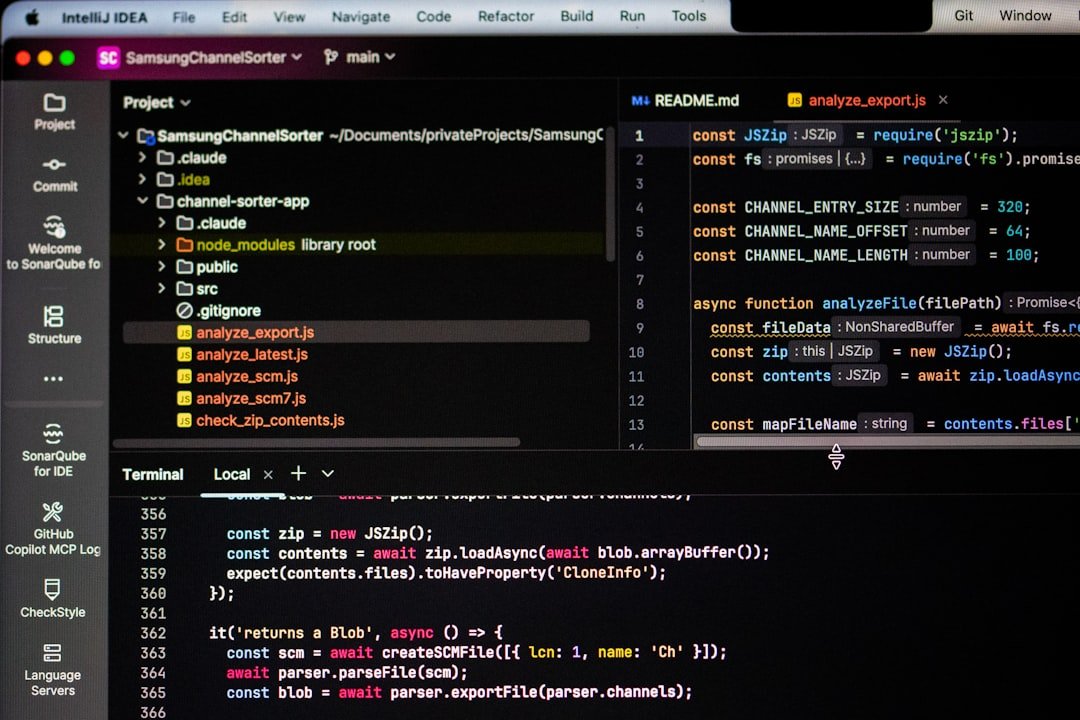
By 2026, the overall level of domestic code models has improved markedly from a year ago. The Kimi, Zhipu GLM, ByteDance Doubao, and Alibaba Qwen series already offer an experience close to mainstream closed-source models on everyday tasks like code completion and function generation, though they still lag on long-context refactoring and complex agent chains. As for exactly how big the gap is, scores on various public leaderboards change frequently, so it's safer not to cite specific scores; all that can be said is that on Chinese comments, understanding of domestic frameworks, and local toolchain invocation, domestic models have a home-field advantage.
This means that even if an AI coding tool routes to a domestic model during certain periods, users can hardly tell at the level of everyday completion and small-function generation. The difference mainly shows up in large refactors and complex agent tasks.
The Common-Sense Range for Pricing and Value

Rather than cite specific plan figures that could be wrong, let's just discuss the general understanding. Cursor's personal subscription is roughly in the same price band as ChatGPT Plus and Claude Pro, around twenty dollars a month, with the enterprise version priced higher; the specifics are subject to the official price list. Windsurf's personal tier is close to Cursor's, but it has been adjusted at different times. TRAE's domestic version is priced noticeably lower than dollar-subscription tools, a common structure in the Chinese market. Claude Code itself is priced under Anthropic's Pro / Max subscription system; there is no standalone plan of "tens of dollars a month including millions of tokens" as circulated in some community posts.
If you want to choose, remember one thing: the difference between Pro tiers is actually far smaller than the difference made by usage habits. A developer who knows how to prompt can get more out of a cheap tool than someone clicking around aimlessly on a flagship subscription.
How to Tell Which Model You're Using
You don't need complex tools; there are a few plain methods for a rough judgment. Asking the model "who developed you" can sometimes elicit its identity, but more and more models are trained not to disclose it proactively. Watching how it handles Chinese-sensitive topics gives a fuzzy clue: domestic models lean toward conservative responses, foreign models are more direct. Looking at output style also offers hints, as different model families have preferences in Markdown usage, list formatting, and sentence structure. None of these methods is 100% accurate; they only give a confidence level. If you really care, the safest bet is still to read the official model-disclosure documentation and your account's usage details.
Who Cares About This Most
For enterprise users, what matters isn't which model is cool, but whether code requests pass through undisclosed inference nodes. For engineering code involving trade secrets, if it gets routed to an inference service not on the procurement compliance list, there's a data-governance risk. This is the fundamental reason many large enterprises explicitly ban or restrict the use of AI coding tools, and it has little to do with how good the model is.
For individual developers the impact is relatively small, but paying a subscription fee and not getting the model you expected does feel uncomfortable. A practical response is to check whether the tool offers a "lock the model" option, turn off the "auto/fast" path, and stick with a single public model.
How to Choose an AI Coding Tool in 2026
If domestic developers prioritize latency and price, ByteDance TRAE's domestic version, or directly connecting to the official APIs of Doubao, Kimi, and Zhipu, are convenient options. Overseas developers, or those deeply dependent on the Claude / GPT ecosystem, can just pick one among Cursor, Claude Code, and Windsurf; the differences mainly lie in agent-mode details and IDE integration. Enterprises with high security requirements are best off going the private-deployment route, using open-source IDE plugins like Cline, Continue, and Aider connected to their own vetted API endpoints. Students and beginners should experience the free tiers first, with no need to buy Pro right away.
Frequently Asked Questions
Does Cursor really secretly use domestic models?
There's no official admission. The community has had suspicions about latency and style drift, but Anysphere's public line is that it "uses the most suitable model to complete a request," which leaves room for routing. If you mind, you can turn off the fast path in settings and lock to a specific Claude or GPT model, which makes the request path much clearer.
What's the difference between TRAE's overseas and domestic versions?
The main differences are the default model and the compliance channel. The domestic version leans toward ByteDance's own Doubao series and the connected domestic ecosystem, while the overseas version leans toward connecting to public models from Anthropic, OpenAI, and others. Specific pricing and features will be adjusted with version updates for each version, subject to the current pages on TRAE's official site. The two versions differ in regional access experience, with VPN and IP attribution both having an effect.
Is Windsurf still worth using now?
It is, but first get clear on its current ownership and model direction. Windsurf went through acquisition rumors, team changes, and shifts in direction over the past year, so if you came for a specific model before, go to its current official site to confirm the default engine and pricing before deciding.
Is using VS Code with Cline or Aider yourself cheaper?
It is cheaper, but it takes time to configure. An open-source agent plus your own API key can deliver most of the daily experience of mainstream IDE tools, with the cost mainly being API token consumption. The trade-off is the lack of the indexing, completion model, and team management that dedicated tools bundle in, and context recall on large monorepos may fall short. For personal scripts and small projects this combination is already enough; for enterprise-scale large codebases, commercial tools are still recommended.
Is there any chance AI coding tools get cut off by government action?
US export controls do impose bans on some countries; China is not currently on the strictest embargo list, but OpenAI's and Anthropic's direct commercial API services to mainland China have always gone through third-party proxies or local compliance channels, with worse latency and stability than direct connections. The safe approach is not to stake your entire engineering pipeline on a single overseas model; keep a domestic model as a fallback, and choosing any one of Kimi, Zhipu, Doubao, or Qwen as backup is enough.
Inspiration: Ruan Yifeng, "Digging Into the Cursor Wrapper Suspicions" https://www.ruanyifeng.com/blog/2026/03/kimi-cursor.html
📝 This article is from DouWen www.douwen.me . Please retain the source when reposting.
Original link: https://www.douwen.me/archives/1094/
💬 Comments (8)
Practical tips not fluff.
Sharing this with my team.
Clear and to the point.
Best summary I've read on this.
Thanks for the detailed comparison.
Step-by-step is gold.
Solid breakdown, very useful.
Bookmarked for reference.