Comparison between DeepSeek and ChatGPT, whether the domestic large model can replace OpenAI in 2026
🇨🇳 阅读中文版Between 2024 and 2025, DeepSeek kept breaking out, with V3 and R1 pushing domestic Chinese large models to a position where even overseas players had to take them seriously. The question is whether it can really replace ChatGPT. This article runs a side-by-side comparison across several typical tasks to tell you where DeepSeek and ChatGPT are each strong and weak, and which one is the most cost-effective choice for which scenario. This article does not cite each side's specific public-leaderboard scores or current pricing—refer to the current pages on the official sites.
What Is DeepSeek, and Why Did It Suddenly Break Out

DeepSeek is the Hangzhou company DeepSeek, whose parent company is the domestic private hedge fund High-Flyer (Huanfang Quant); the company focuses on the large-model direction.
Its V3 is a flagship model with a MoE architecture. After publishing the paper, it sent shockwaves through the overseas community, and its key selling point is that its training cost is markedly lower than that of a conventional flagship model. R1 focuses on reasoning ability and reaches first-tier levels on math-competition and coding benchmarks—refer to the official site for the current latest sub-version. Subsequent iterations such as V3.5 and R1 V2 have gradually filled in multimodality, long context, and Agent tool calling.
On the commercial side, DeepSeek takes an extreme low-price route; its API price is a fraction of a flagship GPT's, which is why it has penetrated so deeply among domestic developers.
ChatGPT's Model Matrix in 2026

ChatGPT's model matrix in 2026 has already become fairly differentiated. The flagship is the latest version of the GPT series, leading in all-around capability; the mid-tier is the default chat model, with low latency suited to real time; there is also a low-priced small model suited to batch tasks, plus dedicated reasoning sub-models. The Plus and Pro subscription tiers have different prices and unlock different features—refer to the official site.
This means that when comparing DeepSeek with "ChatGPT," you first have to be clear about which sub-model you mean.
Long-Form Chinese Writing
We asked each to write a 1,500-word Chinese article on the topic "Why was commerce in the Song dynasty so developed?" DeepSeek's output flowed extremely well, with natural, unforced Chinese, citing allusions such as Wang Anshi's reforms, the Maritime Trade Bureau, and Along the River During the Qingming Festival—basically right on the first try. The GPT flagship's Chinese also flows well but is slightly stiffer than DeepSeek's; the GPT mid-tier's drop-off in Chinese feel is more noticeable.
This is the natural advantage of DeepSeek's high proportion of Chinese in its training corpus.
Code Generation

We asked each to write a React TODO List component in TypeScript, with localStorage persistence and drag-to-reorder. The GPT flagship is generally more solid on rigor and best-practice details—stricter TypeScript types, more up-to-date library choices, and steadier handling of easy-to-trip-over spots like dependency arrays. DeepSeek is usable overall, but occasionally leaves a small bug that needs one more pass.
The overall sense is that for code tasks the GPT flagship still leads somewhat, but DeepSeek is competitive on the value dimension.
Math and Logical Reasoning
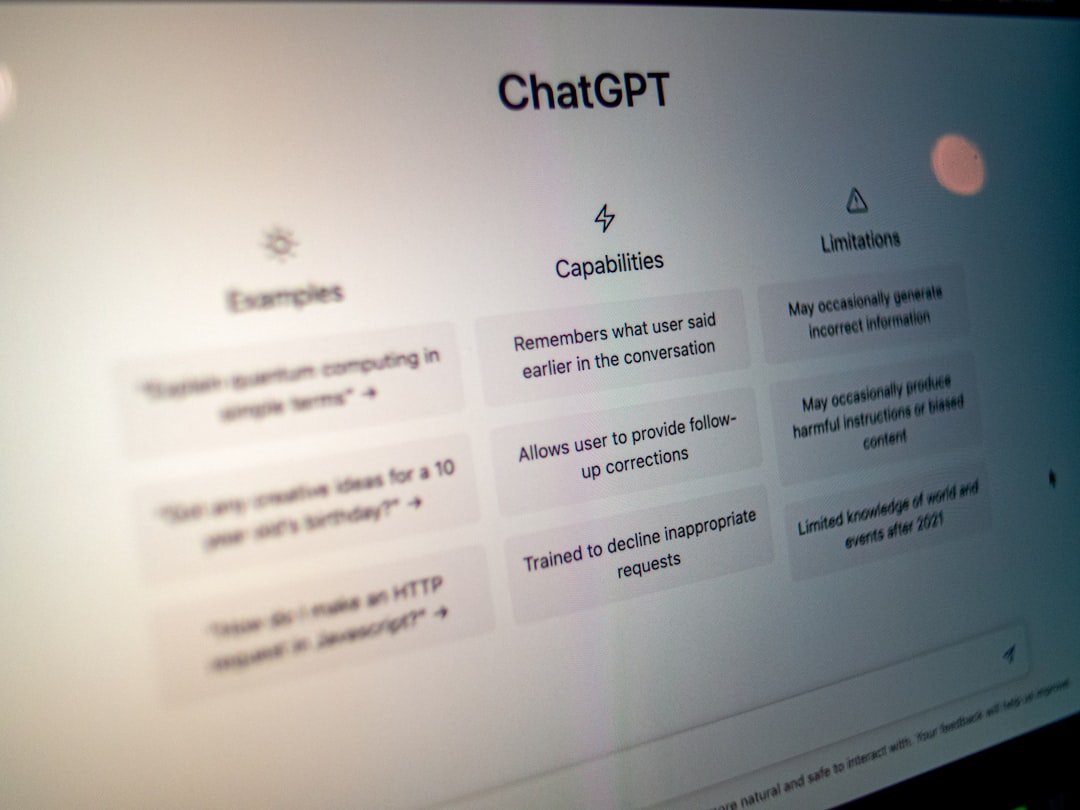
On math-competition and logical-reasoning problems, the DeepSeek R1 series and OpenAI's reasoning sub-models (the o series) are at roughly the same first-tier level, with little difference in accuracy. The difference is mainly price—the R1 series costs just a fraction of OpenAI's reasoning sub-models. This is the scenario where DeepSeek's value stands out the most.
Agent Tool Calling
A simple agent task: automatically search the web to query data + write an analysis + save to a local file. The GPT series' function calling has been iterated the longest and leads on stability; DeepSeek supports function calling, but is slightly weaker in the robustness of constructing tool parameters, occasionally needing a retry. For key agent scenarios GPT is still recommended.
Long-Context Understanding
We asked each to handle a 100-page PDF and answer cross-page consistency questions. DeepSeek's current long-context window covers most common long-document scenarios, and its cross-page reasoning is usable; the GPT flagship is stable at the 128K level; if the document scale exceeds the 200K range, the Claude flagship is still the most comfortable choice today. DeepSeek still has room to catch up in extra-long-text scenarios.
Chinese Professional Domains
We asked each to explain the theft-related provisions of the Criminal Law. In domains with deep localization, such as Chinese law, traditional Chinese medicine, and Chinese history, DeepSeek is smoother than the overseas flagships in the accuracy of citing provisions and its sense of practical cases. The GPT flagship sometimes can't keep up on the details of Chinese professional domains and occasionally gets things confused.
English Academic Writing
We asked each to write an English sociology abstract. The GPT flagship's English is fluent and natural, with an authentic academic style and almost no trace of AI; DeepSeek is also good but occasionally has the sentence structure of "Chinglish." For English scenarios, GPT still leads.
Price and Value Comparison
The DeepSeek series' per-unit API price is usually just a fraction of the GPT flagship's, and its quality is already close in a great many everyday scenarios—which is why it's widely used domestically as the "everyday default." Using the GPT flagship as a backstop for critical tasks and DeepSeek for batch runs of routine tasks is the most common combination among domestic developers.
Which to Choose for Which Scenario
- Chinese writing and translation: DeepSeek.
- English academic and creative writing: GPT flagship.
- Code generation for critical projects: GPT flagship; for everyday scripts: DeepSeek.
- Math and programming-competition reasoning: the DeepSeek R1 series, strong on value.
- Agent tool calling: GPT flagship, where stability matters most.
- Long-document analysis: for scenarios within 200K, both GPT and DeepSeek are enough; above 200K, Claude is recommended.
- Domestic development and deployment: DeepSeek, because access is stable and needs no VPN.
- Cost-sensitive scenarios like customer-service bots, batch content generation, and education-product backends: DeepSeek.
Frequently Asked Questions (FAQ)
Is the DeepSeek API safe? Will the Chinese government see the data?
DeepSeek publicly states that user data is not leaked and not used for training, and its enterprise edition can sign a data-protection agreement. But because the company is located within China, it is in theory subject to the Data Security Law and the Cybersecurity Law. For overseas enterprises' sensitive data, OpenAI, Anthropic, or a private deployment of DeepSeek is recommended. For individual users' everyday use, the compliance risk is negligible.
Can I use ChatGPT directly within China?
You can't access it directly—you need a VPN. Compliant paths include cloud-vendor proxies (such as compliant access to Azure OpenAI through partners) and subscribing to ChatGPT Plus for use overseas—it depends on your company's qualifications and use case. DeepSeek has extremely stable access within China, which is its key advantage.
Is DeepSeek just a reskinned ChatGPT?
No. DeepSeek is a fully self-developed MoE-architecture model; it has published its paper and model weights, downloadable on GitHub and HuggingFace. Early versions occasionally said "I am ChatGPT" in their output because the training data contained ChatGPT conversation samples, but the model itself is not a reskin.
For a student writing a thesis, DeepSeek or ChatGPT?
For a Chinese-language thesis, DeepSeek feels smoother, with natural Chinese and accurate professional-domain content; for an English thesis, ChatGPT is somewhat stronger. But the compliance risk of using AI to write a thesis is the same regardless of model—detectors like Turnitin and Originality can identify both, and quite a few schools have already written "unauthorized use of AI tools" explicitly into their academic-misconduct rules.
How does Claude compare with DeepSeek?
Each has its strengths. The Claude flagship's advantages are in ultra-long context, code understanding (especially refactoring large codebases), a refined writing style, and English creative writing that is top in the industry. DeepSeek's advantages are price, more idiomatic Chinese expression, stable domestic access, and strong value on reasoning tasks. Choosing Claude for everyday overseas development, DeepSeek for domestic projects, and Claude as a backstop for critical tasks is a common combination.
📝 This article is from DouWen www.douwen.me . Please retain the source when reposting.
Original link: https://www.douwen.me/archives/1086/
💬 Comments (6)
Stats really back it up.
Easy to follow.
Step-by-step is gold.
Thanks for the detailed comparison.
Great resource.
Bookmarked for reference.