The current situation of polarization of AI computing power, how ordinary developers can break the situation in 2026
🇨🇳 阅读中文版One open fact about the AI industry in 2026 is that top-tier computing power is highly concentrated in the hands of a few leading companies. The ordinary developer faces a compound predicament: large clusters are too expensive to rent, API prices are beyond their control, and local small models have limited capabilities. Rather than citing the specific GPU numbers that change constantly and are reported inconsistently, this article explains, at a structural level, the logic behind how the polarization of AI compute formed, along with several breakthrough paths that ordinary developers can still take in 2026.
The Reality of the Compute Divide

The consensus judgment in the industry is that the gap in available high-end GPUs between a leading AI company and an ordinary research lab, a ten-person startup, or an independent developer is already a matter of orders of magnitude, not a simple multiple. The gap itself is not in dispute; how many cards each company holds is a trade secret, and public figures are often estimates and media speculation, so they will not be cited here. We only acknowledge one fact: it is impossible for you to compare directly, on equal footing, with OpenAI, Anthropic, or Google on compute.
On price, an H100-class GPU on the open market runs in the tens of thousands of USD per card, and an eight-card system costs more, fluctuating with channel and time. On the rental market, platforms like RunPod, Lambda Labs, Vast.ai, and CoreWeave all bill by the hour, with prices per each platform's current page. A commonsense conclusion is that running a medium-sized experiment for a month can easily push the GPU bill into the tens of thousands of USD, which is unaffordable for an individual and a heavy strain even for a small company.
On availability, the latest high-end GPUs have long been in a state of supply falling short of demand, with large customers prioritized and small ones queuing; H100 instances on public clouds are frequently out of stock. This supply-side structure itself amplifies the compute gap.
Why This Polarization Forms

The first reason is the power law of scale. The compute needed to train a flagship large model grows nonlinearly with parameter count and data volume, and small-compute players cannot enter this game. The second reason is supply-chain priority: Nvidia's shipments tend to favor binding large customers, so leading companies more easily get new cards. The third reason is revenue feedback: leading companies have substantial API and subscription revenue and can keep investing in buying cards, while small companies lack this cash-flow loop.
Add to this export controls, energy limits, CUDA ecosystem lock-in, and capital markets' high valuations of leading companies, and these factors stack up to raise the compute threshold to a height that ordinary developers cannot cross. This is a structural problem, not a temporary imbalance, and any notion of "catching up in another two years" is unrealistic.
Accept Reality and Choose the Track That Suits You

The first thing ordinary developers should do is not to slug it out head-on with the leading companies, but to accept reality and reposition.
What not to do: training a foundation model from scratch to reach the level of mainstream closed-source models, a path whose investment exceeds the upper limit of most teams' capacity. Also, do not try to wage a price war with the giants on general API pricing; they have scale to spread costs, and you do not.
What you can do falls into several categories: application-layer innovation built on top of leading models, which is the space where ordinary developers create the most value; vertical-industry fine-tuning, tuning a general model into an expert within a specific industry; model optimization and compression, getting large models to run on small devices and lowering latency and cost; and agent workflows and system architecture, where engineering ability matters more than compute.
Choosing a track where you have a comparative advantage is the first step to breaking through.
Path One: Use APIs, Without Self-Training or Self-Hosting
For the vast majority of developers, calling a cloud API directly is the most cost-effective option.
The cost gap between self-built training and using an API directly is typically two to three orders of magnitude or more; the exact number varies with the model and workload, so we will not quote a precise price here, only point out the order-of-magnitude difference. The flagship APIs available overseas are OpenAI, Anthropic, and Google; domestically available ones include DeepSeek, Moonshot, Zhipu, Alibaba's Tongyi, and ByteDance's Doubao, most of which offer an OpenAI-compatible protocol.
Scenarios suited to pure API use include conversation, Q&A, document summarization, code generation, data analysis, customer service, and marketing copy, that is, almost any application with no special data-compliance requirements. Three best practices: turn on prompt caching so that cache-hit portions are billed at a lower rate; do multi-model routing, sending simple queries to small models and complex tasks to the flagship; and route non-real-time tasks through the batch API where possible, which can save a considerable share of the cost.
You should also be clear about the downsides of APIs: sensitive data leaves the company, the vendor may change pricing, and the model may be retired. The advice is to first get your business working with an API, then consider whether to self-host. For most use cases, an API is already enough.
Path Two: Open-Source Small Models for Local Inference
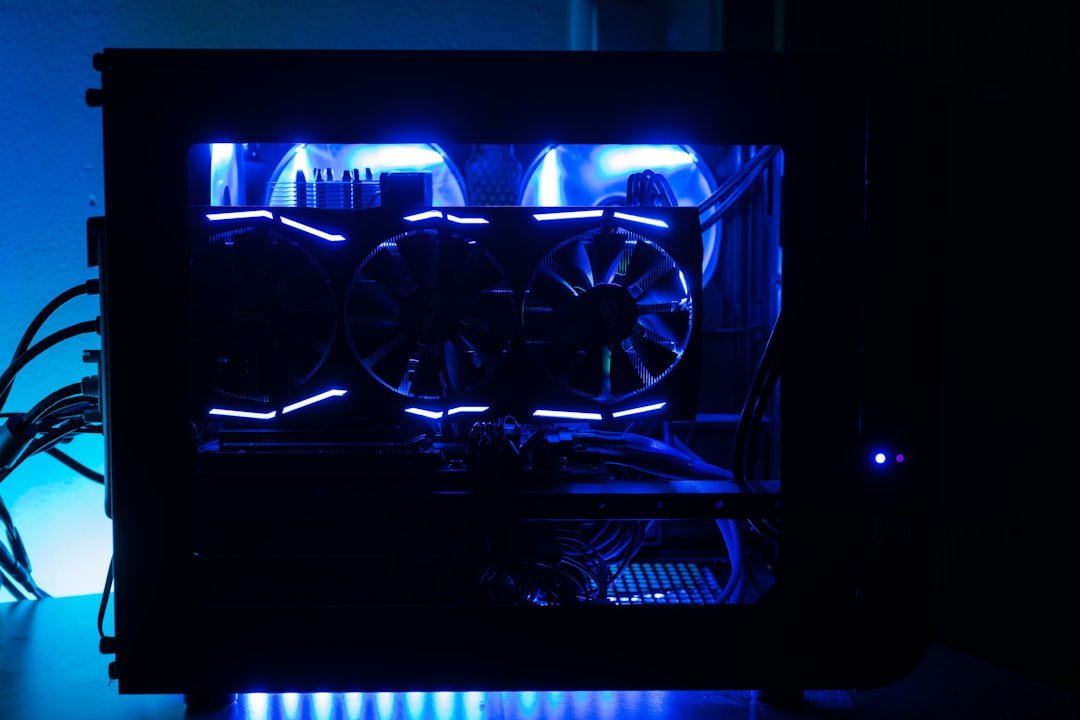
If you are concerned about data compliance, or want more control over the model pipeline, local inference is a mature path.
By 2026 the open-source ecosystem is already rich. Meta's Llama series, Alibaba's Qwen series, DeepSeek, Mistral, and Google's Gemma all come in several sizes; which version is most suitable and how large a parameter scale to use is best determined by each project's official repository at the time. Local inference's hardware requirements roughly break down as: consumer-grade graphics cards can run small-size models, mid-range VRAM can run mid-size quantized models, and only data-center-grade GPUs are suitable for running large-size full-precision models.
On the toolchain side, Ollama is a convenient tool for individuals getting started locally, LM Studio provides a GUI, and vLLM and SGLang are production-grade inference engines that clearly outperform naive implementations on throughput and concurrency.
Suitable scenarios: local experimentation, privacy-sensitive conversation, internal enterprise knowledge bases, and offline scenarios. The shortfall is that small- and mid-size open-source models still lag behind leading closed-source flagships on complex reasoning; exactly how much they lag varies and the leaderboard numbers are unstable, so they will not be cited. We can only say the gap is small on everyday completion and summarization tasks, but obvious on complex agent chains.
Path Three: Rent GPUs for Limited Training

If your business must do fine-tuning or small-scale training, renting GPUs is a compromise.
Mainstream platforms include RunPod, Lambda Labs, Vast.ai, and CoreWeave, and AutoDL domestically; prices fluctuate with card model, contract length, and market supply and demand, per each platform's current rate. The break-even point between renting and buying depends on your actual monthly usage hours; for long-term high utilization, buying cards is more economical, while for short-term experiments, renting is more flexible.
For parameter-efficient fine-tuning like LoRA or QLoRA, running a few cards for a few days can yield usable results in a single vertical domain, which is fully affordable for an ordinary team. But pretraining a somewhat larger model from scratch requires far more GPU hours than an individual or small team can budget for; do not go down this path.
On the tool stack, use HuggingFace Transformers plus PEFT, plus DeepSpeed or FSDP for distribution; at the framework level, choose ready-made scaffolding like Axolotl or LLaMA Factory. The advice is to first get the flow working on a single card before scaling to multiple cards, otherwise the money burned debugging on multiple cards can exceed the cost of the training itself.
Path Four: Specialize in Agents and Workflows
A judgment worth repeatedly stressing in 2026 is that the value of agent engineering is rising rapidly. The reason is that model capability is already enough to support many tasks, and the real bottleneck lies in how to orchestrate multi-step reasoning, call tools, handle errors, maintain long-term memory, and coordinate multiple agents.
Mainstream frameworks include LangChain, LlamaIndex, LangGraph, CrewAI, and AutoGen, each with its own emphasis; which to choose depends on your workflow's complexity. Frequently discussed products like Cursor, Claude Code, and Devin are essentially examples of agent engineering; their differentiation is not the model itself but the upper-layer orchestration and engineering details.
Commercial value: an agent system that solves a concrete business problem creates far more value than training a general model from scratch. Customer-service automation, contract analysis, code review, and data cleaning are all high-demand directions in 2026.
On skill investment, deeply mastering one or two agent frameworks, tuning a RAG system well, becoming familiar with at least one vector database, and handling the edge cases of tool calls reliably is basically enough to enter this track. This path has low compute requirements, with engineering ability at its core, and ordinary developers can fully compete here.
Path Five: Vertical-Domain Differentiation
Leading companies do general LLMs well, but vertical domains are the opportunity for ordinary developers.
In fields like healthcare, law, finance, education, industry, and government, general models often do not perform well enough, not because of compute but because of a lack of professional data, domain context, and compliance understanding. In these fields, what truly creates value is not a stronger general model but a team that knows the industry, can obtain compliant data, and can identify concrete pain points.
Ordinary developers' advantage here is being close to the industry front line, accumulating clean domain data, understanding the customer's context, and finding concrete customers willing to pay. The startup threshold is not high; a vertical agent plus a small model fine-tuned for that domain can produce a usable MVP with a few people in a few months.
Path Six: Optimization and Compression Engineering
The model is already trained, but making it run cheaper and faster is a discipline of its own. Quantization, pruning, distillation, KV cache optimization, Flash Attention, continuous batching: each of these directions has ample engineering room and a talent shortage.
Every company that uses LLMs needs inference engineers to cut costs. An ordinary developer can start on a consumer-grade GPU, chew through topics like vLLM, quantization algorithms, and attention optimization, and build the capability in a few months, directly meeting enterprise-grade needs. This is the path with the lowest compute requirement yet a return that is far from low.
A Programmer's Long-Term Strategy Under the Compute Gap
Three principles. First, do not slug it out with the leaders on foundation models; this is not a track an individual can win. Second, work where the leaders are not strong: vertical, application, engineering, and agents are the home turf of ordinary developers. Third, keep your understanding of the underlying technology; even if you do not self-train, understand transformers, understand RAG, understand fine-tuning, and understand quantization. These skills make you smarter than others even when just using an API.
On time allocation, a reasonable rhythm is to spend most of your time building projects, set aside a fixed slice of time to keep up with the latest papers and tool updates, and run a small experiment in a new direction each quarter. Do not be anxious. The compute gap is structural, and ordinary developers never needed to close it in the first place; what you do need to build is judgment and engineering skill.
Frequently Asked Questions
Can I still learn AI without an H100?
Absolutely. A single consumer-grade graphics card or one cloud GPU-hours account is enough for you to learn most engineering practices. Running small-size models locally, understanding the internals of a transformer, calling APIs to build applications, studying RAG systems, and doing small-scale LoRA fine-tuning all require no H100. The H100 is designed for training large foundation models, and only leading companies are doing that.
Can ordinary companies still build foundation models?
Some people still build small-size foundation models, but the commercial value is low, because the open-source ecosystem already has plenty of options. The foundation-model market is basically saturated; Llama, Qwen, Mistral, and others are all open source, so there is no need to rebuild the same thing again. The real commercial value lies in vertical fine-tuning and the application layer.
Are domestic GPU alternatives like Huawei Ascend worth using?
Worth watching, but the ecosystem is still catching up. Ascend has some competitiveness on hardware performance, but it is not compatible with the CUDA ecosystem, so using Ascend requires rewriting some code and kernels. It is worth using in scenarios that demand domestic self-sufficiency; where Nvidia can be bought overseas, Nvidia still dominates. Over the medium to long term, the toolchains of Ascend and other domestic accelerator cards keep improving.
Will the compute gap turn AI into an oligopoly?
In the short term, concentration at the top is high; over the long term, not necessarily. Three counterforces are at work: open-source models keep closing in on closed-source capabilities, the vertical application layer is not easily swallowed entirely by the leaders, and the cost per unit of compute keeps falling with hardware iteration. Most industries will not end up in the extreme oligopoly of just two or three suppliers.
Should I switch careers into AI or stay in traditional development?
You do not need to switch entirely; you can do it gradually. First, put AI tools to use in your current development work to boost your efficiency. Then learn RAG and agent engineering in your spare time and build a side project. After a few months you will have a clearer sense of whether you truly want to do AI applications full-time. Going all-in on a career switch with no prior exposure carries higher risk.
Inspired by Ruan Yifeng's Weekly for Geeks, Issue 391: https://www.ruanyifeng.com/blog/2025/09/weekly-issue-391.html
📝 This article is from DouWen www.douwen.me . Please retain the source when reposting.
Original link: https://www.douwen.me/archives/1076/
💬 Comments (6)
Sharing this with my team.
Easy to follow.
Thanks for the detailed comparison.
Loved the FAQ section.
Clear and to the point.
Best summary I've read on this.