Top 5 free AI mind mapping tools, 2026 online one-click generation of structure diagrams
🇨🇳 阅读中文版5 Free AI Mind Map Tools Tested: Which One Is Worth Choosing in 2026
Mind mapping tools have long been standard equipment for knowledge workers. But starting in 2025, a new generation of AI-powered mind mapping tools went live, shifting from manually dragging nodes to "generating a complete mind map from a single sentence." This article puts five free AI mind map tools to the test and compares them head-to-head to see which is most worth choosing.
Test method: each tool was given the same input, "Generate a mind map on the theme of the 2026 World Cup, including five branches: history, format, teams, star players, and cultural impact." We looked at generation quality, node depth, visual aesthetics, collaboration, and export formats.
Who AI Mind Map Tools Are For

Good for writing. People who write papers, reports, and books. Generate an outline from a sentence and then expand the content, boosting efficiency fivefold.
Good for studying. Students taking notes in class and reviewing. Turning a textbook chapter into a mind map makes memorization twice as efficient as linear notes.
Good for product managers. Feature breakdowns, user journey maps, competitor analysis. Turn fuzzy concepts into a visual structure.
Good for project management. Breaking a project into tasks, assigning responsibilities, tracking progress. A mind map is more intuitive than a Gantt chart.
Good for content creation. Short-video scripts, article outlines, marketing plans. AI mind maps help you quickly build a content skeleton.
Good for consulting and sales. Customer research, needs analysis, proposal presentations. A polished mind map is more persuasive to a client than a 30-page slide deck.
Tool 1: Xmind AI

Xmind is a veteran domestic mind mapping tool. In 2024 it released the Xmind AI feature integrated with GPT-4.
Free version features: 100 AI generations per month. Each AI generation can produce a mind map up to three levels deep. The template library has 200-plus free templates. Export to PNG, SVG, PDF, and Markdown.
Hands-on test: input "2026 World Cup." In 10 seconds it generated a mind map with 6 main branches and 30 child nodes. The structure was reasonable but the node descriptions were on the simple side, averaging 5 to 10 characters each. The visual style is clean.
Strengths: the best Chinese experience. As domestic software with no separate international version, its servers are in China and access is fast. Generated content fits Chinese expression habits.
Weaknesses: the free version's 100-per-month quota is on the low side. AI generation only goes three levels deep, which isn't enough for complex topics.
Pricing: the Plus subscription is 65 yuan per month or 488 yuan per year. The Pro subscription is 99 yuan per month.
Target users: Chinese-language users, students, writers, and budget-conscious domestic users.
Tool 2: Whimsical AI
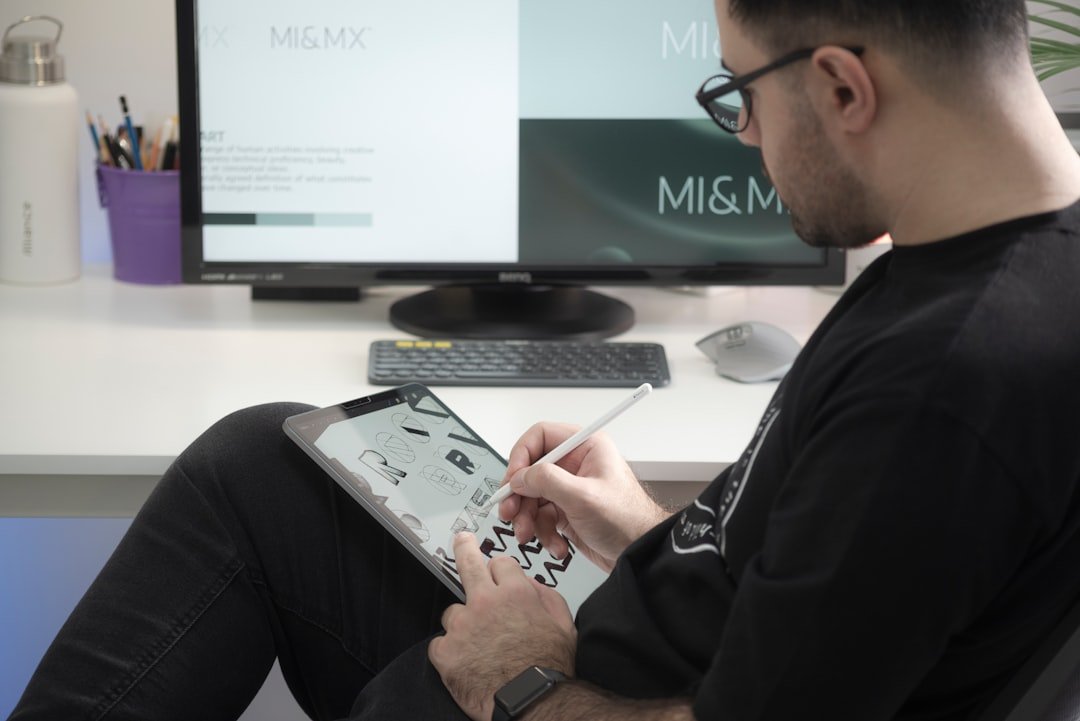
Whimsical is a Silicon Valley startup founded in 2017. It added AI features in 2025.
Free version features: a cap of 5 files per month, each containing 1 AI mind map. Export to PNG and PDF. No watermark.
Hands-on test: input "2026 World Cup." In 8 seconds it generated 5 main branches and 25 child nodes. The node descriptions are detailed, 15 to 30 characters each with full descriptions. The visual style is closer to a corporate product manual.
Strengths: the best visual design of the five. A full set of templates including mind maps, flowcharts, wireframes, and sequence diagrams. The best Notion integration experience.
Weaknesses: the free version is limited to just 5 files, a strict cap. Chinese support is mediocre; Chinese input works but the templates and template fonts are optimized for English.
Pricing: Pro is 12 dollars per month or 100 dollars per year.
Target users: designers, product managers, English-language work environments, and users who prioritize visual aesthetics.
Tool 3: ChatMind

ChatMind is a product launched by ByteDance in 2024. Its free version is powerful and it leads with an AI-first approach.
Free version features: 20 AI generations per day, with 100 in the first week for new users. No limit on the number of files. Generation depth up to 5 levels. Support for Chinese and English. Export to PNG, PDF, SVG, Markdown, and XMind formats.
Hands-on test: input "2026 World Cup." In 12 seconds it generated 7 main branches and 50-plus child nodes, reaching 4 levels deep. The AI automatically adds an emoji to each child node to boost visual appeal.
Strengths: the most powerful free version. The best Chinese AI generation quality of the five. Generation depth up to 5 levels, suitable for complex topics.
Weaknesses: relatively few visual templates, only 10-plus. The Pro version is expensive, starting at 49 yuan per month. Generation is slightly slower than Xmind.
Pricing: Plus is 49 yuan per month or 388 yuan per year.
Target users: students, content creators, independent media, and users who need deep structure.
Tool 4: Mindly AI

Mindly is a Swedish startup founded in 2022, with a core positioning around mobile mind mapping.
Free version features: free on iOS and Android. 50 AI generations per month. 50-plus templates. Export to PNG and PDF.
Hands-on test: input "2026 World Cup." In 10 seconds it generated 6 main branches and 30 child nodes. The best mobile UI experience, with smooth gestures and natural node dragging.
Strengths: the best mobile experience. Apple Watch integration lets you generate mind maps by voice input. Smooth handwritten editing with Apple Pencil.
Weaknesses: the desktop experience is mediocre and the web version is feature-limited. Chinese support is basic, with Chinese OCR accuracy around 60%.
Pricing: Pro is 4.99 dollars per month or 39.99 dollars per year.
Target users: iOS and Android mobile users, designers, and users accustomed to handwritten notes.
Tool 5: GitMind AI
GitMind is a product of Wondershare, a domestic software company founded in 2020. Its free version is full-featured.
Free version features: no AI usage limit. Cloud collaboration with real-time multi-user editing. Export to PNG, PDF, SVG, Markdown, PPT, and Word. 300-plus templates.
Hands-on test: input "2026 World Cup." In 15 seconds it generated 6 main branches and 35 child nodes. The visual style is clean, close to Notion's look.
Strengths: the unlimited AI in the free version is the biggest highlight. Strong collaboration features, free for teams of 5 or fewer. The most complete export formats, including PPT and Word that can be used directly in work presentations.
Weaknesses: AI generation quality is slightly below ChatMind. Node descriptions are on the short side.
Pricing: Premium is 30 yuan per month or 188 yuan per year.
Target users: team collaboration, enterprise users, office scenarios that need PPT and Word export, and users extremely sensitive to budget.
Head-to-Head Comparison of All 5 Tools
AI generation quality: ChatMind first for depth. Xmind AI second for reasonable nodes. GitMind third for clear structure. Whimsical fourth for good English quality. Mindly fifth, on the concise side.
Visual aesthetics: Whimsical first. Xmind second. GitMind third. Mindly fourth. ChatMind fifth.
Chinese support: Xmind AI first. ChatMind second. GitMind third. Mindly fourth. Whimsical fifth.
Mobile experience: Mindly first. Xmind second. The rest are web-first.
Collaboration: GitMind first for free multi-user collaboration. Whimsical second. The others are basic.
Free-version value: ChatMind first. GitMind second. Xmind third. Mindly fourth. Whimsical fifth.
Pricing: GitMind is cheapest at 30 yuan per month. Mindly at 4.99 dollars is about 35 yuan. Xmind is 65 yuan. ChatMind is 49 yuan. Whimsical at 12 dollars is about 85 yuan, the most expensive.
Overall recommendation: Chinese-language students should choose ChatMind or Xmind AI. Designers should choose Whimsical. For team collaboration, choose GitMind. Mobile users should choose Mindly.
5 Practical Tips for AI Mind Map Generation
Tip one: state the topic precisely. "2026 World Cup" is vague. "2026 World Cup, hosted by three North American countries with 48 teams, match rules, and star lineups" is detailed and improves AI generation quality by 50%.
Tip two: specify the structure and hierarchy. Say in the prompt "generate a mind map with 6 main branches, each with 4 to 5 child nodes" and the AI will follow it. Without specification, the AI's output structure is arbitrary.
Tip three: add background information. Give the AI some context, for example "I'm a sports columnist preparing a 2026 World Cup feature." The AI will adjust the content depth and angle to your perspective.
Tip four: iterate multiple times. After the first generation, have the AI expand individual nodes you're not satisfied with. "Please expand the child nodes under branch 3, the North American host cities," and the AI will refine that branch specifically.
Tip five: combine with search. Both Xmind AI and ChatMind support web access. Add "refer to the latest data" in the prompt and the AI will call a search engine to get real-time 2026 information rather than old data from its training set.
Real-World Use Cases for AI Mind Maps
Case one: paper outlines. A graduate student writing a 10,000-word paper. First use ChatMind to input the paper's theme and generate a five-level-deep mind map. Convert the map outline into a Word table of contents. Each node corresponds to a section, so writing flows without getting stuck. A paper goes from outline to first draft in three days.
Case two: student review. A college-entrance-exam student reviewing history. For each chapter, use Xmind AI to generate a knowledge-point mind map. Before the exam, review just the maps and cover a whole book's content in an hour. Mind map memory lasts 30% longer than linear note memory.
Case three: product requirement breakdown. A product manager receives a new feature request. Use Whimsical AI to generate a feature-breakdown map from one sentence. Main branches: technology, design, operations, marketing. Child nodes are specific subtasks. A complete product requirements document in an hour.
Case four: client proposals. A consultant making a proposal. GitMind generates a solution mind map. Export to PPT and present it directly to the client. It earns higher client acceptance than walking through a traditional deck line by line.
Case five: a personal knowledge system. A book lover. After finishing each book, use Mindly to generate a reading-notes map saved to iCloud. After three years, 200-plus maps have accumulated, the seed of a personal knowledge base.
Case six: team brainstorming. A startup team. Before a meeting, use GitMind for real-time multi-user collaboration to build one map. Everyone adds ideas to their own branch. A one-hour meeting produces five times more than a traditional one.
5 Questions to Ask Yourself Before Buying
Question one: what language do you mainly use? Chinese-first, choose ChatMind or Xmind AI. English-first, choose Whimsical or Mindly.
Question two: are you an individual or a team? Individual, choose ChatMind, Xmind, or Mindly. Team, choose GitMind or Whimsical.
Question three: do you value visuals or structure? Visual-oriented, choose Whimsical. Structure-oriented, choose ChatMind.
Question four: what's your budget? Free users should pick ChatMind or GitMind first. With a budget of 100 yuan per month, choose Xmind Pro or Whimsical. Unlimited budget, choose Whimsical Pro.
Question five: what export formats do you need? Need PPT and Word, choose GitMind. Need Markdown and the universal XMind format, choose ChatMind. Need SVG design source files, choose Whimsical.
Don't buy just because someone recommended it. Try the free versions for one to two weeks and compare the experience before deciding to pay. All five tools have free versions you can test with zero risk.
Limitations and Future Trends of AI Mind Maps
Current limitations. First, AI-generated maps often have a formulaic tendency, with the "5 main branches, each with 5 child nodes" template clearly showing. You need to manually adjust 30% of the content before it's usable in key scenarios.
Second, weak at expressing complex logic. When it comes to multiple causal relationships, timelines, and data visualization, the visual expressiveness of mind maps themselves is limited. Even AI can't save it.
Third, collaboration conflicts. When multiple people edit the same node simultaneously, conflicts arise. The conflict-resolution mechanisms of every tool are still imperfect.
Future trends. First, multimodal integration. The next generation of mind mapping tools will let you embed images, video, and 3D models directly into nodes. Whimsical is already trying it.
Second, real-time web access. AI automatically pulls data from the latest information sources, keeping maps always up to date rather than a snapshot from creation time.
Third, personalized models. Models trained on a user's historical maps, generating maps whose style increasingly fits the user's thinking habits.
Fourth, voice and AR input. Speak a passage or draw a map with gestures in VR space. By late 2026, Apple's Vision Pro already had prototype apps.
Frequently Asked Questions
Are free AI mind map tools actually enough?
For the vast majority of ordinary users, yes. ChatMind is free 20 times a day and GitMind is unlimited. A student writing a paper needs 30 to 50 maps a semester, which the free version can handle. Xmind AI's 100 per month also covers ordinary users. Only professional consultants, content creators, and people who need to produce 5-plus maps a day need the paid version. It's advisable to use the free version for 2 weeks before deciding whether to upgrade.
Can AI mind maps replace human brainstorming?
Not entirely, but they can accelerate it. An AI-generated mind map is a structural starting point, not the endpoint. The human brain's core value lies in insight, judgment, and creativity. The AI does 80% of the grunt work and builds out the basic structure. The remaining 20%, deciding which branch matters and which node to delete, still needs human judgment. Treat AI as a collaborative tool, not a replacement, to get the most value.
Which is better, a mind map or an outline list?
It depends on the scenario. A linear outline suits simple topics with clear logical order, like "5 steps to write a good email." A mind map suits multidimensional, complex topics that need to show branch relationships. For papers, review, and project management, the mind map is better. For short-form writing, step-by-step procedures, and deep dives into a single topic, an outline list is more efficient. The two aren't opposites; they complement each other. The benefit of AI tools is freely switching between the two views.
Can these tools be used reliably in China?
4 of the 5 are accessible in China. Xmind AI, ChatMind, GitMind, and Mindly all have domestic servers and require no VPN. Whimsical is on US servers and needs an overseas node. If you don't want the hassle, you can choose the first 4 tools, whose experience is already good enough. Whimsical's only irreplaceable feature is its high-end visual templates. If you don't need those, the other 4 tools fully cover the requirements.
How do mind maps work with note apps like Notion and Obsidian?
There are 3 integration approaches. First, export Markdown. All 5 tools support exporting Markdown, which you paste directly into Notion or Obsidian as a nested list. Second, export images. Export the mind map as PNG and embed it in a note app as a visual supplement. Third, API integration. Whimsical has an official Notion integration plugin for two-way sync. ChatMind also supports webhook sync to Notion. The recommended workflow is: AI tool generates the map, convert to Markdown and import into a note app, then expand and write the content in the note app. The map serves as the outline and the notes serve as the content.
📝 This article is from DouWen www.douwen.me . Please retain the source when reposting.
Original link: https://www.douwen.me/archives/1038/
💬 Comments (7)
Thanks for the detailed comparison.
Clear and to the point.
Easy to follow.
Sharing this with my team.
Best summary I've read on this.
Loved the FAQ section.
Solid breakdown, very useful.